

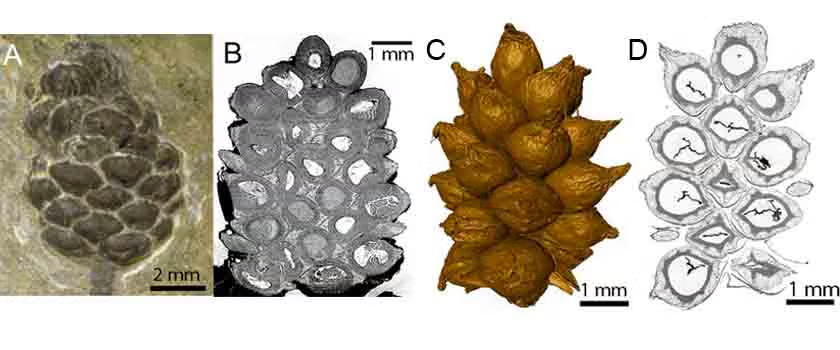
Fossil (A,B) and modern (C,D) sedge fruits studied by synchrotron tomography (B,D). 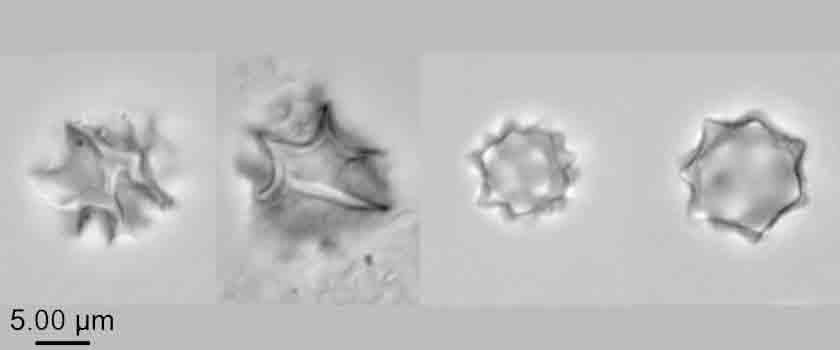
Modern and fossil phytoliths of a relative of ginger (left) and a palm (right) 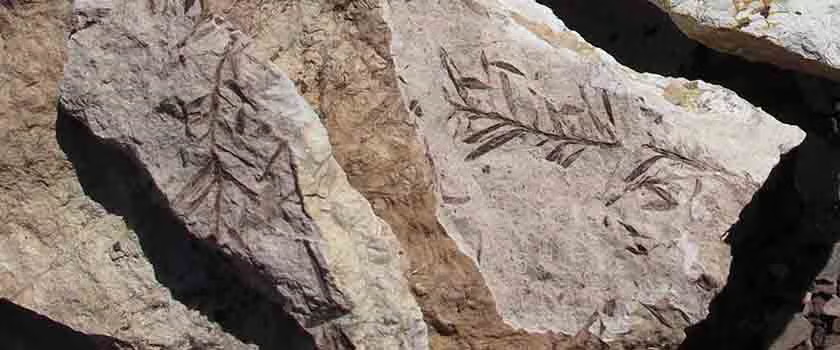
Dawn redwood (Metasequoia) fossil from Montana 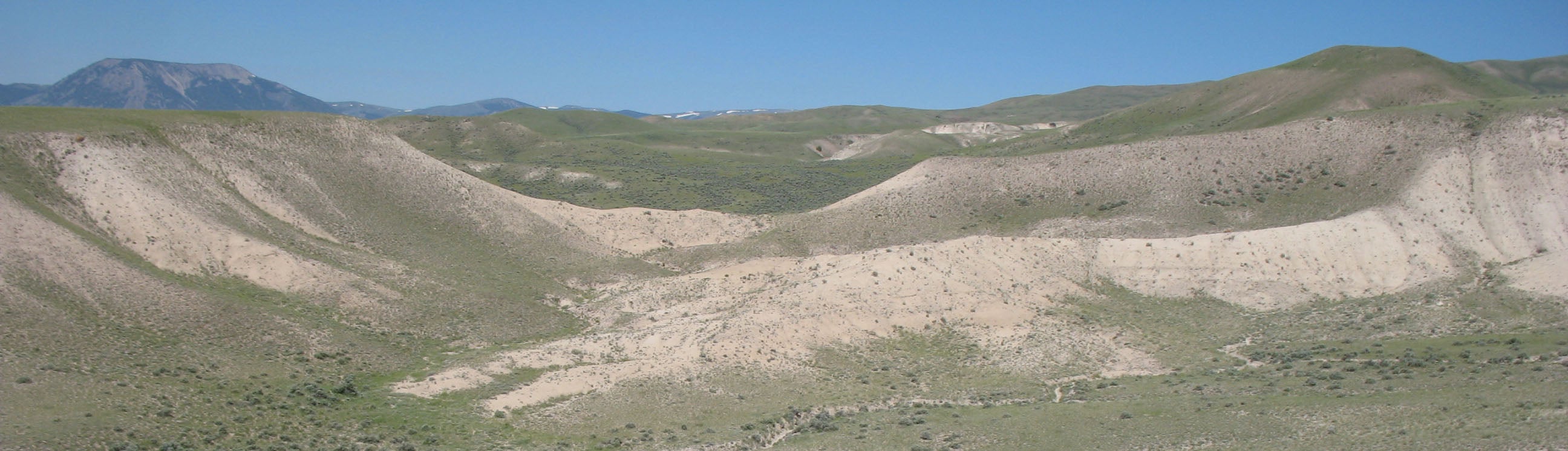
Field work in Montanta 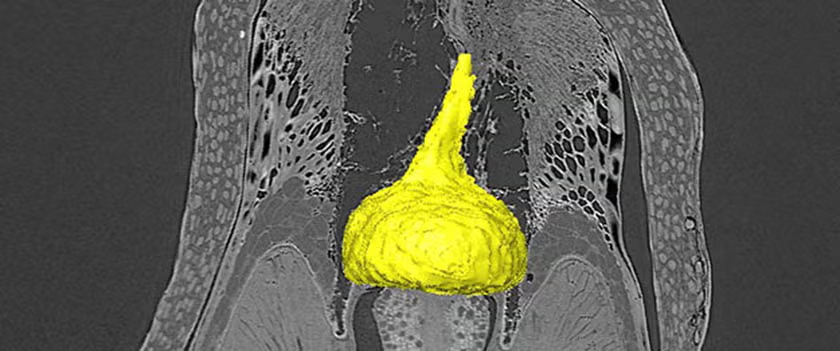
Digitally reconstructed operculum (yellow) of a ginger seed 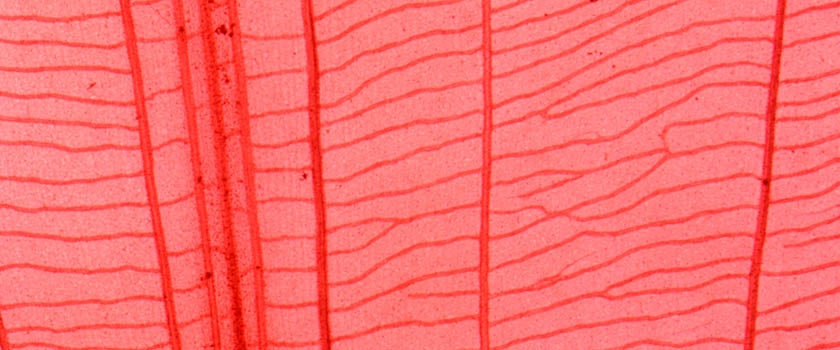
Leaf venation in Tapeinochilus, a spiral ginger 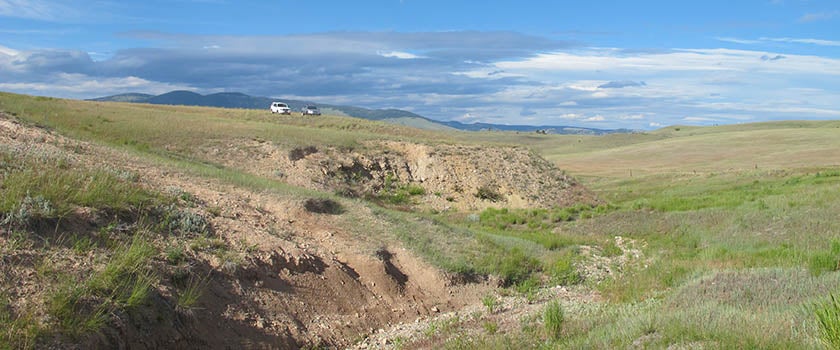
Fieldwork in Montana 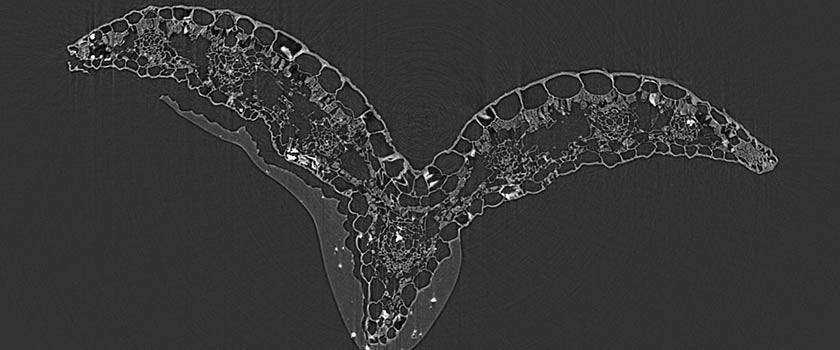
Digital cross section through a sedge leaf 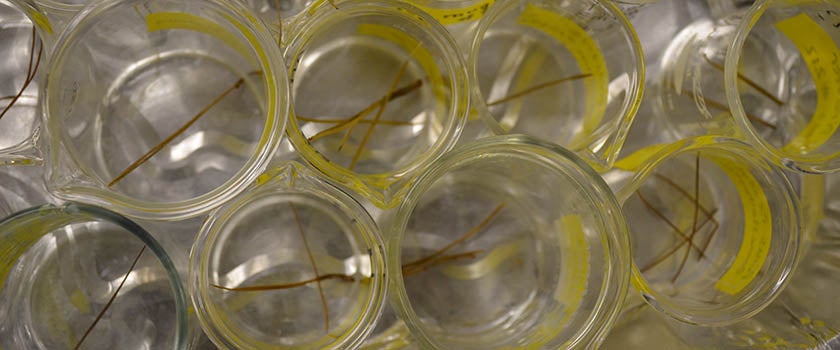
Pine needles being prepared for isotopic analysis 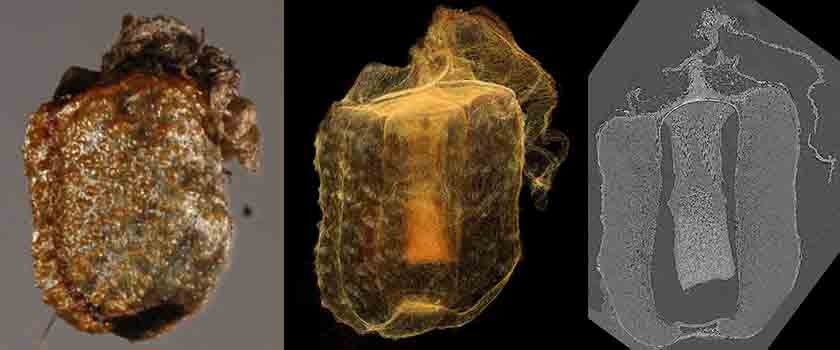
Seed of Monocostus (left) visualized with synchrotron tomography (middle and right) 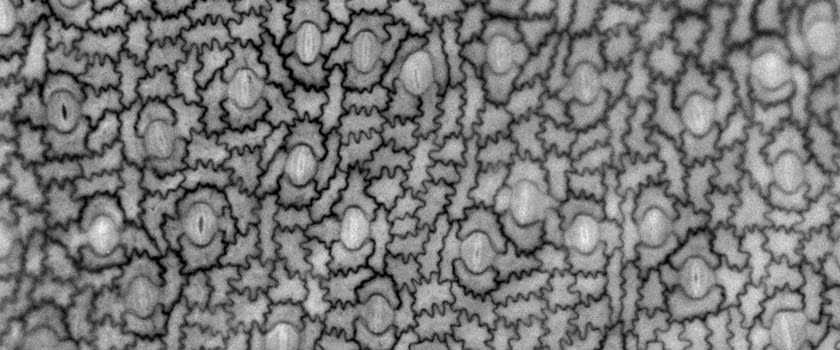
Cuticle of Indianthus 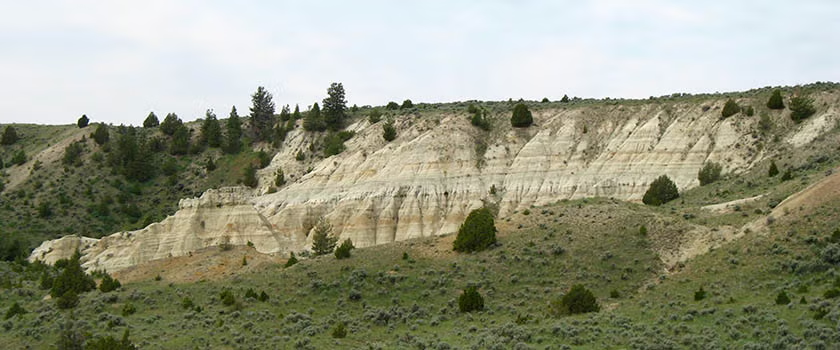
The Eocene (39.2 Ma) Timberhills A locality, Montana 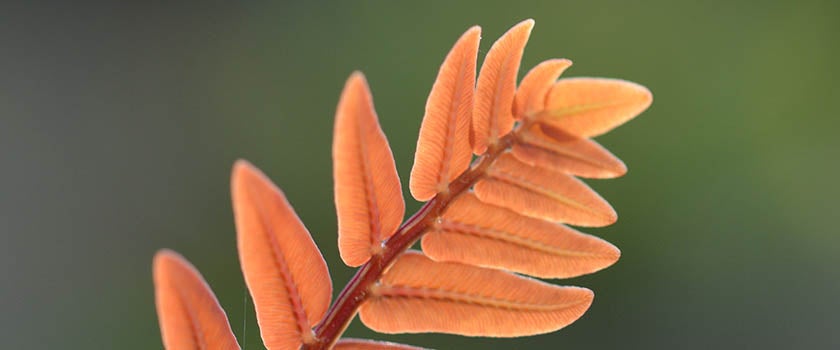
Young frond of Osmunda (royal fern) 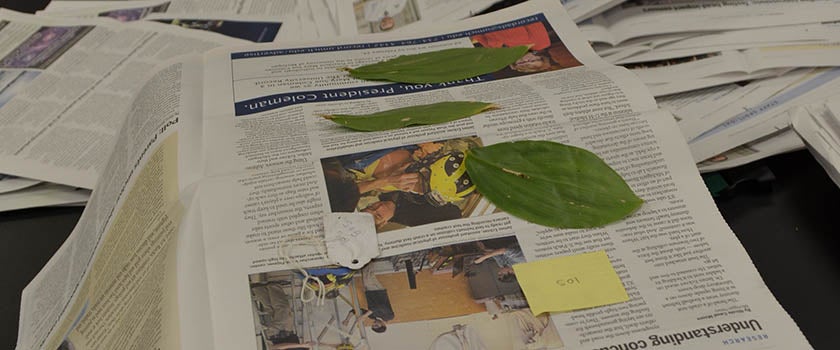
Pressing plants 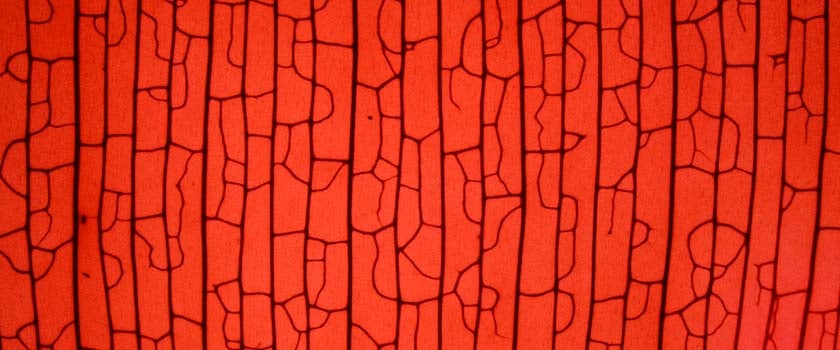
Leaf venation of Danae 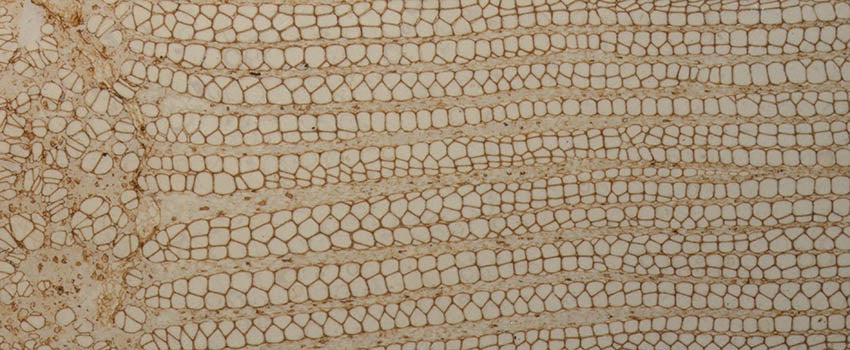
Wood from the seed fern Medullosa
[pb_slideshow group=”3″]
Below are some examples of the current research projects going on in the lab. Please contact Selena if you are interested in working on any of them!
Evolutionary history of bananas, gingers and relatives (Zingiberales). When and where did Zingiberales evolve, and how have they developed into the modern plants we know? Study of the fossil record and morphology/anatomy of these plants, combined with DNA data, will allow us determine the answers to these questions. Work is needed on fossils; on seed and leaf morphology; and on ecological niche modeling of living plants. More about the project here!
Plant paleobiodiversity over the last 130 million years. There is much talk about how biodiversity is changing today, but what have been the long-term trends in biodiversity since flowering plants became dominant? In particular, the Paleogene period saw a very warm planet (as warm as is predicted for 2100), as well as global cooling. We can look at the fossil record of particular groups (e.g., pines, monocots), to see how their biodiversity was impacted by these large environmental changes. We have two approaches: 1) assemble and analyze databases on all known occurrences of fossil plants over this time period; 2) study and describe new fossils, and re-examine previously described fossils, to contribute to our overall understanding of biodiversity and evolution.
One major thread of this research right now is a collaboration to re-examine the Deccan flora of India, which dates to the Cretaceous-Paleogene boundary. A better understanding the flora and its affinities has a lot of exciting potential to tell us about plant evolution and biogeographic patterns! This is work with Steven Manchester (University of Florida), Elisabeth Wheeler (North Carolina State University), Bandana Samant (Nagpur University), Dhananjay Mohabey (India Geological Survey), Dashrath Kapgate (J.M. Patel College), and Rashmi Srivastava (Birbal Sahni Institute for Paleobotany).
We are also ramping up work on the diversity and biogeographic history of the flora of Laramidia — i.e. the Cretaceous of Western North America, with a focus on anatomically preserved plant fossils. There are some interesting hints about which angiosperms we see, and how widespread coniferous forests are along the Western Interior Seaway. Are you interested in this topic? Contact Selena about graduate research opportunities!
Evolution and ecology of monocot leaf traits. Leaves are critical plant organs as the sites of photosynthesis and play an important role in regulating gas, water, and nutrient exchange. Leaf architecture varies with phylogeny and ecology. Monocot leaf architecture has not be extensively studied, and there is much to learn about vein patterns, distribution of functional traits, and quantifying ecologically significant features such as vein density.
Past Projects
Reconstructing the ecosystems of Montana over the last ~40 million years ago. A near-continuous deposit of sediments in southwestern Montana has left us with the clues of how vegetation and climate have changed in this region over the last 40 million years. We are using multiple lines of evidence including phytolith, plant macrofossil, isotopes, and paleosol evidence to reconstruct these ecosystems. More about the project here!
Modern phytolith diversity. Related to the Montana project, in order to confidently identify and interpret phytoliths from ancient sediments, we need information about the phytoliths from modern plants. These can be extracted in the lab, and we are building a database that makes this work accessible to other phytolith researchers. Some particular focal points are Zingiberales phytoliths; sedge phytoliths; and phytoliths from the flora of Montana.