
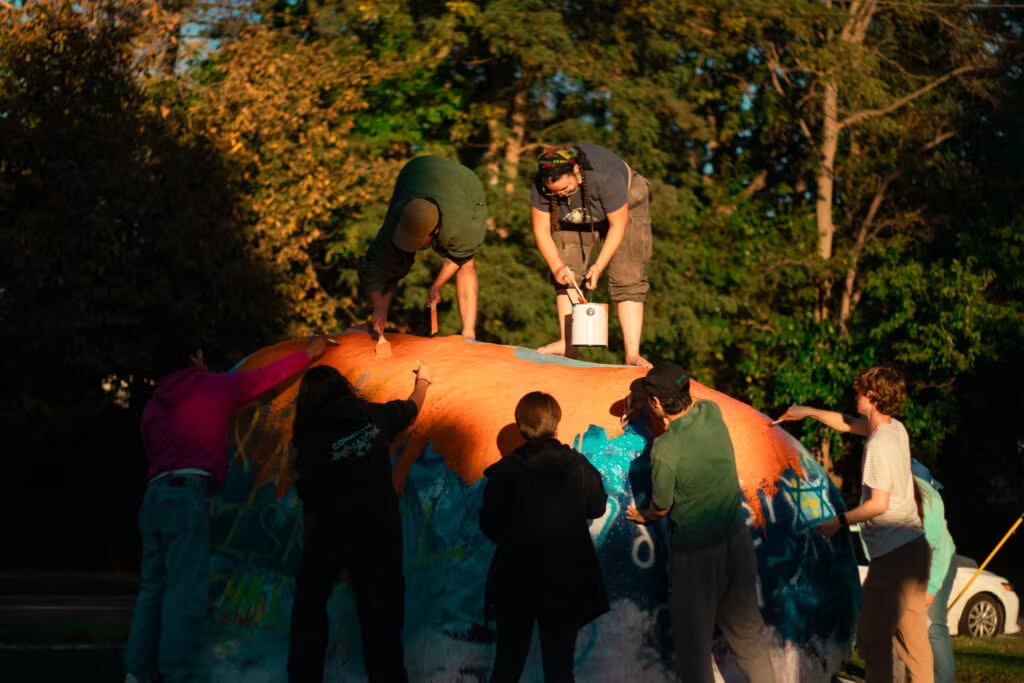
A group of individuals collaboratively painting a large rock outdoors under warm sunlight. Two people are standing on top of the rock, applying bright orange paint with brushes, while others work on the sides, adding layers of orange. The setting is surrounded by trees, creating a vibrant and dynamic scene of teamwork and creativity.

Boozhoo/Hello!

The Native American Student Association (NASA) is dedicated to fostering community and connection among Native students, faculty, and the surrounding Native and First Nations communities. We aim to create a welcoming space where Indigenous voices are celebrated, and cultural traditions, languages, and political issues are honored and supported. Through events held each semester, we provide opportunities for gathering, learning, and sharing. Whether you’re a student, faculty member, or community member, we invite you to join us!

A craft workshop table where a woman is seated, demonstrating how to create corn husk dolls. Several handmade corn husk dolls and crafting materials are displayed on the table. Children and adults stand nearby, observing the demonstration, with some wearing colorful clothing.
Anthony L. Genia (Ottawa-Choctaw) is appointed as the University of Michigan’s Native American Recruiter, focusing on equitable admissions and program development.  The University of Michigan Native American Student Association (UM-NASA) announces its first meeting on November 13 to formalize its structure and address the growing number of Native American students, aiming to enhance representation and cultural alignment with university policies.

Timeline

The Native American Student Association was established in 1972, born out of student activism and a collective call for institutional change. Since its inception, the organization has evolved and thrived, becoming a vital presence on campus. Through cornerstone events such as the annual powwow, ongoing activism that challenges policy at the University of Michigan, and intentional community building, NASA has created a space that serves as a home for Indigenous students from across Indian Country.

Community

NASA serves as a vital space of community and belonging for Native American students at the University of Michigan. It organizes and sponsors a variety of events, both informal and formal, to foster connection and support.

If you would like to share your experiences from your time at UM, we encourage you to reach out. Through an in-person or virtual interview, you can share your memories, inspire, and provide guidance to current and future Native students at the University of Michigan.
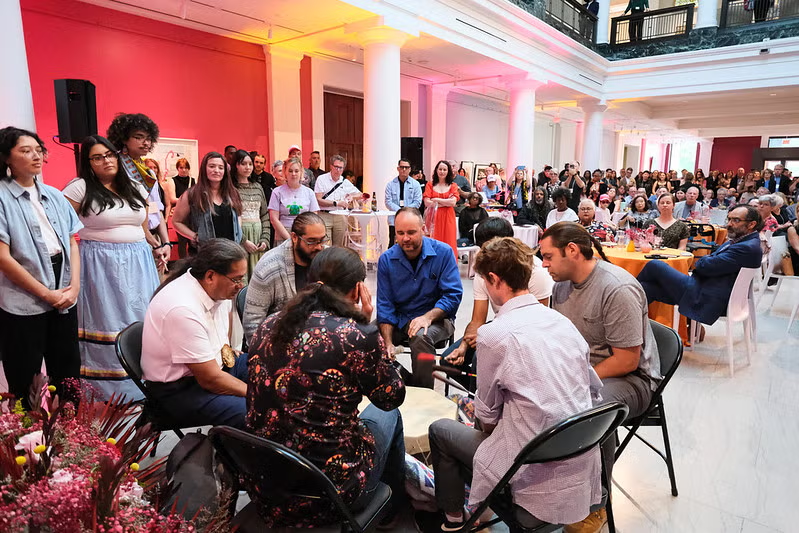
The image depicts a gathering in a bright and elegant indoor venue with red and white walls, high ceilings, and large columns. In the foreground, a group of individuals, primarily men, is seated in a circle, playing a drum together in what appears to be a cultural or ceremonial performance. Surrounding them are spectators of various ages, standing or seated at round tables adorned with orange tablecloths. Floral arrangements are visible in the foreground, adding a vibrant touch to the scene. The atmosphere suggests a communal celebration or event with diverse participation.
This poster announces the "50th Annual Dance for Mother Earth Powwow," set to take place on Saturday, March 23, 2024, and Sunday, March 24, 2024, at Skyline High School in Ann Arbor, Michigan (2552 N Maple Rd). The design features an illustration of four individuals in profile with braided hair, surrounded by yellow flowers, green leaves, and red strawberries. Hosted by the University of Michigan's Native American Student Association (NASA) and supported by OAMI, the event welcomes all and encourages attendees to visit powwow.umich.edu for details.

Powwow

The Dance for Mother Earth Powwow holds the distinction of being the oldest student-run powwow in the nation. Established in 1973, this remarkable tradition has become a cornerstone event. Organized and hosted annually by the Native American Student Association, the powwow is a significant celebration that draws participants and attendees from across the country. NASA celebrated its 50th Dance for Mother Earth Powwow in 2024.

Activism

The Native American Student Association has a powerful legacy of activism that dates back to its founding in 1972. The community has challenged the university’s failure to honor the Treaty of Ft. Meigs and demanded the creation of a Native American Studies program. NASA has also taken a stand on critical issues such as the repatriation of Native remains, filing civil rights complaints, lawsuits, and official grievances against the university. This unwavering commitment to accountability underscores NASA’s enduring role as a driving force for change.
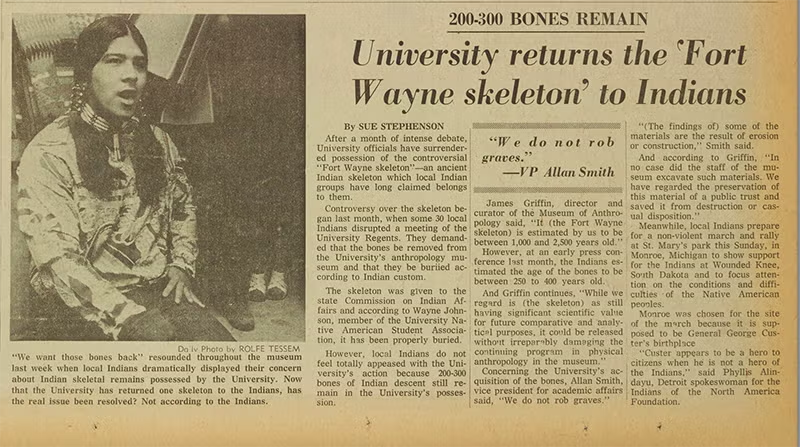
The newspaper article titled "University returns the 'Fort Wayne skeleton' to Indians" discusses the surrender of a Native body, known as the Fort Wayne skeleton, by university officials after significant debate. Native American groups had long claimed the remains as theirs, citing the need for proper burial in accordance with their customs. The controversy began when local Native Americans protested, demanding the removal of ancestral bones from the university's anthropology museum. Although one body was returned, approximately 200-300 Indigenous remains are in the university’s possession, leaving the issue unresolved for Native communities.