

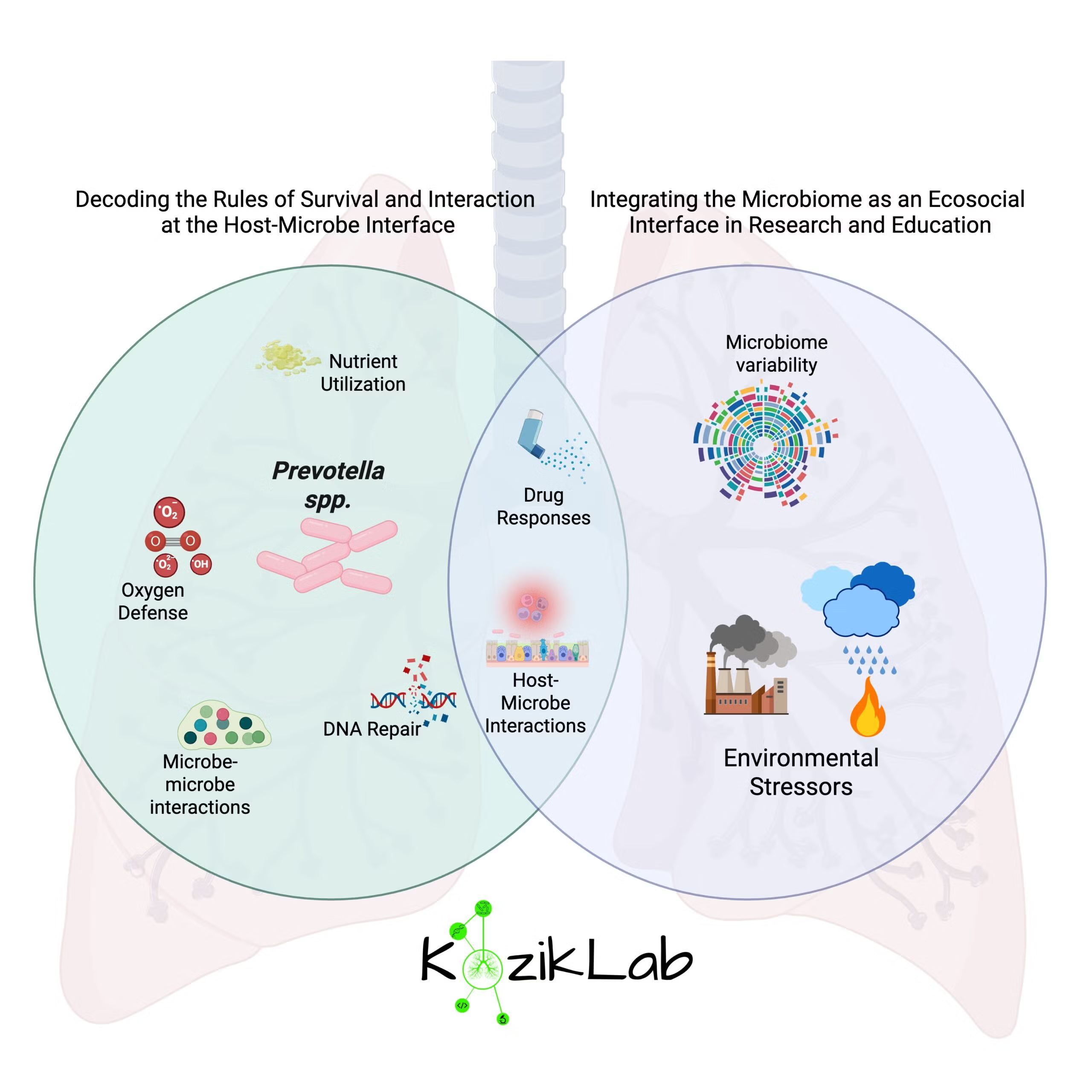
The Kozik Lab investigates a fundamental mystery of the human microbiome: How do “anaerobic” bacteria like Prevotella thrive in the oxygenated environment of the human respiratory tract, and how does their survival influence our health?
The recent discovery of a microbiome in the healthy human airway has refined our view of possible host-microbe relationships in this unique environment that is constantly exposed to an exogenous influx of inhaled substances, microbes, and other particles. Moreover, the possibility of connections to distal systems such as the gut and brain present even more intriguing questions about the activity of these microbes in varying conditions. Historically, lots of biomedical research has focused on pathogens. Our lab shifts the lens toward the resident, non-pathogen ‘commensal’ microbes that sit at the interface of host physiology and environmental exposure. By defining the “rules of engagement” between microbes, their hosts, and their environments, we aim to transform how we treat chronic respiratory diseases.
Projects
The Prevotella Paradox & Oxygen Adaptation
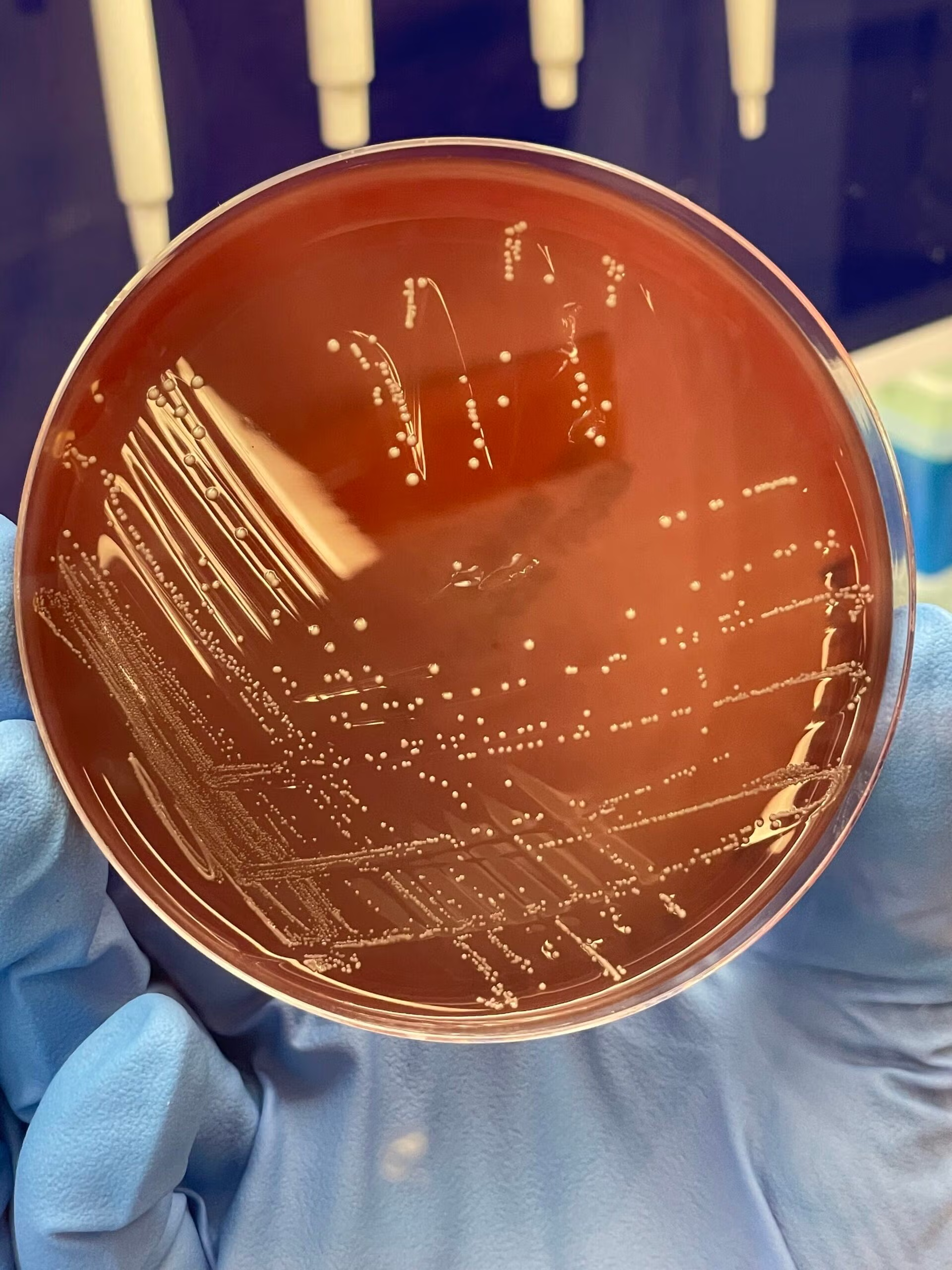
For over 100 years, Prevotella melaninogenica has been classified as a “strict anaerobe,” defined by its supposed inability to tolerate oxygen.
However, microbiome data tells a different story. P. melaninogenica is a key member of human respiratory tract, frequently reported in this oxygenated environment. This creates a fundamental biological paradox: how can an strictly anaerobic organism become one of the most successful inhabitants of the oxygenated airway?
We set out to resolve this paradox. Our recently preprinted work shows that P. melaninogenica actually maintains active growth in hypoxic conditions (oxygen levels lower than 21% [atmospheric levels] but higher than 0%). Using transcriptomics, we’ve also identified shifts in gene expression associated with oxygen exposure that suggests a sophisticated ability to tolerate oxygen!
Mapping Microbial Adaptation
Redefining Prevotella as a microaerobe is just the first step. Our ongoing work seeks to answer key questions:
- Mechanisms of Tolerance: We are identifying the molecular mechanisms P. melaninogenica uses to detect and neutralize oxygen, to defend against oxidative damage, and the regulatory networks that support its survival toolkit.
- Competitive Fitness: We examine how oxygen tolerance impacts microbe-microbe interactions.
- Clinical Impacts: We investigate how these oxygen-survival strategies contribute to bacterial persistence during infection and chronic airway inflammation.
Expanding Experimental Tractability for Prevotella
Despite being a key member of the human lung microbiome, Prevotella has remained functionally understudied in the lab. Its fastidious growth requirements and the lack of genetic tools have forced the field to rely on genomic correlations rather than experimental proof. Without the ability to grow, manipulate, and study these microbes, we cannot understand their role and interactions with our immune system and our bodies more broadly. By working to develop more protocols and tools for Prevotella research, we are enabling our lab and the broader scientific community to move from simply observing these microbes to actively interrogating them in controlled laboratory settings.
Microbial Biotransformation of Inhaled Corticosteroids
Inhaled corticosteroids (ICS) have long been the gold standard for managing airway inflammation, yet some individuals are either partially or completely nonresponsive to them. We are investigating whether lung commensals, specifically Prevotella and its neighbors, possess the biochemical machinery to “intercept” these compounds.
The Ecosocial Interface
A major hurdle in biomedical research is the reliance on broad population labels that fail to capture the true drivers of health. These labels often serve as imprecise “proxies” for a complex web of environmental, social, and economic factors. To achieve true precision medicine, we must move away from relying too much on these shorthand categories and toward a direct measurement of the lived environment. We are leading the discussion on how population data is used in microbiome science, ensuring that research focuses on environmental conditions.