

By Therese Cerdan

This wood and rattan basket was crafted by expert Bontoc basket weaver Johnny Bangao Jr., who hails from the Cordillera region of the Philippines. This oblong Bontoc basket, called bituto, can fully separate into two equally-sized containers, which are used as fruit trays.
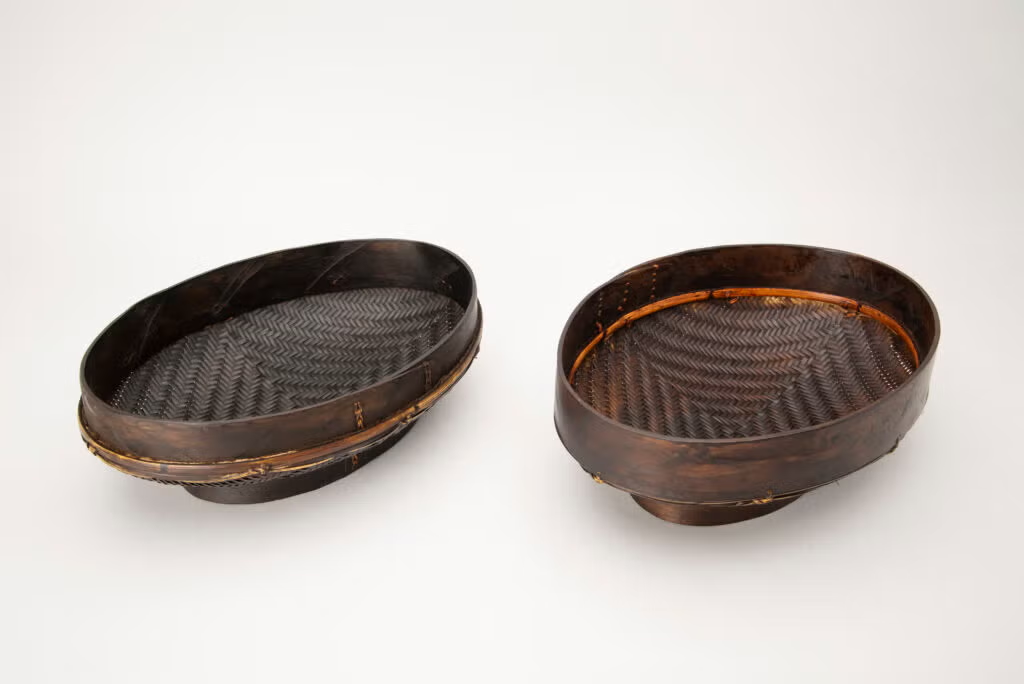
The process of creating this basket began when Johnny collected thin, split bamboo (inuwasan) or rattan (owey) from his farm near Baguio. He then used various Cordilleran basket weaving patterns, such as sinaadan and tinalidtid, to form the plaited basket surface. Through the process, he used awls (tik, pangsedsed) and beaters (pat-o) to pack the strands tightly together in their woven pattern. Then, the plaited surfaces were bound to the wooden hoops at the center, top, and bottom of the basket. The basket was colored using an oil-based dark brown stain to resemble the smoke stained baskets traditionally stored near hearth fires.
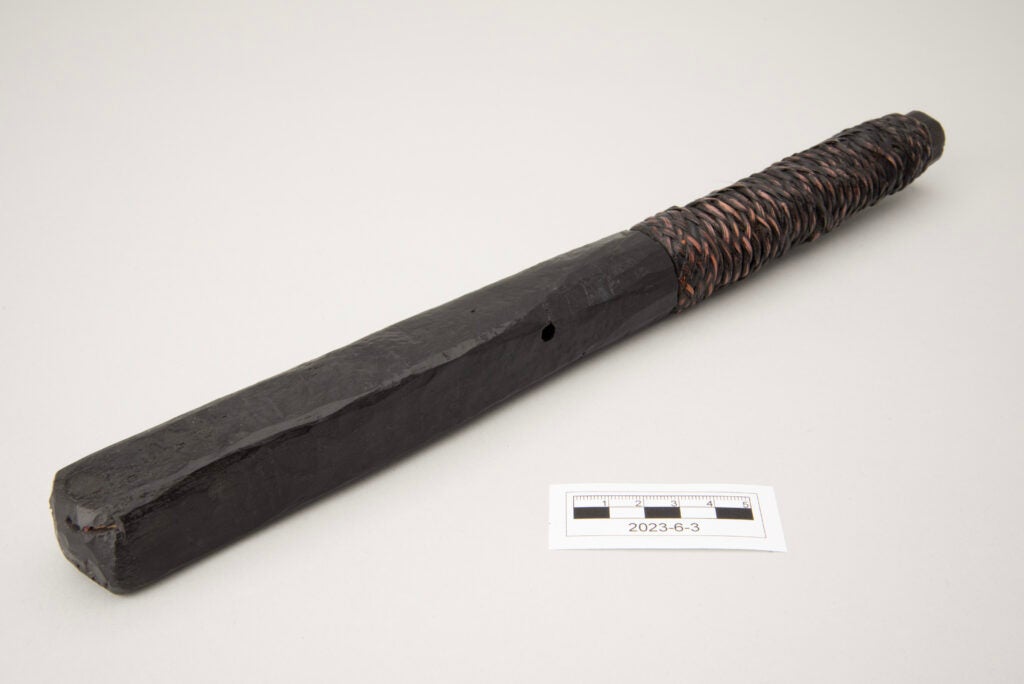
Pat-o beater. Johnny Bangao Jr. Donation. UMMAA 2023-6-3. This work is licensed under CC BY-NC-SA 4.0. 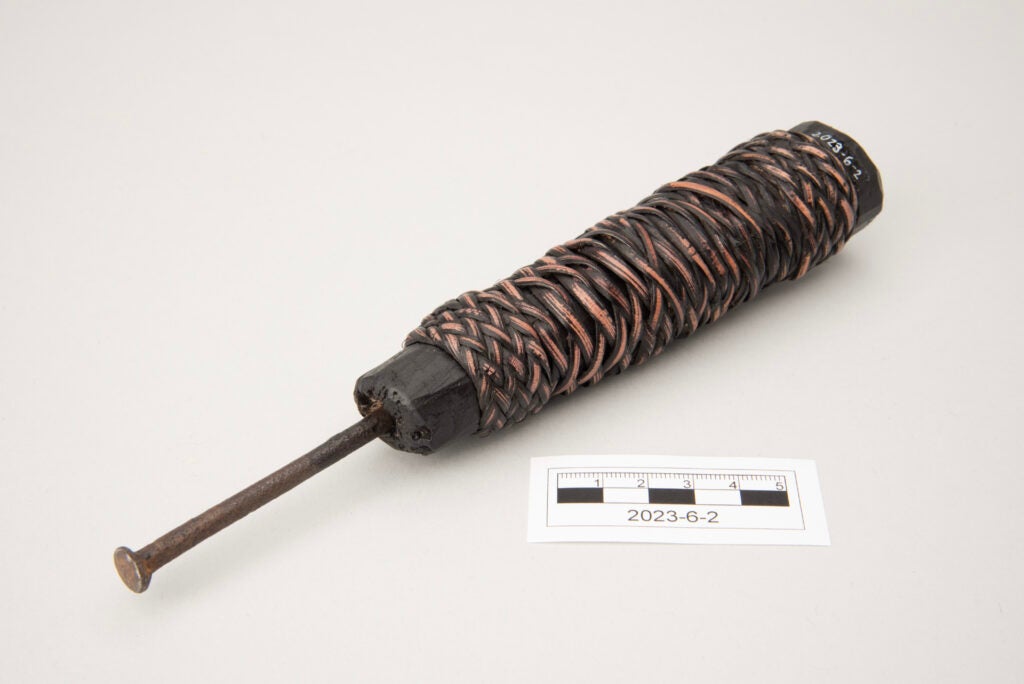
Pangsedsed awl. Johnny Bangao Jr. Donation. UMMAA 2023-6-2. This work is licensed under CC BY-NC-SA 4.0. 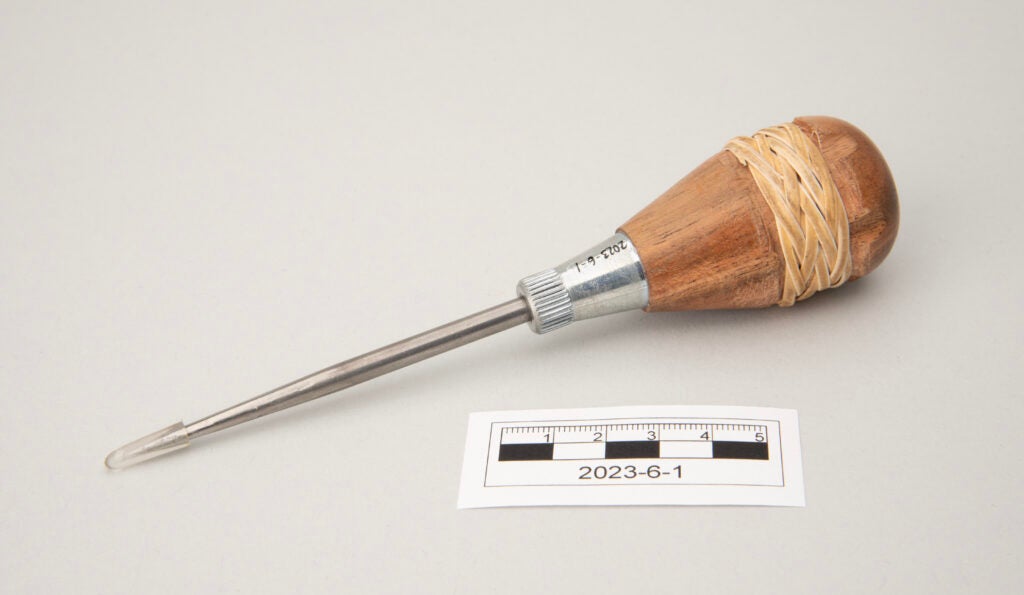
Tik awl. Johnny Bangao Jr. Donation. UMMAA 2023-6-1. This work is licensed under CC BY-NC-SA 4.0. 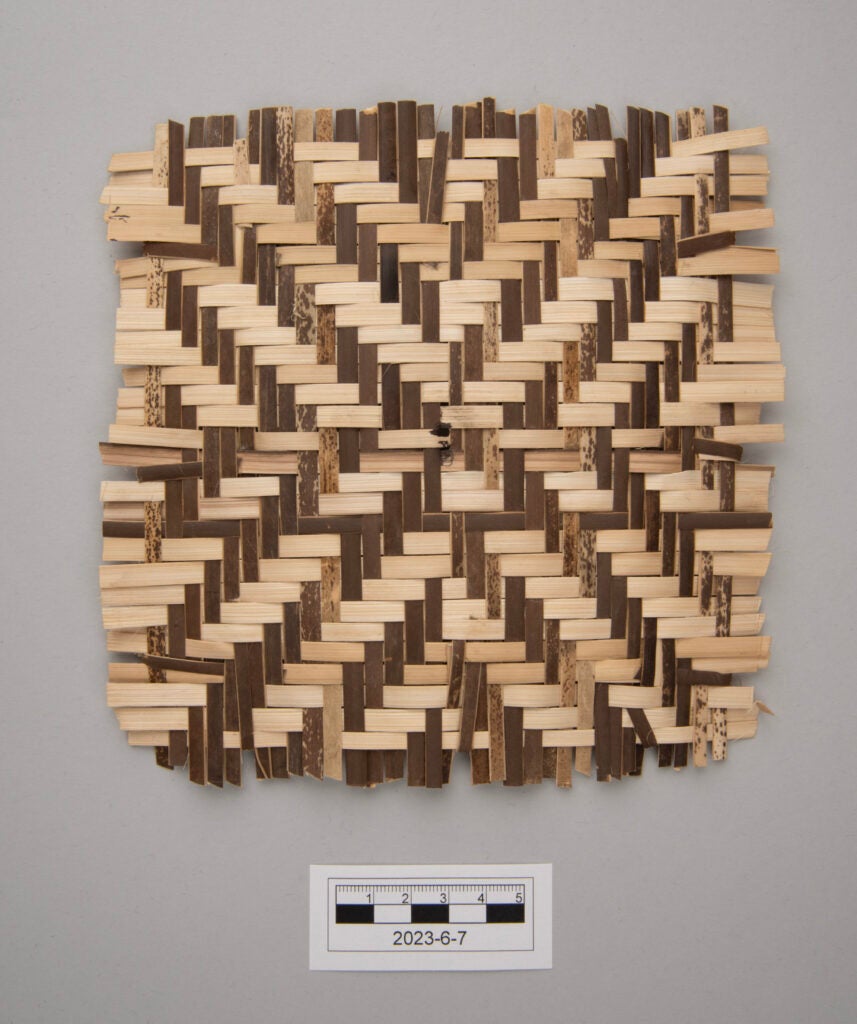
Inusong basket weaving pattern. Johnny Bangao Jr. Donation. UMMAA 2023-6-7. This work is licensed under CC BY-NC-SA 4.0. 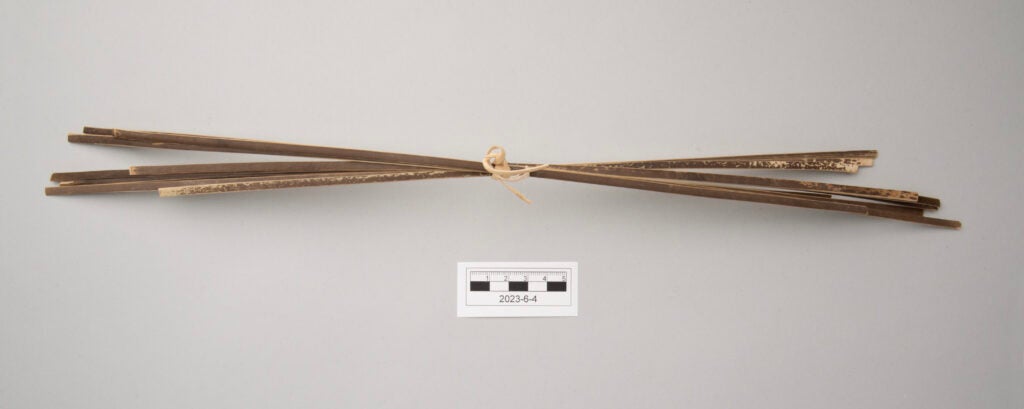
Inuwasan (bamboo).Johnny Bangao Jr. Donation. UMMAA 2023-6-4. This work is licensed under CC BY-NC-SA 4.0. 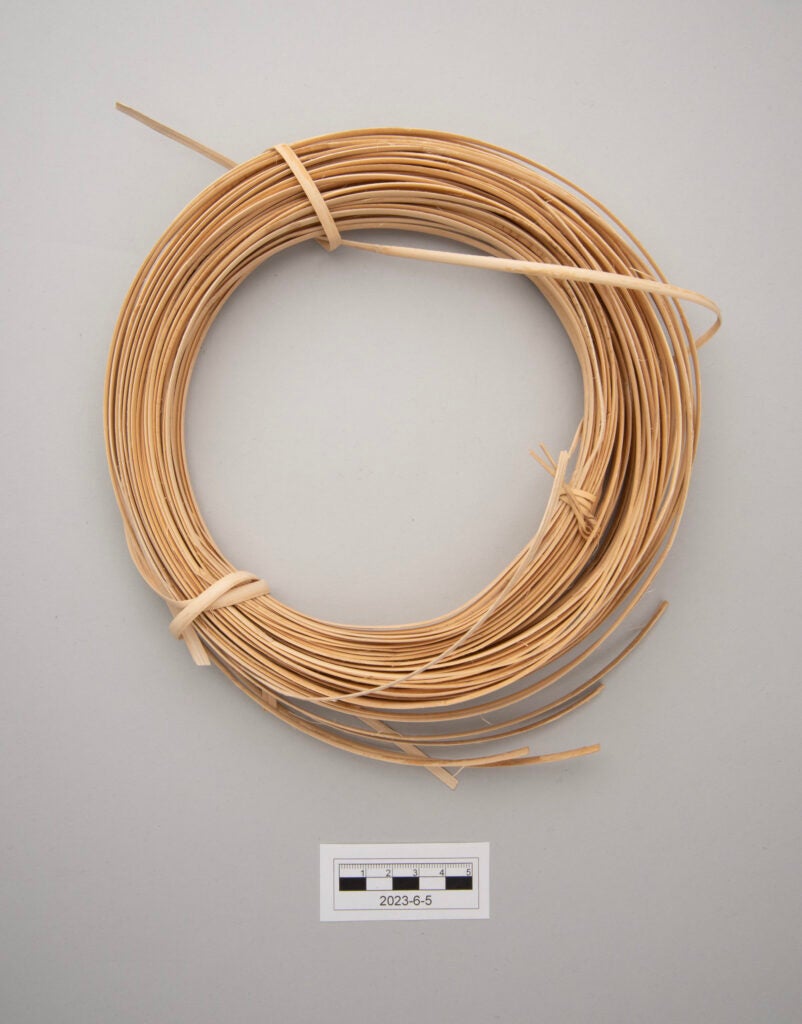
Owey (rattan). Johnny Bangao Jr. Donation. UMMAA 2023-6-5. This work is licensed under CC BY-NC-SA 4.0.
The basket, tools, and knowledge were all generous gifts to the UMMAA from Johnny Bangao himself. This knowledge sharing was at the heart of the ReConnect/ ReCollect Project, which hosted Indigenous Filipino artists and culture-bearers in Ann Arbor in 2023. This was done in an effort to open access to, build reparative relationships with, and engage the collections with their descendant communities. Johnny was able to share traditional weaving practices and terminologies, as well as provide additional contexts for the historical Philippine baskets in UMMAA’s collections. This collaboration was just one part in the process of continuing meaningful connections with communities and promoting ethical stewardship of the University’s vast collection of Philippine material.
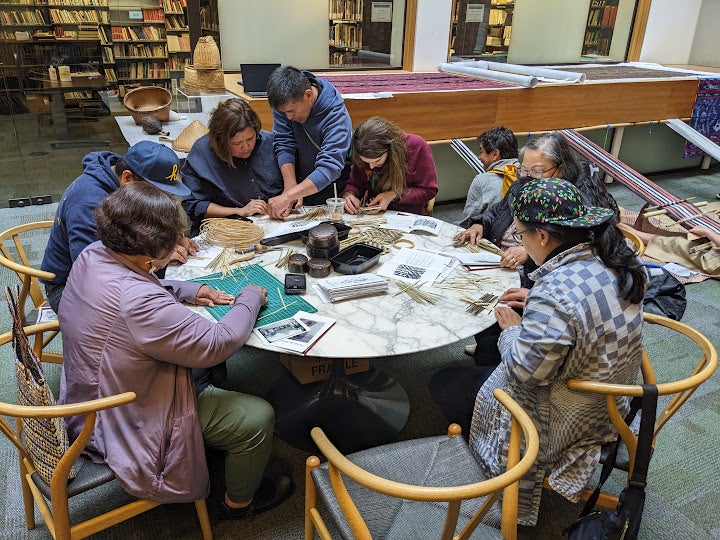
To learn more about the ReConnect/ ReCollect Project and reparative connections to Philippine collections, visit https://www.reconnect-recollect.com/
