
Continuing with our recent theme of building out physical infrastructure along the river, today’s story lays out plans for yet another engineering marvel – expanded sewage drains in Wyandotte. The purpose of the proposed plan was to divert the substantial quantities of residential sewage that was being dumped into Ecorse Creek, on the upriver side of the city, into to a discharge point south of the city, presumably to reduce sewage flow along the growing city’s riverfront. The water treatment plant the article anticipates being built at that location was constructed two years later, in 1927.
As local residents know all too well, raw sewage flows into the Detroit River continue to foul the water nearly 100 years later, especially, as this article points out, after the major storm events that are becoming ever more frequent in the region.
Transcript:
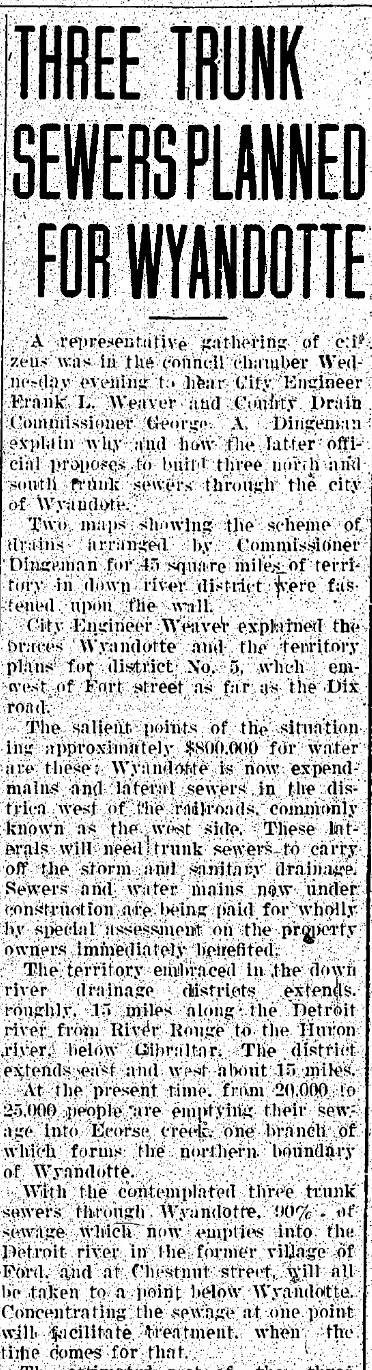
A representative gathering of citizens was in the council chamber Wednesday evening to hear City Engineer Frank L. Weaver and County Drain Commissioner George A. Dingeman explain why and how the latter official proposes to build three north and south trunk sewers through the city of Wyandotte. Two maps showing the scheme of drains arranged by Commissioner Dingeman for 41 square miles of territory in down river district were fastened upon the wall. City Engineer Weaver explained the plans for District No. 5, which consists of Wyandotte and the territory east of Fort street as far as the Dix road.
The salient points of the situation are these: Wyandotte is now expending approximately $800,000 for water mains and lateral sewers in the districts west of the railroads, commonly known as the west side. These laterals will need trunk sewers to carry off the storm and sanitary drainage. Sewers and water mains now under construction are being paid for wholly by special assessment on the property owners immediately benefited.
The territory embraced in the down river drainage districts extends, roughly, ten miles along the Detroit river from River Rouge to the Huron river, below Gibraltar. The district extends east and west about ten miles. At the present time, from 20,000 to 25,000 people are emptying their sewage into Ecorse creek, one branch of which forms the northern boundary of Wyandotte. With the contemplated three trunk sewers through Wyandotte, 90% of the sewage which now empties into the Detroit river in the former village of Ford and at Chestnut street will all be taken to a point below Wyandotte. Concentrating the sewage at one point will facilitate treatment when the time comes for that.
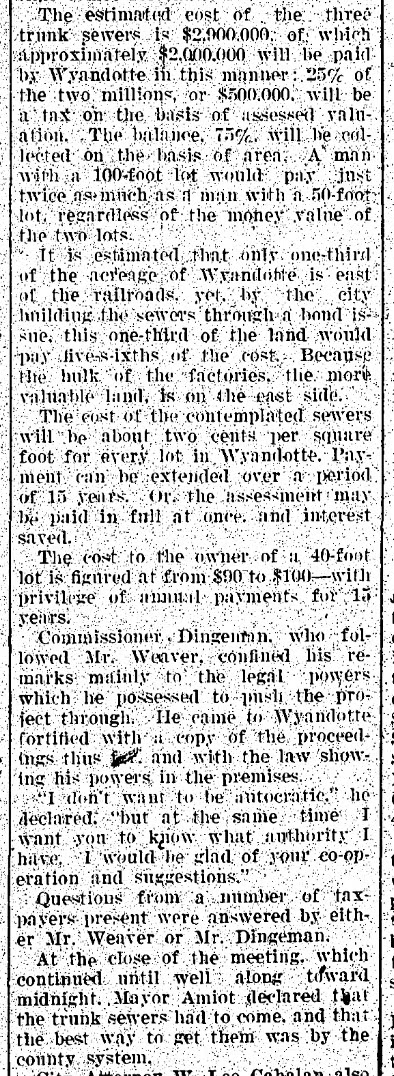
The estimated cost of the three trunk sewers is $2,000,000, of which approximately $2,000,000 will be paid by Wyandotte in this manner: 25% of the two millions, or $500,000, will be levied on the basis of assessed valuation. The balance, 75%, will be collected on the basis of area. A man with a 100-foot lot would pay just twice as much as a man with a 50-foot lot, regardless of the money value of the two lots.
It is estimated that only one-third of the acreage of Wyandotte is east of the railroads, yet, by the city building the sewers through a bond issue, this one-third of the land would pay five-sixths of the cost, because the bulk of the factories, the most valuable land, is on the east side. The cost of the contemplated sewers will be about two cents per square foot for every lot in Wyandotte. Payment can be extended over a period of 15 years, or the assessment may be paid in full at once and interest saved. The cost to the owner of a 40-foot lot is figured at from $60 to $100, with privilege of annual payments for 15 years.
Commissioner Dingeman, who followed Mr. Weaver, confined his remarks mainly to the legal powers which he possessed to push the project through. He came to Wyandotte fortified with a copy of the proceedings thus far and with the law showing his powers in the premises. “I don’t want to be autocratic,” he declared, “but at the same time I want you to know what authority I have. I would be glad of your co-operation and suggestions.”
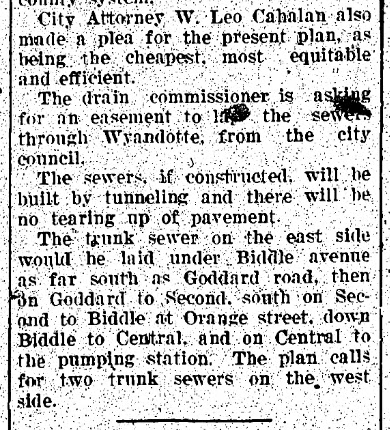
Questions from a number of taxpayers present were answered by either Mr. Weaver or Mr. Dingeman. At the close of the meeting, which continued until well along toward midnight, Mayor Amiot declared that the trunk sewers had to come, and that the best way to get them was by the county system. City Attorney W. Leo Cahalan also made a plea for the present plan, as being the cheapest, most equitable and efficient. The drain commissioner is asking for an easement to lay the sewers through Wyandotte from the city council.
The sewers, if constructed, will be built by tunneling and there will be no tearing up of pavement. The trunk sewer on the east side would be laid under Biddle avenue as far south as Goddard road, then on Goddard to Second, south on Second to Biddle at Orange street, down Biddle to Central, and on Central to the pumping station. The plan calls for two trunk sewers on the west side.
Original Article:
Citation:
“Sewage Plan Given Council.” Detroit News, 18 Dec. 1925. NewsBank (Detroit News Web Archive @UMich).