100 Years Ago, Today - Detroit River Story Lab

100 Years Ago, Today

Over the past year, Holly Nelson has been collecting stories pertaining to the rich history of the Detroit River and its surrounding communities, gathered from historical newspapers from the 18th century to the 20th. While many of the newspapers were published in the river region, others are from as far off as England, and even Australia, highlighting the river’s importance on the world stage. The point of this project is to begin a process of recovery, spotlighting the stories that have helped to shape local communities’ relationships to the river in ways both big and small. Our hope is that resurrecting these stories from their cloistered place in the archive will help us better understand the historical roles played by the defining waterway of the region and perhaps shed some light on the issues facing river communities today.

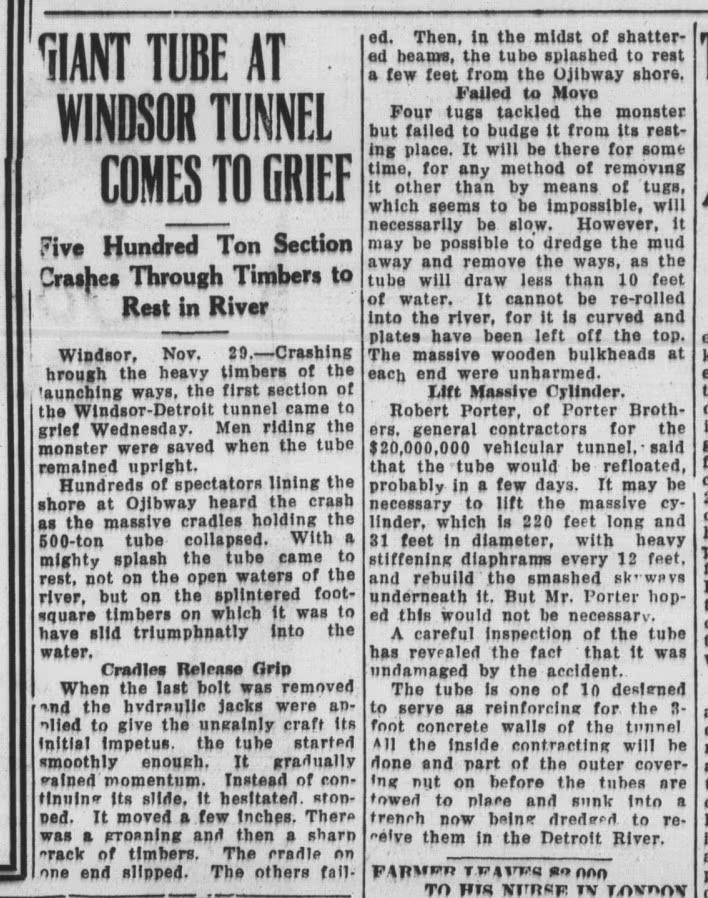
“Giant Tube at Windsor Tunnel Comes to Grief” in The Owasha Daily Times (November 29th, 1928)

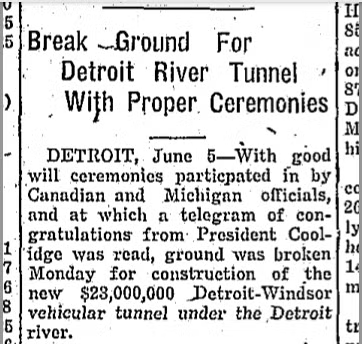
Back in June, the blog featured an article from Mount Pleasant Daily Times commemorating the beginning of the construction of the Detroit-Windsor tunnel. Today’s piece, published five months later, chronicles a mishap in the construction process—the crashing of a 500-ton tunnel tube. Fortunately, nobody was hurt in the accident (and neither was the tube). While an unfortunate event, indeed, the crash reminds us just how marvelous this work of engineering truly was.

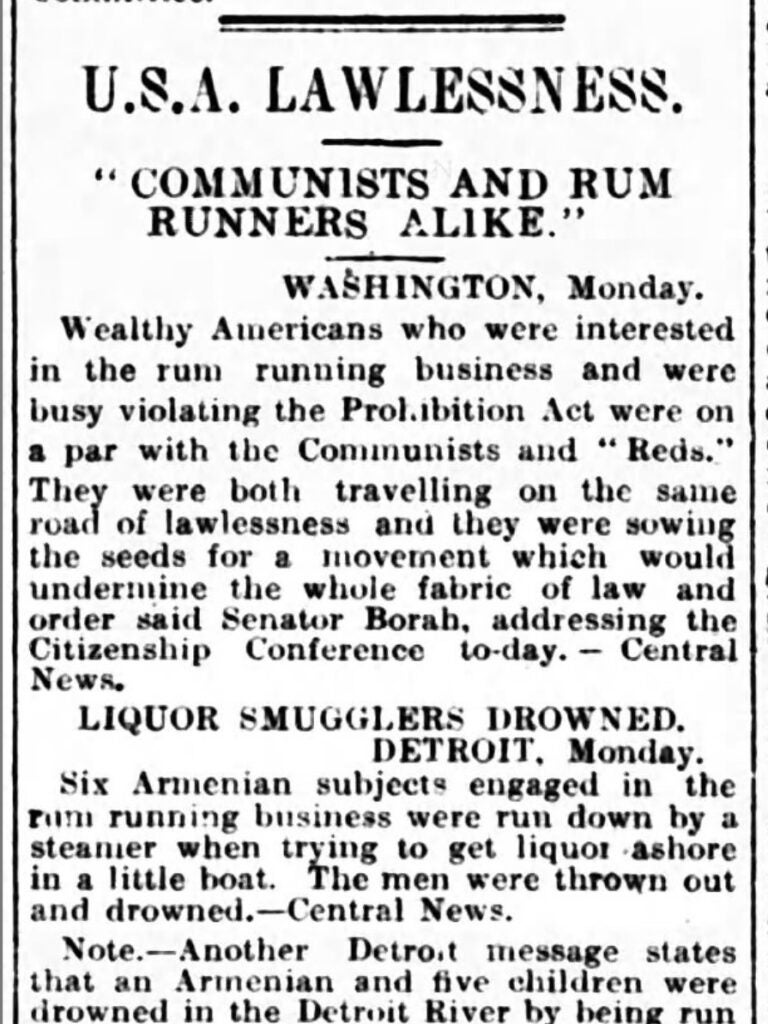
“U.S.A. Lawlessness” in Western Mail (October 16th, 1923)

Today’s group of articles features another international perspective on the Detroit River, this time hailing all the way from Wales. The writer offers a scolding account of the illicit liquor trade across the river, somewhat surprisingly comparing rum runners with Reds and Communists. According to this account of the role of Ecorse in the trade, three fourths of the illegal liquor smuggled into the US during Prohibition came across the Detroit River.

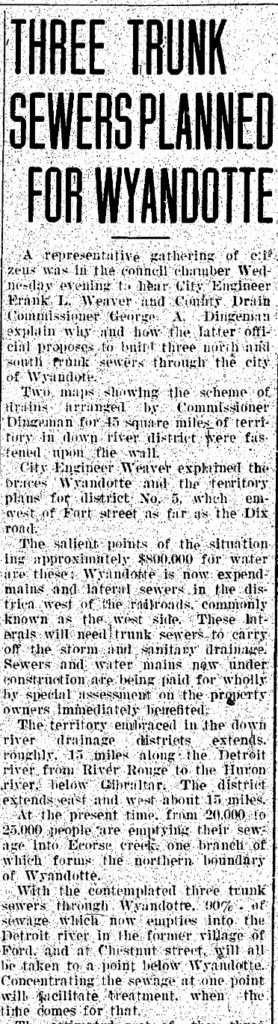
“Three Trunk Sewers Planned for Wyandotte” in Wyandotte Herald (October 7th, 1927)

Continuing with our recent theme of building out physical infrastructure along the river, today’s story lays out plans for yet another engineering marvel – expanded sewage drains in Wyandotte. The purpose of the proposed plan was to divert the substantial quantities of residential sewage that was being dumped into Ecorse Creek, on the upriver side of the city, into to a discharge point south of the city, presumably to reduce sewage flow along the growing city’s riverfront. The water treatment plant the article anticipates being built at that location was constructed two years later, in 1927. 

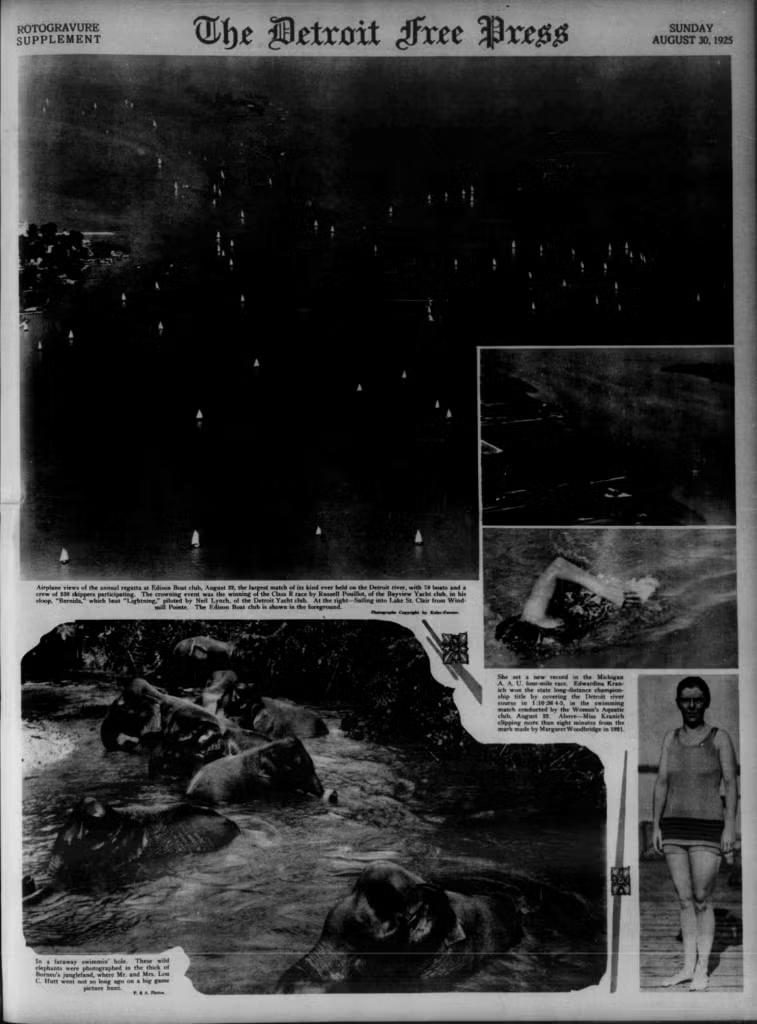
“Rotogravure Supplement” in The Detroit Free Press (August 30th, 1925)

A bonus article for the month of August to brighten up everyone’s start to the semester! Today’s piece, a rotogravure supplement, contains two Detroit River mentions. The first is an airplane shot of the Edison Boat club’s annual regatta. The second is a picture of swimmer Edwardina Kranich, who won the Women’s Aquatic club state championship for swimming in the river.

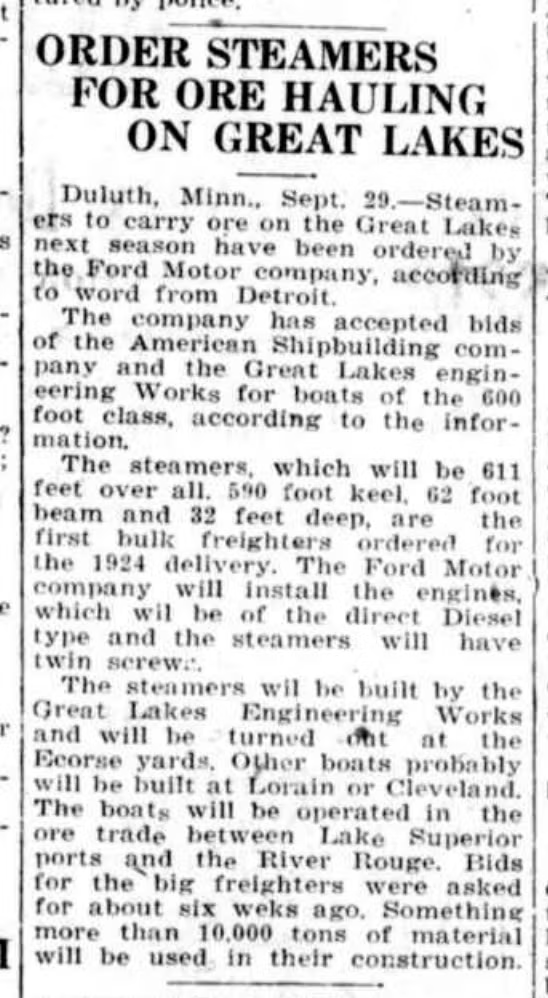
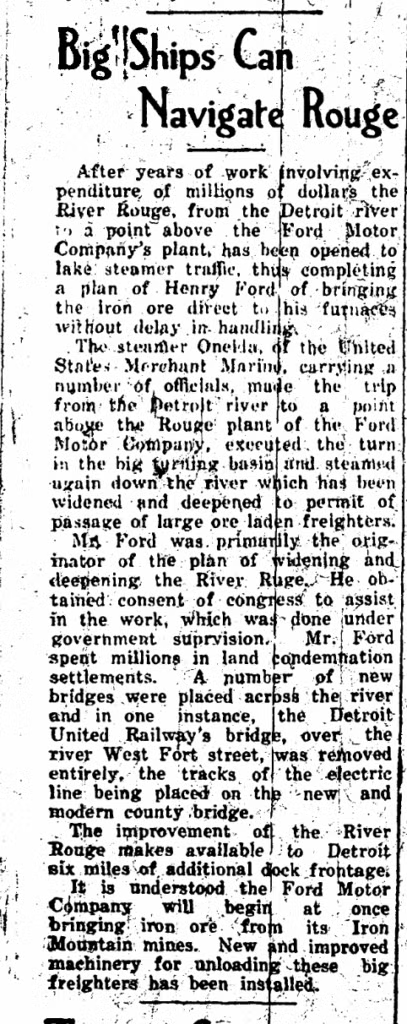
“Big Ships Can Navigate Rouge” in Wyandotte Herald (July 13th, 1923)

To facilitate more efficient transportation of materials (chiefly, iron ore) to his Rouge Factory Plant—originally situated at the confluence of the Detroit River and the River Rouge—Henry Ford hatched a plan to widen the waters. With consent from Congress and government supervision, Ford’s team opened the river to accommodate lake steamer traffic, while also adding new bridges and increasing dock space.

“The Great To-Day, The Greater Future” in The Sydney Morning Herald (May 19th, 1926)

Today’s story is the tenth chapter from Ford’s “The Great To-Day, The Greater Future,” the book which documents the author’s business philosophy and his company’s towering success. This chapter provides a detailed account of Ford’s production cycle at the River Rouge plant along with a reminder of the importance of the Detroit River to the company’s transportation infrastructure.

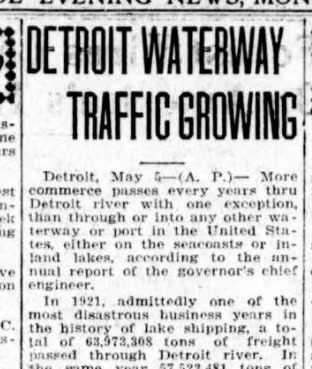
“Detroit Waterway Traffic Growing” in The Monroe Evening News (May 5th, 1923)

Today’s article, from The Monroe Evening News, celebrates the Detroit River’s emergence as one of the two most heavily used waterway for freight shipping in the country. With the construction of new ports and harbors, coupled with the millions of tons of freight passing through the river and Lake St. Clair each year, the article proposes that Michigan will soon become a ‘maritime empire.’

“‘Safety City’ Exhibit Replete With Electrical Devices Opens Friday” in Mount Clemens Monitor (April 11th, 1929)

With the massive boom in the American automotive industry—thanks to Henry Ford’s assembly line—arose the need for greater consideration for road safety. Today’s article concerns a ‘Safety City’ exhibit that toured the state in 1929, from cities in close proximity to the Detroit River like Mt. Clemens, all the way to the Upper Peninsula. A miniature model of Detroit, complete with a riverfront view, instructed visitors on eighteen different causes of traffic accidents. Each stop on the exhibit’s tour also featured an essay competition for local high school seniors.

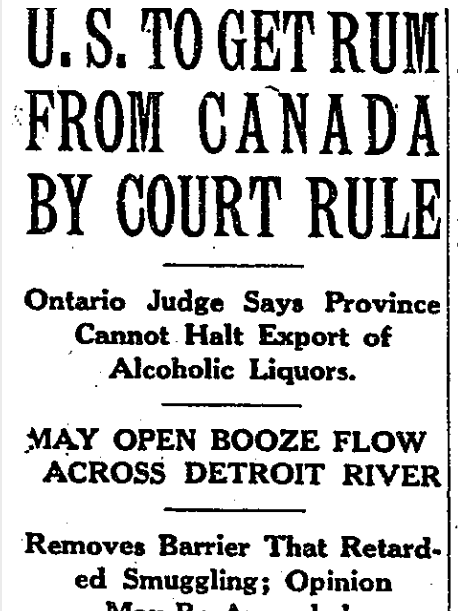
“U.S. to Get Rum from Canada by Court Rule” in Detroit Free Press (March 26th, 1922)

During the Prohibition era, rum runners, often connected with organized crime, transported large quantities of alcohol across the Detroit River from the Canadian to the US side. While the Ontario Temperance Act banned the consumption of alcohol in the province beginning in 1916, it remained perfectly legal to store alcohol intended for export in a bonded warehouse, greatly facilitating the lucrative river smuggling trade.

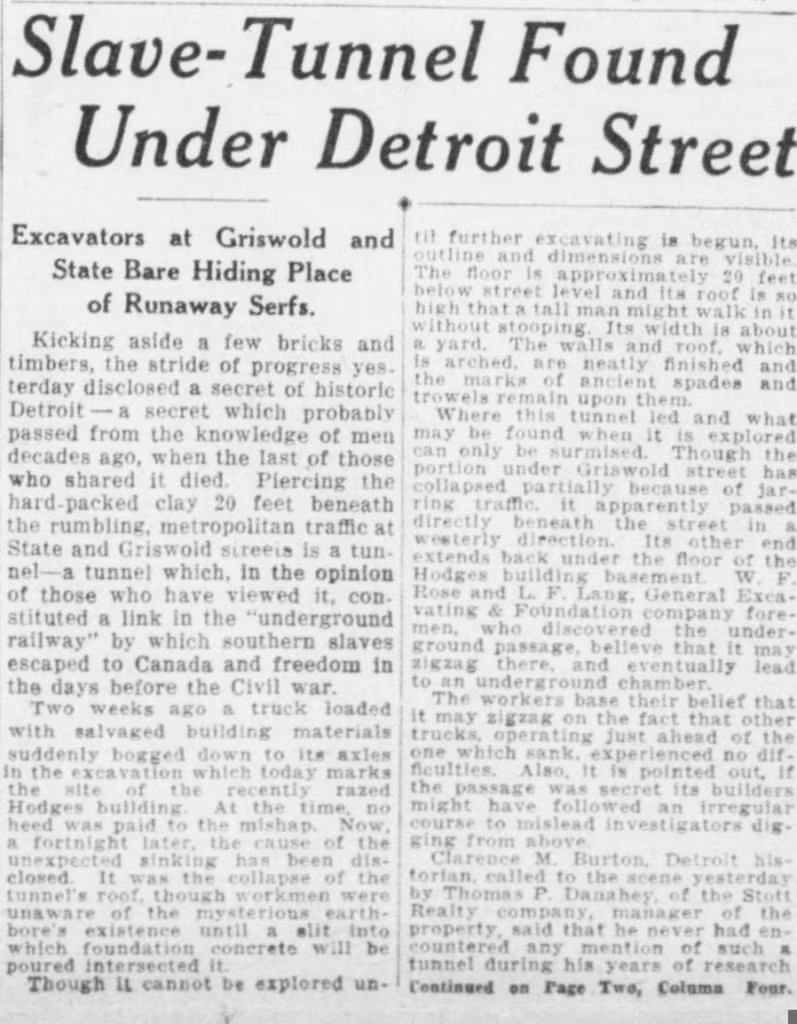
“Slave-Tunnel Found Under Detroit Street” in Detroit Free Press (March 3rd, 1928)

Today’s article reminds us of the Detroit River’s storied role as a pathway to freedom for enslaved Americans before the Civil War. While leveling land to build the 37-story David Stott building at 1150 Griswold Street, near the site of the famed Finney House barn, construction workers unearthed a tunnel that was most likely part of a network of passages used by the anti-slavery resistance. 

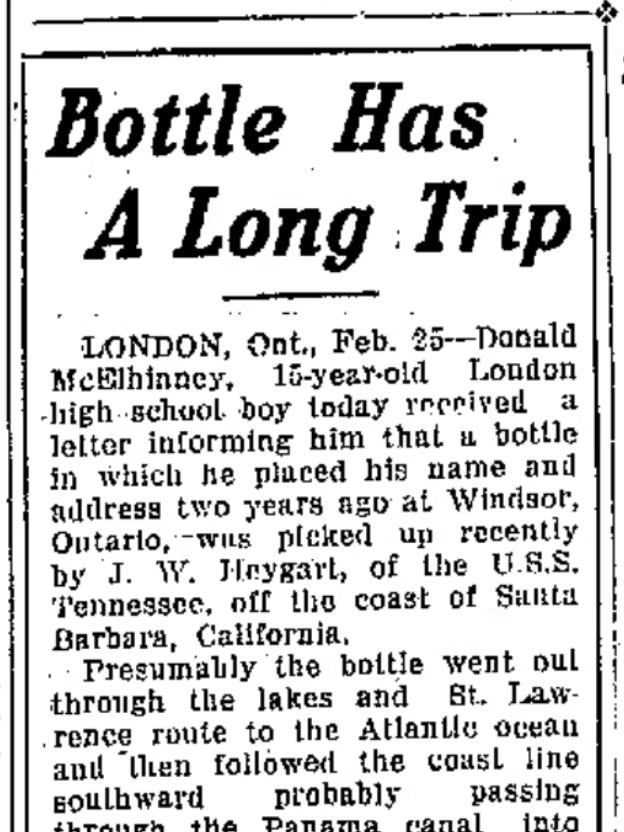
“Cast into River Here, Bottle Found in Pacific” and “Bottle Has a Long Trip” in The Detroit News and The Lethbridge Herald (February 25th, 1925)

Today’s stories, hailing from Detroit and Lethbridge, Alberta, offer complementary accounts of a message in a bottle and its long journey from the Detroit River to the Pacific Ocean. Donald McElhinney, a high schooler from London, Ontario, cast a pop bottle into the Detroit River in 1923. Two years later, off the coast of Santa Barbara, J.W. Heygart found the bottle. Both articles suggest, however improbably, that the bottle found its way through the lakes, down the St. Lawrence to the Atlantic, and then over to the Pacific through the Panama Canal.

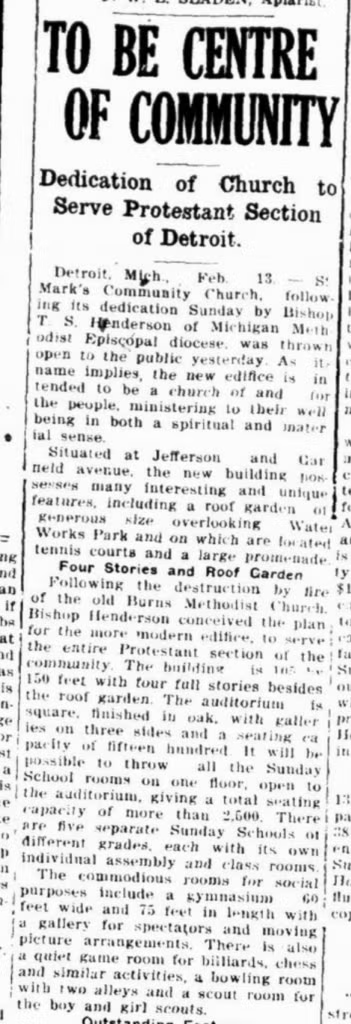
“To Be Centre of Community – Dedication of Church to Serve Protestant Section [Sect] of Detroit” in The Chronicle Telegraph (February 19th, 1920)

Today’s article, published in Windsor’s The Chronicle Telegraph, focuses on the dedication of St. Mark’s Community Church in Detroit, a church “of and for the people.” Boasting a revolving electric cross on its roof, and eventually attracting a congregation of over 3,000 people weekly, we might think of St. Mark’s, located at the intersection of Jefferson and Garland, as an early precursor of today’s megachurch. With a stunning riverfront view, a game room, an auditorium, a roof garden, and even a bowling alley, the church put community and fellowship at the center of their ministry, a space importantly dedicated to “all, irrespective of creed.” Protestantism and its various denominations (Baptist, Lutheran, Methodist, etc.) remained the most represented religion in Detroit at this time, but immigration and migration—due to employment opportunities at Ford—created an even richer constellation of faith in the region that included Catholicism, Islam, and Judaism. While St. Mark’s closed in 1972, the building still stands today.


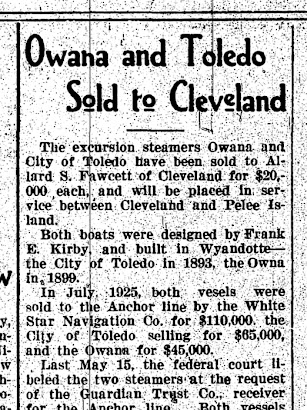
“Owana and Toledo [Steamers] Sold to Cleveland” in the Wyandotte Herald (February 4th, 1927)

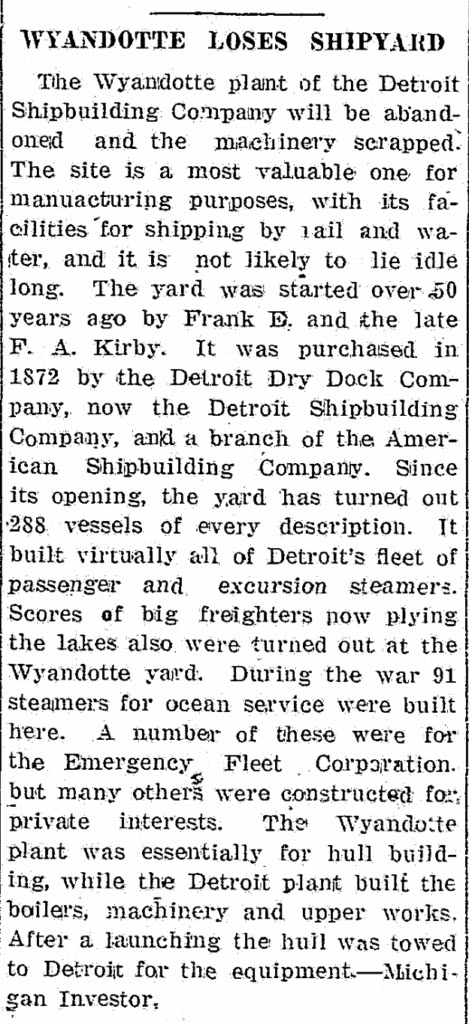
Considered Downriver’s “most historic and renowned shipyard” during its shipbuilding years, Wyandotte Shipyard, founded by naval architect Frank Kirby, produced over 200 cutting-edge ships between 1870 and 1923 for the Detroit Shipbuilding Company (Steffke). Today’s article looks at a major sale of two ships, named Owana and City of Toledo, which were built as ‘excursion steamers’ – steamboats designed to take passengers on leisure trips. The sale of the ships was due to a ‘libel,’ a process that initiates legal action against a ship, usually to claim damages or enforce a ‘maritime lien’. A maritime lien is a legal claim against a ship that gives the lienholder the right to take ownership of said ship. To satisfy the lien, the court can order the sale of the ship, which is exactly what we see in the article below; however, the rationale for the lien is not disclosed and requires further research. That’s enough for today’s crash course in admiralty law—I hope this article gives you a glimpse into Wyandotte’s essential role in the broader history of shipbuilding on the Great Lakes, by way of the Detroit River.

“Rotogravure Supplement – Mid-Winter Sports Number” in The Detroit Free Press (January 25th, 1925)

As Detroiters emerge, shivering, from their most recent polar vortex, they might be intrigued by a glimpse back at wintry scenes in their city from 100 years ago today. Today’s inaugural blog post features a photographic supplement from the January 25, 1925 edition of the Detroit Free Press produced using the relatively new rotogravure printing process, which enabled high-quality image reproduction in print newspapers. The supplement is full of photos by Free Press staff photographers R. Kindle and Joseph Kalec depicting winter leisure on the river. The Grosse Pointe Yacht Club embarks on a weekly series of ice boat tests (mostly on Lake St. Clair, which connects to the river from the north), while female skaters congregate near Belle Isle to participate in ‘rough and tumble’ games on the ice.