
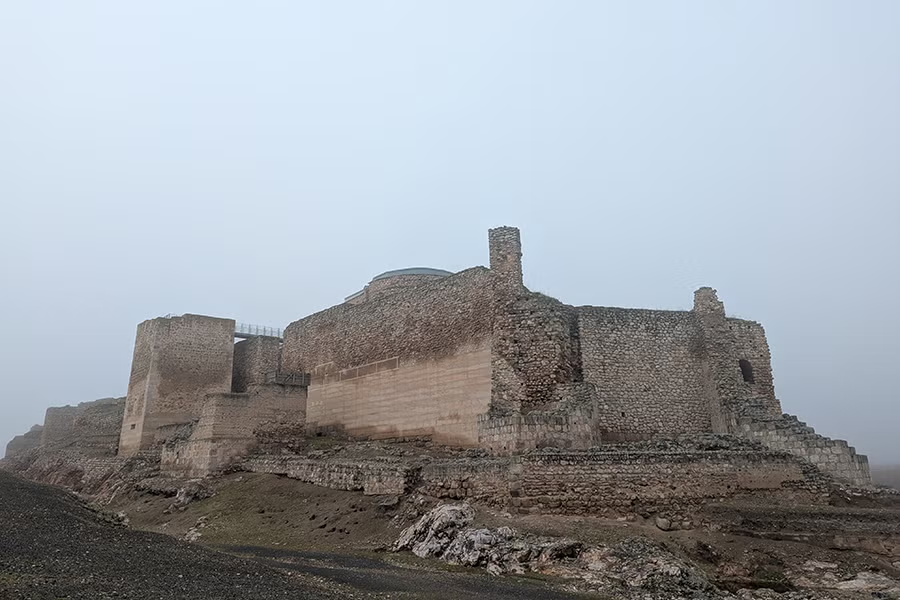
Sarah Slingluff Synopsis: Medieval fortresses, known as qal‘a, located in Islamic Spain (al-Andalus) were small structures located in rural areas. Few remain today, however. This talk presents three extant examples, examining first how these edifices are described in textual records and then proceeding with an analysis of the architectural and archaeological evidence for their function…
Category: Topics
Shadow Theater (Khayal al-Zill) in Late Ottoman Damascus
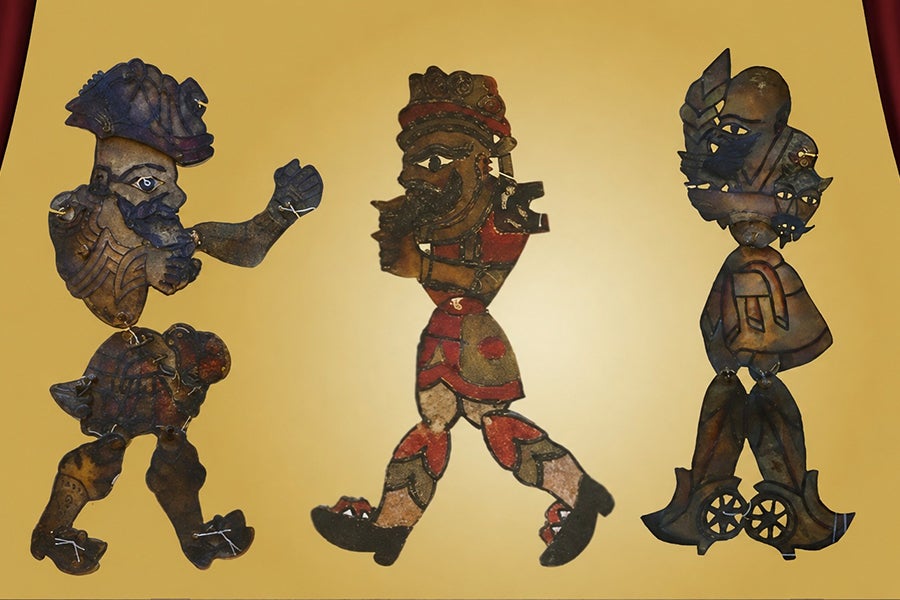
Hala Qasqas Synopsis: This talk explores khayal al-zill (shadow theater) as a central feature of recreation and urban sociability in late Ottoman Damascus. Focusing on nineteenth-century coffeehouses, it examines the material craft of translucent leather puppets, the performance practices of the puppeteer, and the interplay of light, music, colloquial speech, and improvisation. It shows how…
Colonial Propaganda in Algeria during World War II
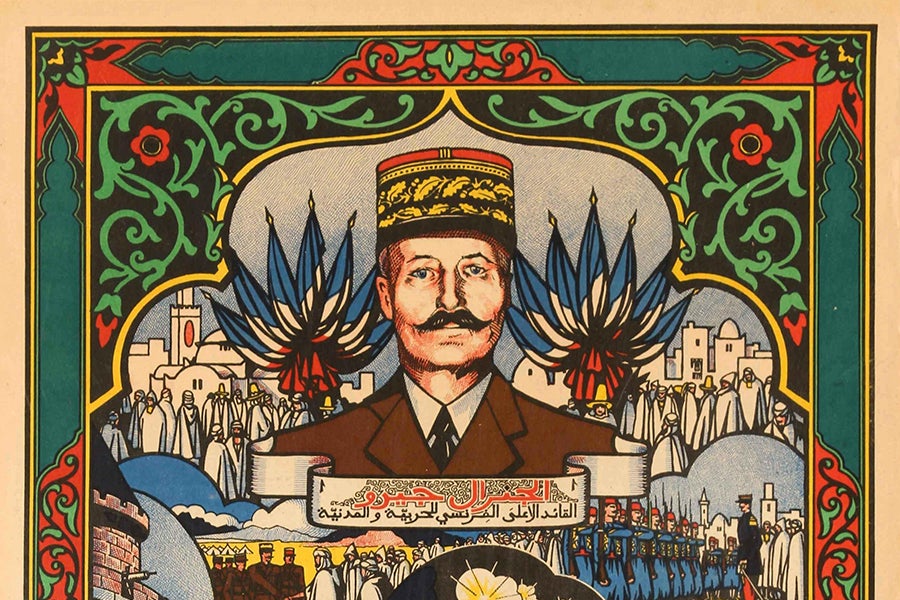
Lacy Murphy Synopsis: This talk examines how French colonial authorities in Algeria mobilized Islamic visual culture in wartime propaganda during World War II. Focusing on posters produced by both the Vichy regime and Free France, it explores how propagandists incorporated Arabic script and Islamic ornament into colonial visual culture to cultivate Muslim political loyalty during…
十六到十九世纪奥斯曼与萨法维领土上的咖啡与咖啡馆
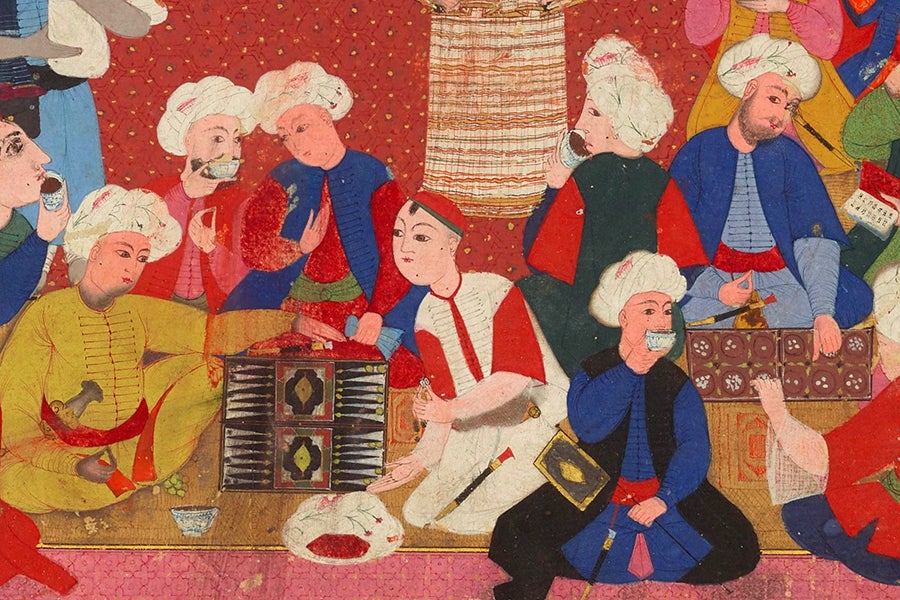
Farshid Emami 法尔希德·埃马米 李玥翎译 摘要: 原产于埃塞俄比亚高地的咖啡最初在十四与十五世纪的也门作为热饮享用。这种新型饮料在十六世纪时从阿拉伯半岛传播出去,咖啡馆也在奥斯曼帝国统治下的东地中海地区流行开来。十七世纪时,咖啡传入了萨法维王朝统治下的伊朗。本讲座探讨奥斯曼与萨法维领土上的咖啡馆建筑,聚焦于叙利亚阿勒颇、土耳其伊斯坦布尔、和伊朗伊斯法罕。咖啡馆作为新兴起的场所塑造并承载了新的城市社交模式,并催生了公共空间的扩展。 课后练习单: 辅助此视频的练习单在此。 参考文献: Alafandi, Rami. “The Waqf of Ibshir Mustafa Pasha.” L.I.S.A. – The Science Portal of The Gerda Henkel Foundation. David, Jean-Claude. Le waqf d’Ipšīr Pāšā à Alep (1063/1653): Étude d’urbanisme historique. Avec la collaboration de Bruno Chauffert-Yvart. Damascus: Presses de l’Ifpo, 1982. Emami, Farshid. “Coffeehouses, Urban Spaces,…
The Floral Borders of an Album Folio in the Aga Khan Museum
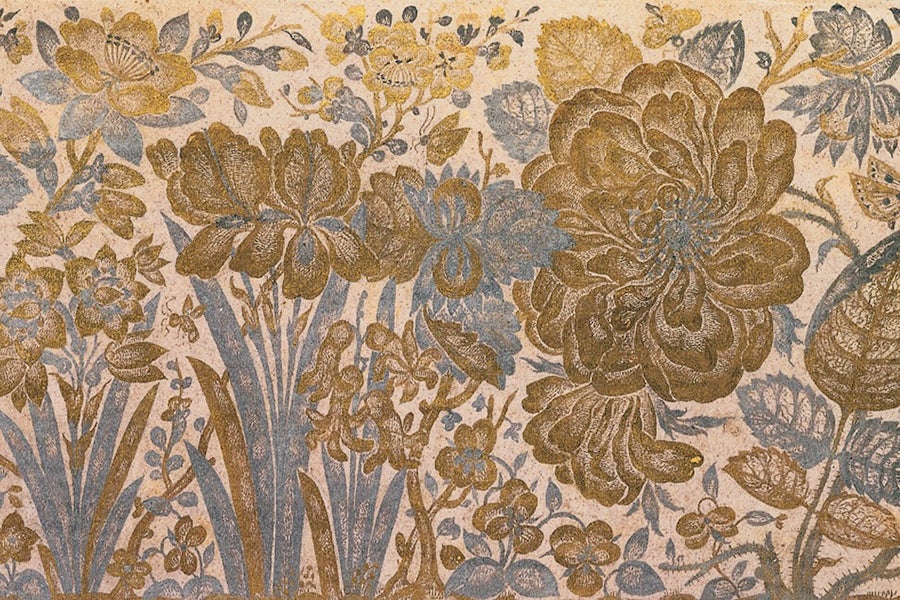
Michael Chagnon Synopsis: The Aga Khan Museum collection includes a folio from the so-called “Drouot” Album, named after the Parisian auction house where its contents were dispersed in 1982. At the center of the folio is a late seventeenth-century painting that was produced in Iran. It is executed in the nim qalam (“half-pen”) technique and…
Aisha Khalid’s “Your Way Begins on the Other Side” in the Aga Khan Museum
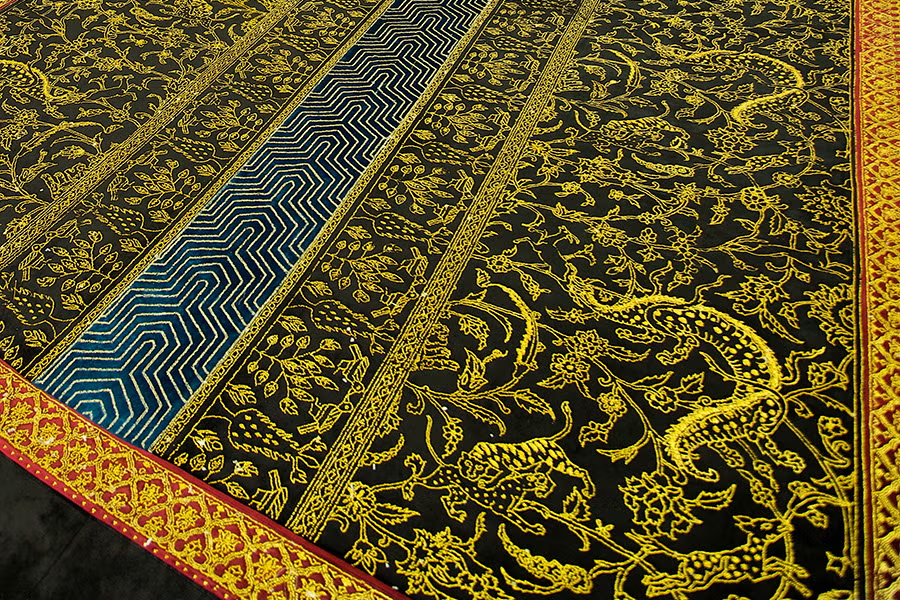
Elizabeth Rauh Synopsis: Aisha Khalid’s 2014 Your Way Begins on the Other Side is a large, dual-sided textile installation that weaves together various historical art traditions and materials across Islamic history and global contemporary art. Crafted by Khalid’s workshop team in Lahore, the artist’s research in embroidery and geometry as well as sacred environments are…
A Stone-Inlaid Water Fountain in the Aga Khan Museum

Patricia Blessing Synopsis: Indoor fountains such as this object, made of stone, with rich, multi-colored inlay and complex waterspouts, were common features in elite residences in Egypt and Syria from the Mamluk period onwards. Today, few of these fountains remain in situ. In Cairo, examples survive from the Ottoman period, for instance at the seventeenth-…
An Iznik Dish with a Garden Pavilion at the Aga Khan Museum

Charlotte Maury Synopsis: This talk discusses a dish that can be dated to seventeenth-century Iznik, the most important Ottoman ceramic production center. Drawing inspiration from natural forms such as saffron flowers and hyacinths, the artist fashioned the garden pavilion in a stylized and abstract manner. The building itself is an unusual feature, rarely encountered in…
Inscribing Emotion in a Musical Manuscript: The Book of Nine Tastes (Kitab-i nauras)
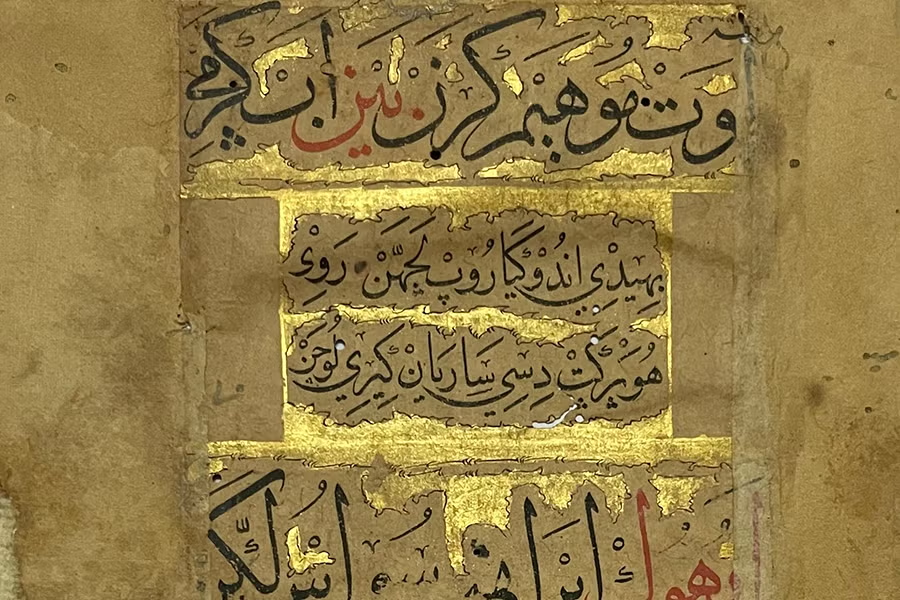
Zoë Woodbury High Khamseen Graduate Student Presentation Award 2025 Recipient Synopsis: This talk examines the Kitab-i Nauras, a Dakani song collection composed around 1600 CE and attributed to Ibrahim ‘Adil Shah II of Bijapur, as a multisensory work that drew together Indic and Persianate literary and musical traditions. By addressing manuscripts of the text written…
Espaces sacrés, cultures partagées : les synagogues du Caire et la vie et le patrimoine juifs en Égypte

Yoram Meital Traduction et enregistrement audio : Camille Grandpierre Résumé : Cette présentation explore les synagogues du Caire en les considérant comme des « témoins vivants » qui révèlent la richesse de la vie sociale, culturelle et religieuse des communautés juives de la ville, de la fin du XIXᵉ siècle à aujourd’hui. Elle met en…