The aridity of the Kingdom of Huarco is mainly the result of the Humboldt Current, an upwelling of cold water from the depths of the Pacific Ocean. This current (14˚-18˚ C) so cools the ocean that winds passing over the coast from the west carry little moisture. As a result, agriculture in the Kingdom of Huarco depended on a series of irrigation canals from the Río Cañete.
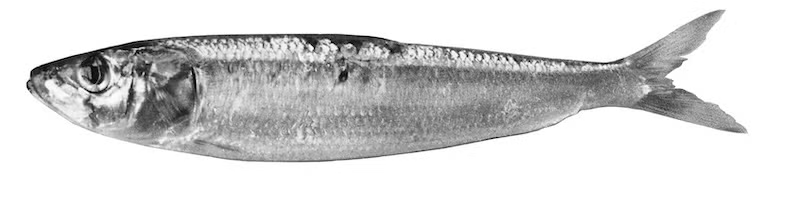
On the positive side, the Humboldt upwelling brings so many nutrients to the upper 100 meters of the ocean that the growth of plankton is extraordinary. Abundant algae and phytoplankton constitute Trophic Level 1 of the ocean ecosystem (the producers). Level 2 consumers include zooplankton such as copepods and euphausiids (krill),which in turn support millions of small fish such as sardines (Sardinops sagax) and anchovetas (Engraulis ringens). These small fish in turn support larger species such as flounder, mackerel, bonito, and several species of drums or croakers.
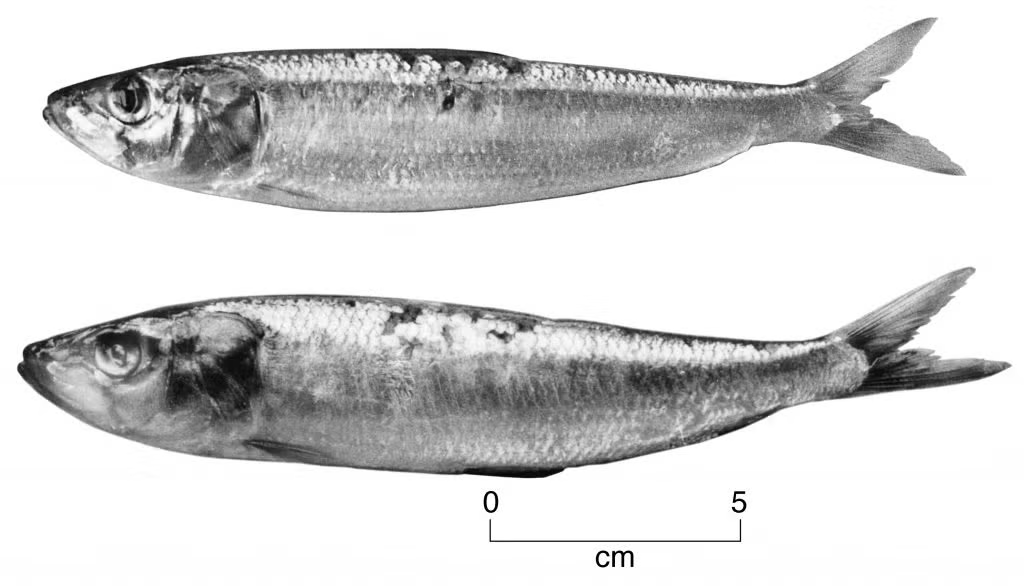
Figure 9. The Pacific sardine (Sardinops sagax), one of the small fish dried at Cerro Azul for export to inland agricultural communities (from Marcus 2016; see Publications, Memoir 59).
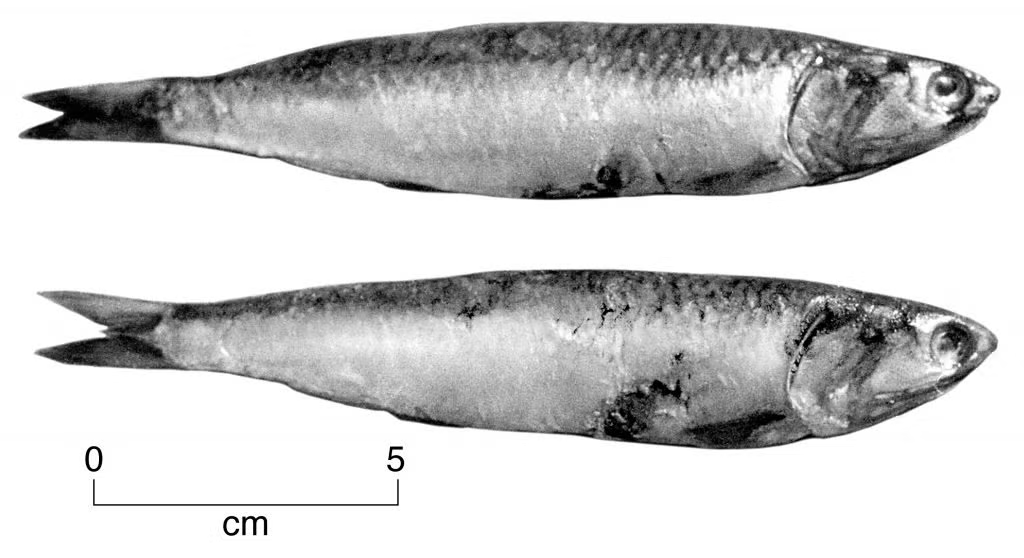
Figure 10. The anchoveta (Engraulis ringens) was another small fish that was dried and stored in sand-filled rooms at Cerro Azul (from Marcus 2016, Memoir 59).

Figure 11. The left-eye flounder (Paralichthys adspersus) (from Marcus 2016, Memoir 59).

Figure 12. Mackerel (Scomber japonicus peruanus) (from Marcus 2016, Memoir 59).

Figure 13. The Pacific bonito (Sarda sarda chiliensis) was not only consumed by the Late Intermediate populations at Cerro Azul, but also featured in their art (from Marcus 2016, Memoir 59).
The ocean bordering the Kingdom of Huarco displays at least two cycles of change, both unpredictable. One is a series of cycles—15 to 20 years in length—during which sardines and anchovetas alternate as the dominant small fish. It is believed that these cycles depend on alternating periods of cooler water (which favors larger zooplankton and hence anchovetas) and warmer water (which favors smaller zooplankton and hence sardines). Some oceanographers propose to call the cycles of sardine dominance “El Viejo” and those of anchoveta dominance “La Vieja.”
A more widely publicized cycle of change is the phenomenon called El Niño, or “the Southern Oscillation.” This cycle is caused by unpredictable changes in the Pacific trade winds. These winds usually collect heat and water vapor from the Peruvian coast and blow it westward toward Indonesia, allowing the cool Humboldt Current to dominate.
Periodically, however, these trade winds relax, leaving the heat and water vapor in place. This allows tropical water masses to override the Humboldt Current. The results can be (1) a severe depletion in plankton, and hence fish, and (2) damaging rains on the coast. Some climatologists suspect that El Niño events are occurring more frequently as a result of global warming (see Publications; Marcus 2016, Memoir 59 and Marcus et al. 2019:351-365).
Although they caught many species of fish, the occupants of Cerro Azul specialized in the industrial-level harvesting of sardines and anchovetas (see the section on Fishing). These fish were dried and shipped inland in exchange for maize, beans, and other agricultural products. The people of Cerro Azul also hunted sea lions, probably with the slings and bolas found at the site. In at least one case, sea lions were roasted in the type of earth oven that Quechua speakers call a pachamanca.

Figure 14. An example of a Late Intermediate sling from Cerro Azul (from Marcus 2016, Memoir 59).

Figure 15. Example of a Late Intermediate bolas from Cerro Azul (from Marcus, Memoir 59).

Figure 16. This mandible from a sea lion (Otaria byronia) was found in a roasting pit (or earth oven) at Cerro Azul (from Marcus 2016, Memoir 59).
Copyright © 2021 University of Michigan Museum of Anthropological Archaeology (UMMAA)

