
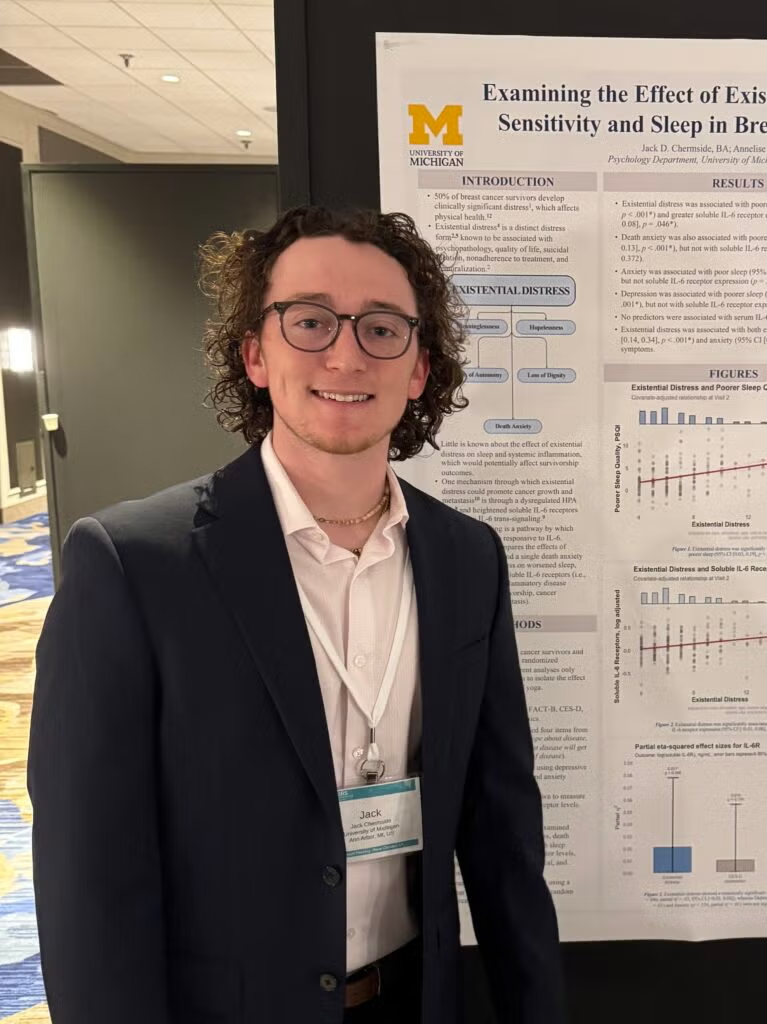
Jack Chermside is the Senior Lab Manager of the Michigan Psychoneuroimmunology (PNI) Lab, where he has directed lab operations since its founding in Fall 2024. As the lab’s inaugural manager, Jack built its infrastructure from the ground up — training personnel, establishing protocols and IRB processes, and setting up both the dry and wet lab spaces — and now coordinates the lab’s full portfolio of studies. These include the MOXIE Study (a pilot study using wearable devices and physiological and self-report measures in lab and real-world settings to characterize how objective and subjective measures of stress relate and generalize across contexts) conducted in collaboration with the Tewari Lab, the RUSH Study (a naturalistic stress study surrounding sorority rush, using repeated biomarker sampling, wearable devices, and ecological momentary data collection), a systematic review and meta-analysis (to examine the effect of distress on inflammatory responses to acute stress), and a CAR-T cell therapy study (to examine how psychological and behavioral factors influence cytokine release syndrome and depression in CAR-T cell therapy patients, and tests the feasibility and preventive potential of low-burden mind–body interventions using daily check-ins, wearables, and immune biomarkers) conducted in collaboration with the Choi Lab and supported by the Eisenberg Family Depression Center. He also hires, trains, and supervises the lab’s research assistants, and oversees participant recruitment and onboarding, in-lab data collection, biospecimen handling and processing, regulatory compliance across all active studies, and data management, including storage, cleaning, and processing.
Jack graduated with honors from the University of Michigan, where he studied psychology and philosophy. He completed a thesis on the philosophy of science of psychology examining the history of existential philosophy and psychology. He is fascinated by the intersection of psychology and medicine, psycho-oncology, and cancer neuroscience, and is especially interested in how distinctively human capacities — the ability to exercise a sense of personal responsibility and agency, the search for meaning and purpose, the awareness of mortality, and subjectivity — shape immune function and mental health, bringing existential and humanistic constructs into psychoneuroimmunology through rigorous measurement and biological testing.
His own research on existential distress, sleep, and IL-6 signaling sensitivity in breast cancer survivors was selected for both a blitz talk and a poster at the 2026 Psychoneuroimmunology Research Society Annual Meeting, where he received the PNIRS Trainee Scholar Travel Award.
Outside the lab, Jack played Division I baseball and remains an avid reader of classic literature, philosophy, and history. He enjoys the outdoors in all weather, biking, and weightlifting, volunteers at the University Hospital, and loves both playing and listening to music.