
觀衆反響
Visitor Reflections
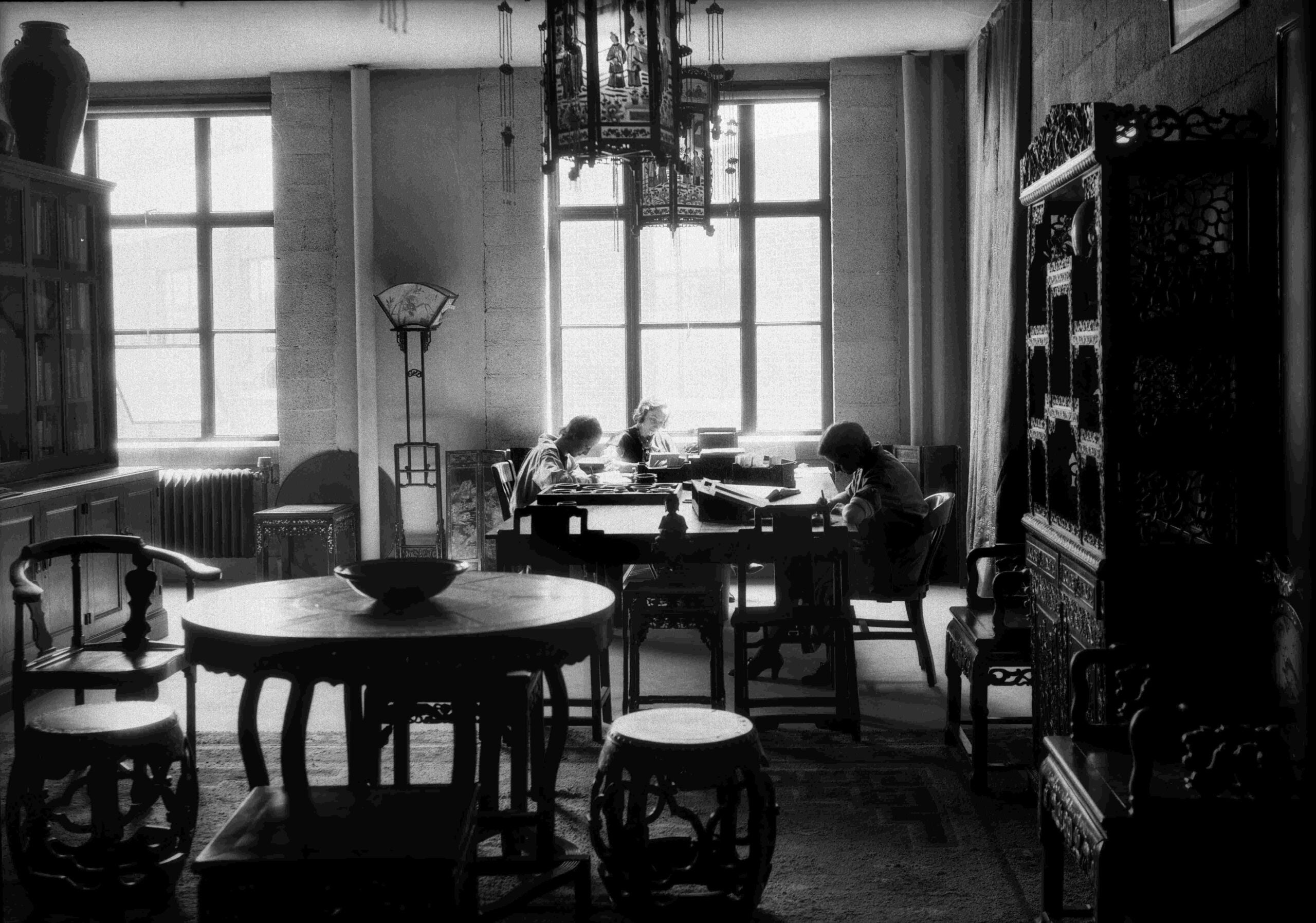
Students seated at table in the Alexander Ruthvan Building, where the Chinese Collection was stored, Museum of Anthropology, ca. 1932-1934; BL006255. In the digital collection Bentley Historical Library: Bentley Image Bank. University of Michigan Library Digital Collections.
觀衆反響:人們都記住了什麽?
Visitor Reflections: What People Remembered
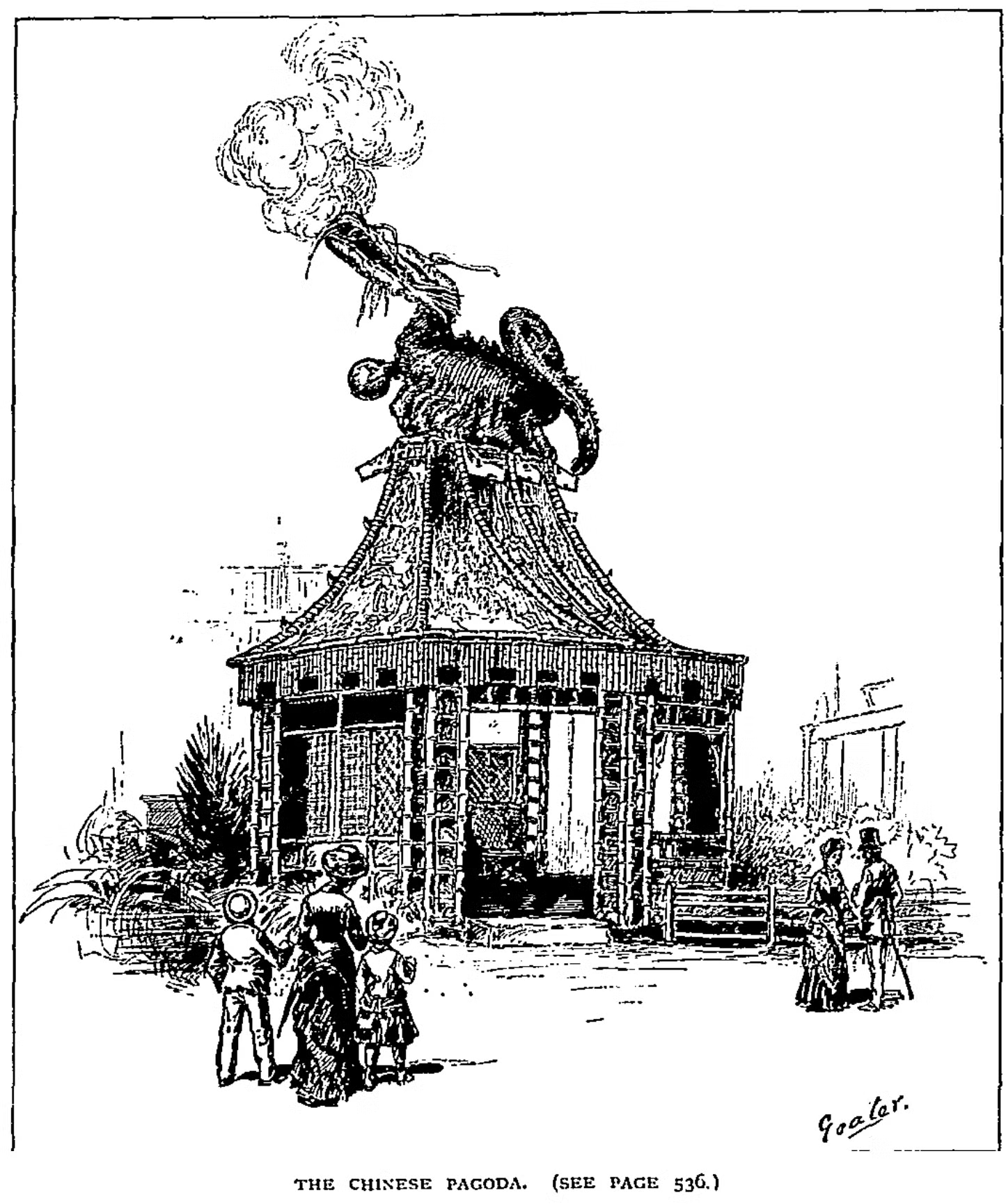
The Chinese Pagoda. St. Nicholas: An Illustrated Magazine for Young Folks. Original image published in Annie C. Goater, “What Joe and Jean Saw at the New Orleans Exposition: Joe’s Letter,” May 1885, 533. 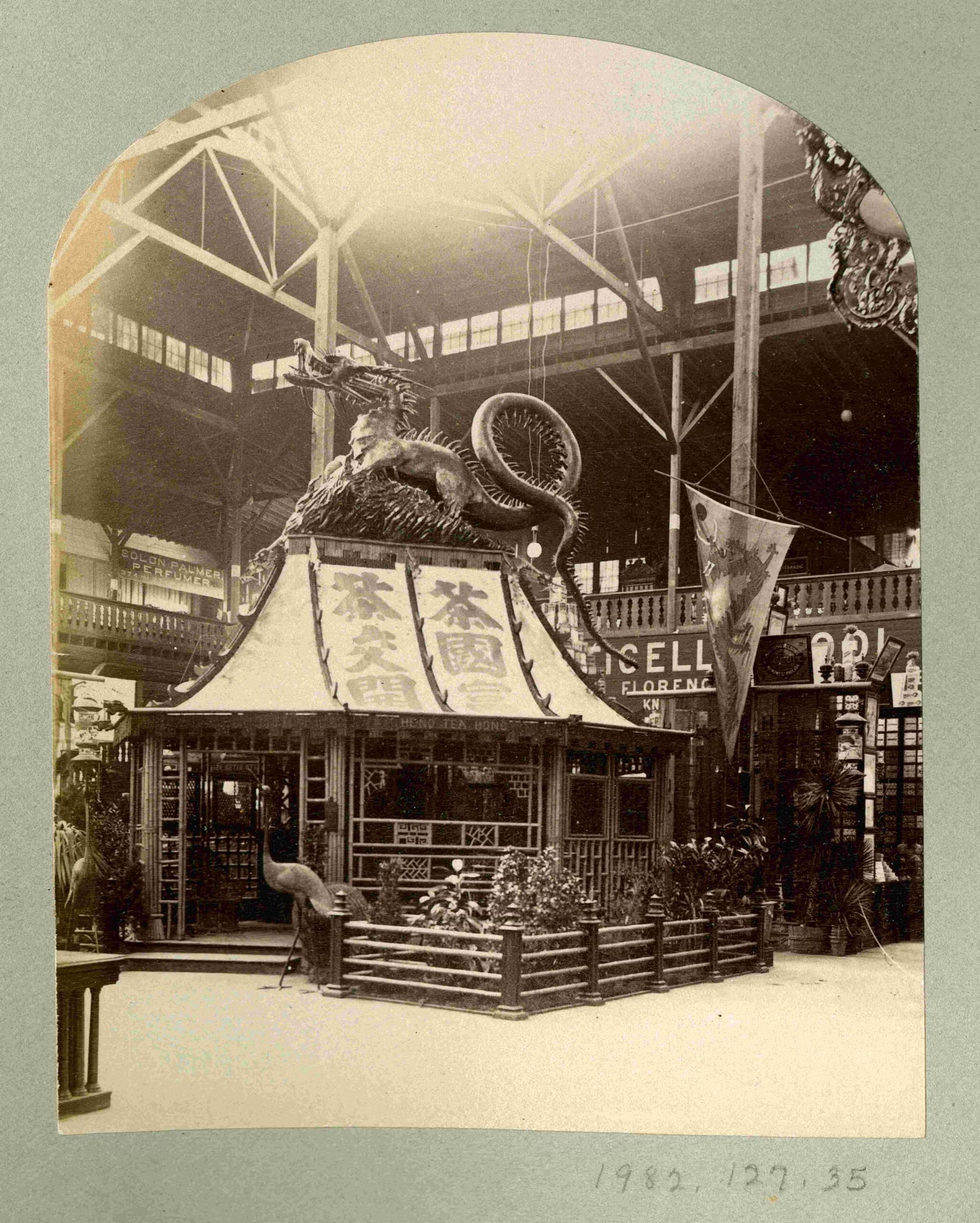
Chinese Exhibit, 1884-1885. Historic New Orleans Collection. Original image created by The Centennial Photograph Company. 1982.127.35. 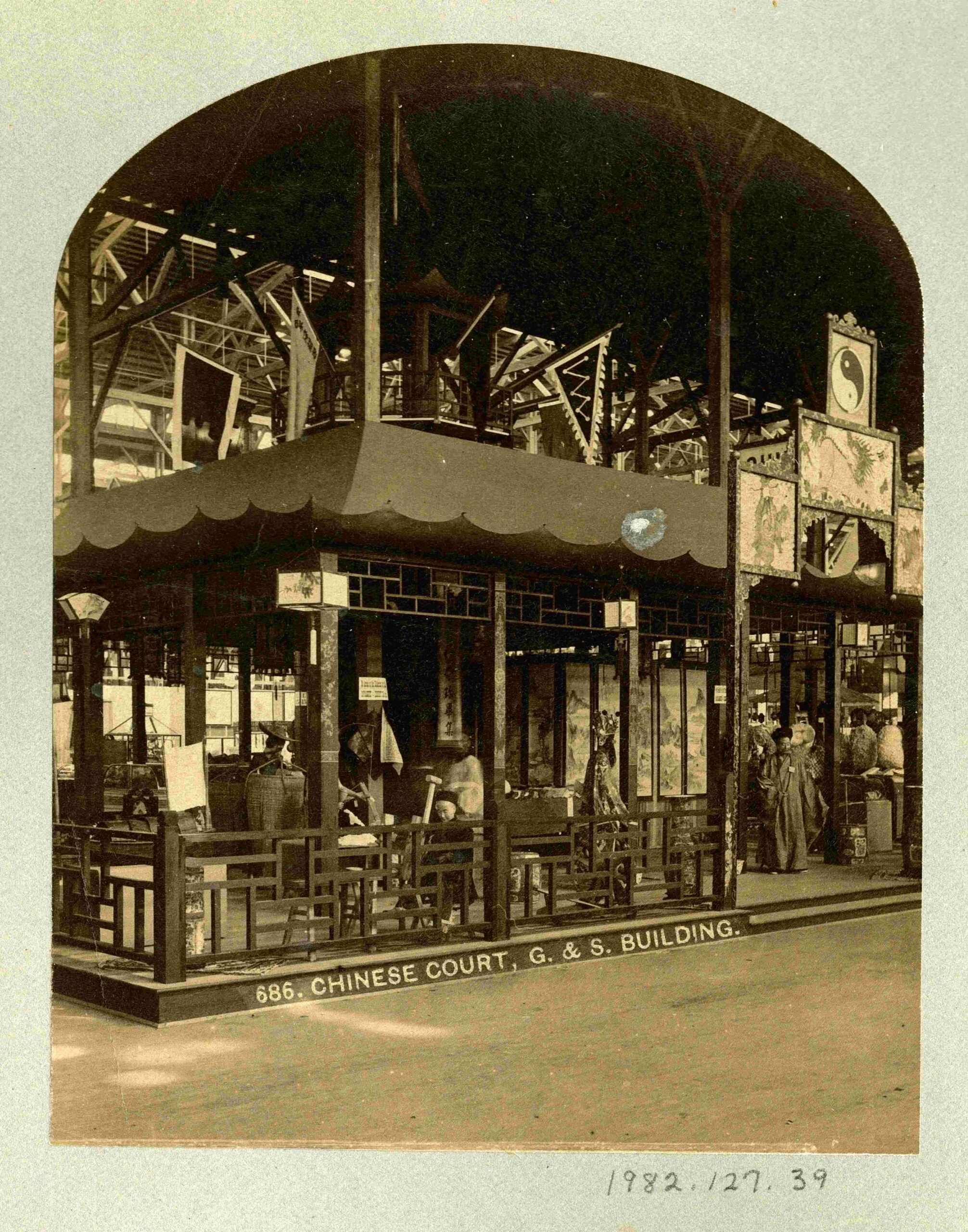
Chinese Court, G. & S. Building, 1884-85. Historic New Orleans Collection. Original image created by The Centennial Photograph Company. 1982.127.39.
The commissioners of the Chinese exhibition attempted to create an idealized vision of China. From today’s perspective, this effort might appear Orientalist or reinforcing stereotypes. Many American visitors were drawn to the Chinese exhibition by their curiosity about such an exotic and distinctly different world.
St. Nicholas was a widely printed American children’s magazine that recorded one child’s impressions about the Chinese exhibition. In “Jean’s Letter,” the first impression of the Chinese exhibition was a giant red dragon that snorted steam, sitting atop a Chinese tea house. However, the tea house was not actually part of the Chinese exhibition, but a commercial display created by Martin, Gillett & Company from Maryland. The company promoted “He-No” Tea, claiming that it was popular in China. In an 1889 trademark case, a Maryland court found that the company’s product was a blend of different Chinese tea leaves, and that there was no specific Chinese tea named “He-No.”
The actual Chinese exhibition was a rectangular pavilion hung with brightly colored flags and banners. Chinese paintings and woodcrafts were displayed above the main entrance. The exhibition area was an open space surrounded by a short wooden fence, so that visitors could observe the exhibition from outside and enter if they were interested. “Jean’s parents” represented average American visitors who spent hours looking at the curiosities, while Jean herself, as a child, had to listen to her parents in order to understand these Chinese products. As Jean wrote, “[the Chinese] have filled it with a great many interesting things … I couldn’t get interested in them, because I didn’t know what they were for, until Papa explained them to me.” Jean’s experience suggests that the appearance of Chinese objects attracted American visitors, but they often needed explanations and written descriptions to understand their actual uses and meanings.
Harper’s Bazaar was a fashion magazine that focused on the crafted objects and visual representations in the exhibition. The magazine writer admired the many mannequins that demonstrated Chinese life through writing, cotton weaving, and the operation of machines. The figures were made with such perfection that many visitors thought that they were real, especially those who were near-sighted. Historic images, shown on the right, captured how these Chinese figures presented Chinese life like museum dioramas or storefront displays.
In addition, the writer was also impressed by the hanging Chinese scrolls, believing that “[they] were scarcely less interesting in a literary way than the printed literature upon industrial topics.” These well-framed scrolls delivered good wishes from the CMCS and the Chinese people through the exhibition. The writer also quoted words from the scrolls to support this observation. Some scrolls from this series are still preserved in the Museum’s collection. One example, UMMAA 16930, states that “the collection of rare and precious things [at this Exposition] causes all who see it to express their delight.” The Chinese calligraphy was written on yellow-green Xuan paper attached to a thick pink silk backing. The writer, Jian Tinghua 簡庭華, courtesy name Wenzao 文藻, wrote the scroll in Zhuan-shu and Kai-shu, two styles of traditional Chinese calligraphy. The Qing clearly understood their goals in participating in this exposition, and they sought to present a positive image of China through forms of expression familiar to them.
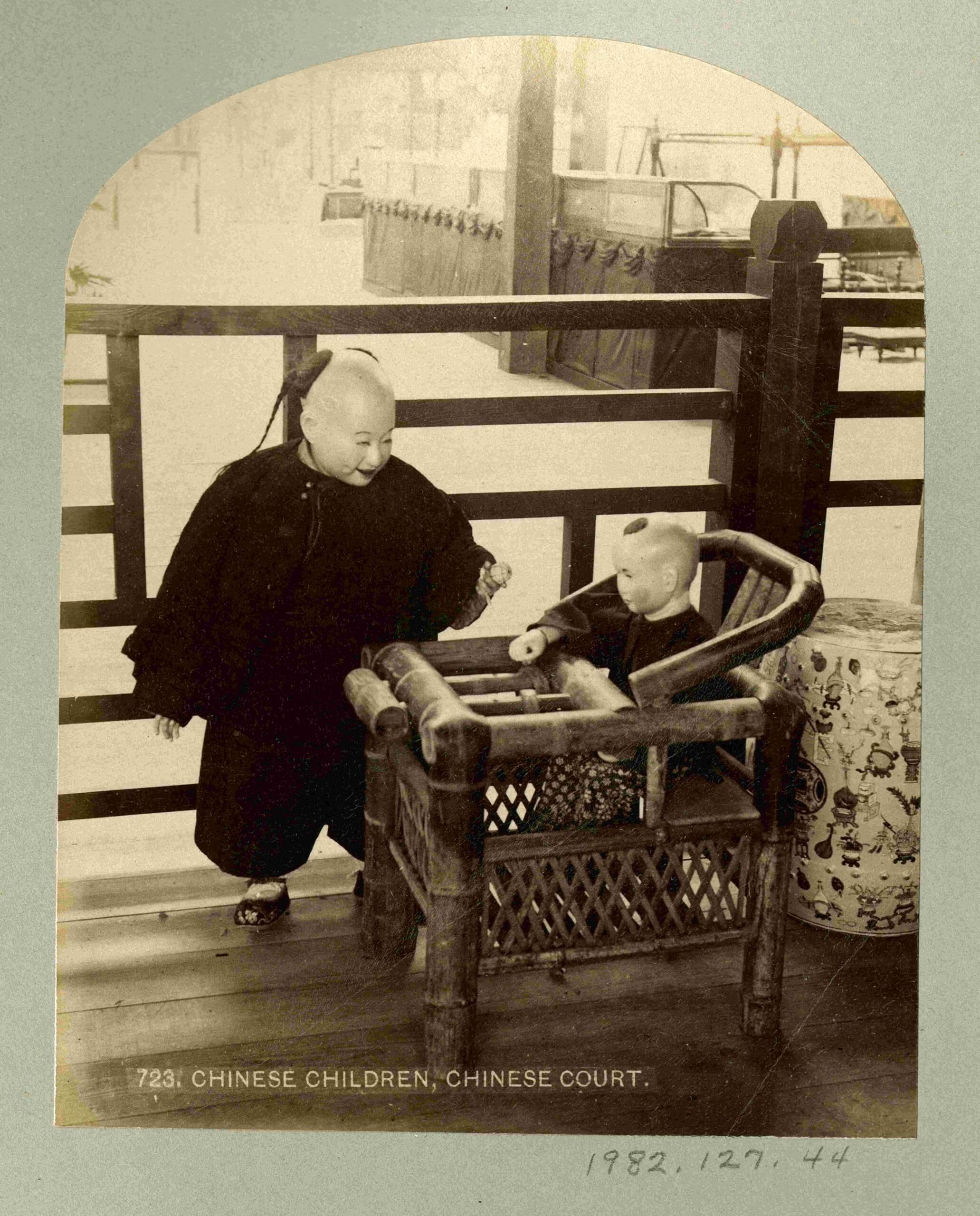
Chinese Children, Chinese Court, 1884-1885. Historic New Orleans Collection. Original image created by The Centennial Photograph Company. 1982.127.44. 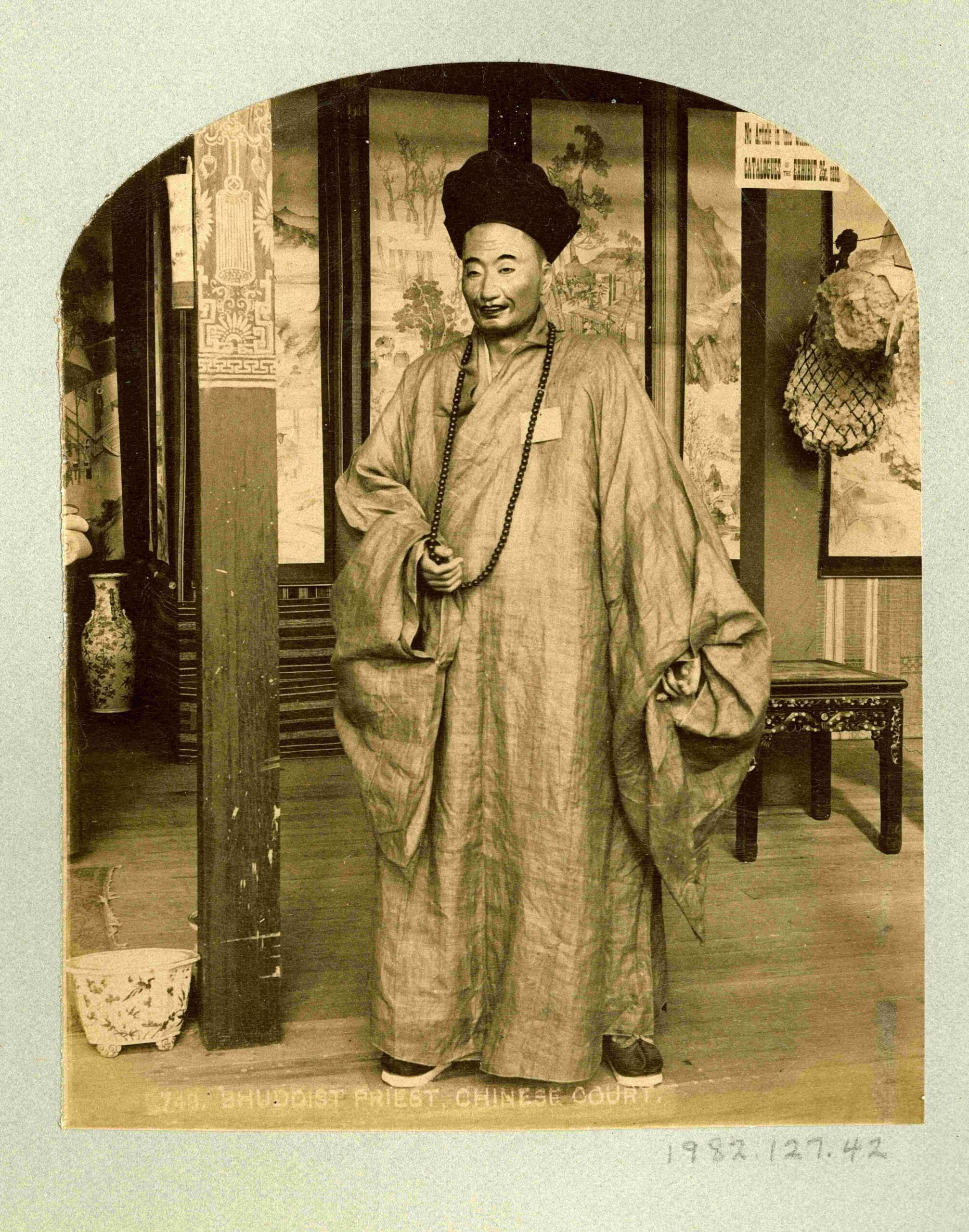
Buddhist Priest, Chinese Court, 1884-1885. Historic New Orleans Collection. Original image created by The Centennial Photograph Company. 1982.127.42. 
Chinese Cotton Gin, Main Building, 1884-1885. Historic New Orleans Collection. Original image created by The Centennial Photograph Company. 1982.127.43. 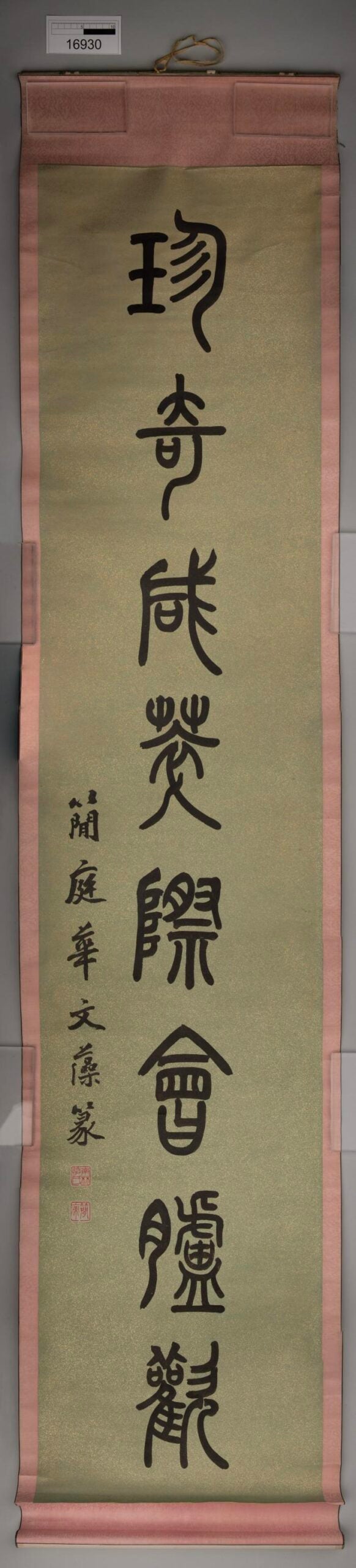
Chinese Calligraphy Scroll on Yellow-Green Xuan Paper with Pink Silk Backing, late 19th century. Chinese Government Collection, UMMAA 16930. This work is licensed under CC BY-NC-SA 4.0.
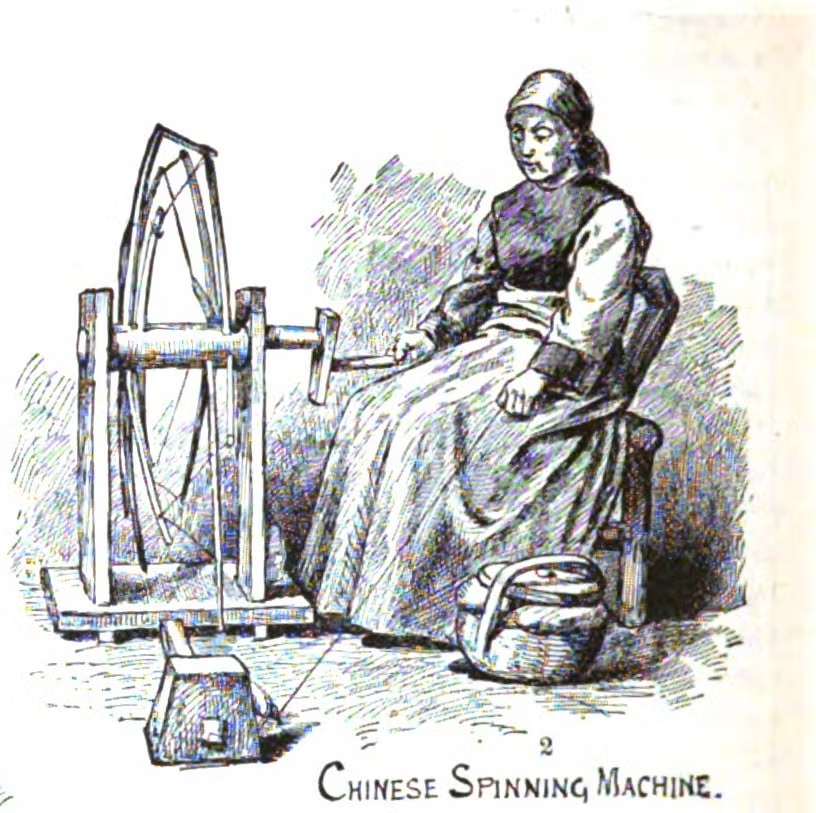
Chinese Spinning Machine. Demorest’s Monthly Magazine. Original image published in W. J. Demorest, E. L. Demorest, and J. C. Croly, eds., “The Chinese Exhibit at the New Orleans Exposition,” July 1885, 556. 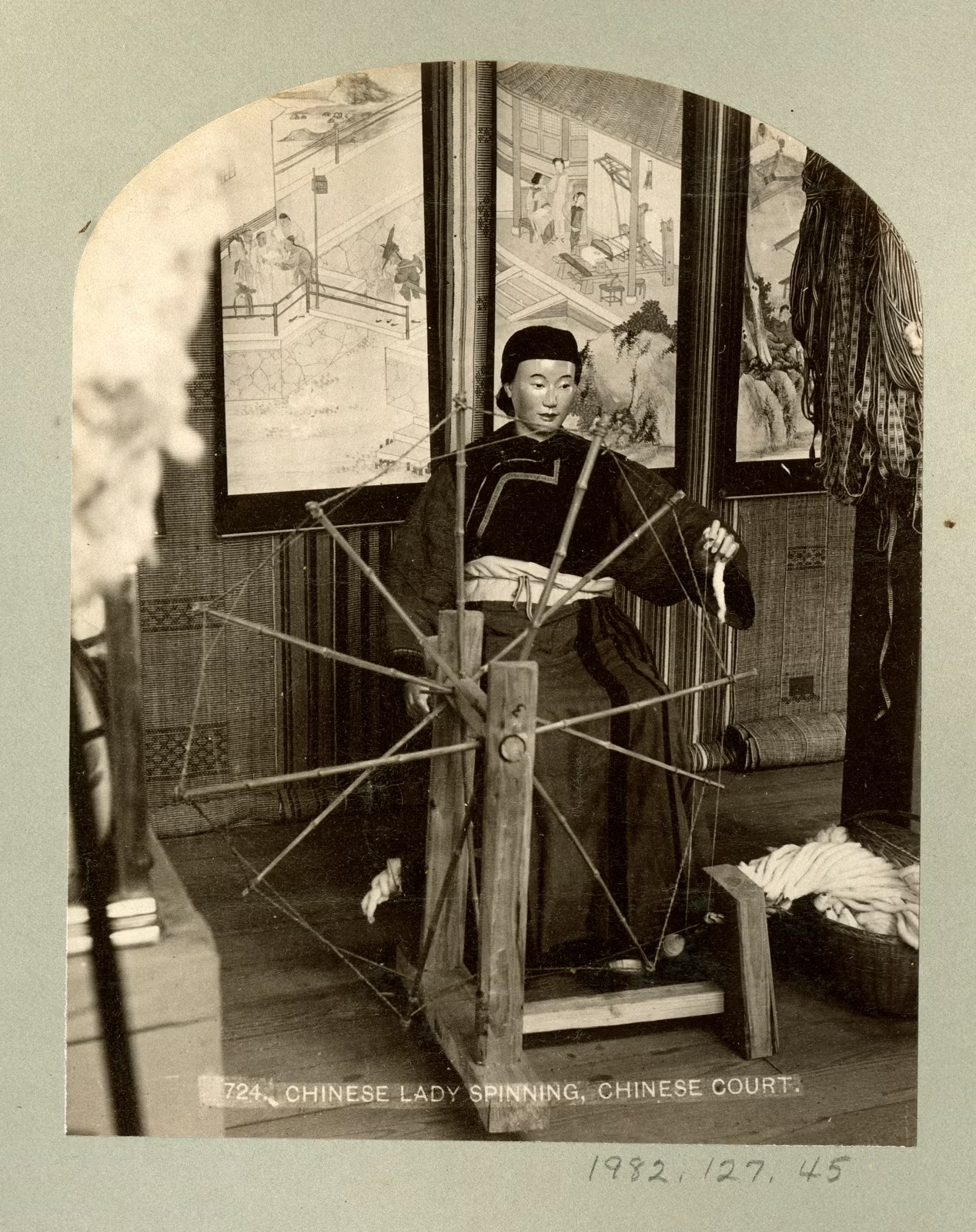
Chinese Lady Spinning, Chinese Court, 1884-1885. Historic New Orleans Collection. Original image created by The Centennial Photograph Company. 1982.127.45.
Demorest’s Family Magazine, also known as Demorest’s Monthly Magazine, was published from 1860 to 1899. In covering the China exhibit at the Cotton Centennial, its editor devoted considerable attention to the condition of the Chinese cotton industry, including the family-based nature of cotton-yarn production and the difficulties foreign investors faced in introducing mechanized manufacturing during this period. The editor clearly quoted specific passages from the CMCS situation report of 1884, titled The Cultivation and Manufacture of Cotton in China. The report stated that most Chinese cotton “never leaves the farm where it is raised except in the shape of cloth,” with all the processes of manufacturing being carried out on the “premises.” The word “premises” in the report referred to a production unit of two or three families who joined their labor and divided the products and profits from cotton processing. Competition between local and foreign cotton cloths also highlighted in the report that suggests the statue of Chinese cotton’s dominance was challenged but not yet displaced by imported cotton.
The magazine mentioned several attempts in Shanghai to establish spinning and weaving factories. However, these initiatives encountered empty treasuries and opposition from foreign competitors. Conflicts of interest among foreign actors who wished to invest in China’s industry contributed to these failures, rather than local Chinese resistance. The editor seemed quite regretful about these failures and concluded that the Chinese people, as well as this vast country, could have benefited from the labor-saving and comfort-giving inventions displayed in the Main Building of the exposition. Perhaps, the editor believed, a different life might have been in store for many Chinese people.