
Continuing with the theme of run-running on the Detroit River, today’s article hails from Ontario’s Newmarket Era. An opinion piece by the Women’s Christian Temperance Union—an international, women-led organization committed to social and moral reform through outlawing alcohol—documents and offers some scathing commentary on a legal case involving rum running.
According to this account, the proprietor of a Canadian dock (the defendant) agreed to ship a consignment of beer belonging to the plaintiff’s company across the river, but the dock proprietor broke his agreement. The alcohol company asked the Court to force the dock owner to fulfill his agreement, but the Court declined, on the grounds that to do so would be to recognize rum-running as a legitimate Canadian industry.
The WCTU is still active today, as indicated by a recent article commemorating the organization’s 150-year anniversary.
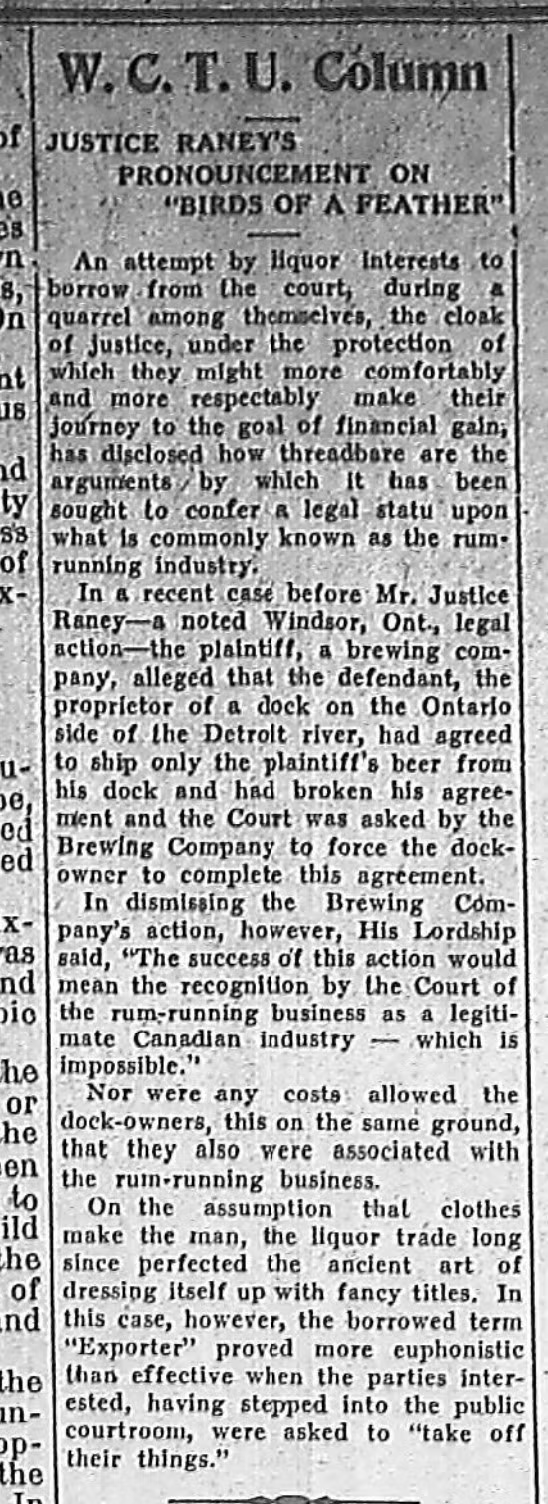
Transcript:
An attempt by liquor interests to borrow from the court, during a quarrel among themselves, the cloak of justice, under the protection of which they might more comfortably and more respectably make their journey to the goal of financial gain, has disclosed how threadbare are the arguments by which it has been sought to confer a legal status upon what is commonly known as the rum-running industry.
In a recent case before Mr. Justice Raney—a noted Windsor, Ont., legal action—the plaintiff, a brewing company, alleged that the defendant, the proprietor of a dock on the Ontario side of the Detroit river, had agreed to ship only the plaintiff’s beer from his dock and had broken his agreement and the Court was asked by the Brewing Company to force the dock owner to complete this agreement.
In dismissing the Brewing Company’s action, however, His Lordship said, “The success of this action would mean the recognition by the Court of the rum-running business as a legitimate Canadian industry – which is impossible.”
Nor were any costs allowed the dock-owners, this on the same ground, that they also were associated with the rum-running business.
On the assumption that clothes make the man, the liquor trade long since perfected the ancient art of dressing itself up with fancy titles. In this case, however, the borrowed term “Exporter” proved more euphonistic than effective when the parties interested, having stepped into the public courtroom, were asked to “take off their things.”
Original Article:
Citation:
“Justice Raney’s Pronouncement on ‘Birds of a Feather.’” Newmarket Era [Newmarket, Ontario], 2 Nov. 1928, https://news.ourontario.ca/2426622/page/8. Ontario Community Newspapers Portal. Accessed 13 October 2025.