

فرشيد ايمامى
ترجمة يمنى نيازي
نبذة
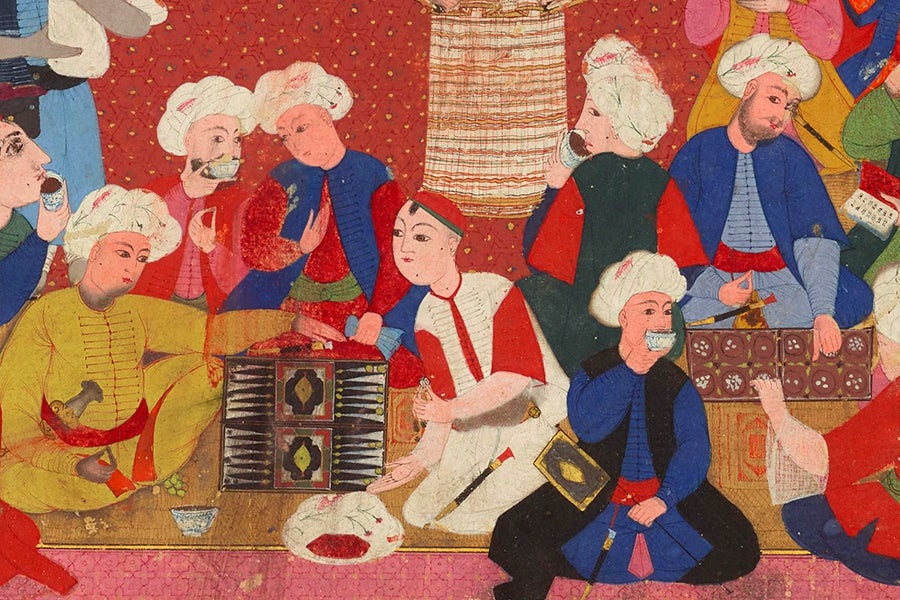
نبات أصلي في مرتفعات إثيوبيا، تم استهلاك القهوة لأول مرة كمشروب ساخن في اليمن خلال القرن الرابع عشر أو الخامس عشر. خلال القرن السادس عشر، انتشر المشروب الجديد خارج شبه الجزيرة العربية وانتشرت المقاهي في منطقة شرق البحر الأبيض المتوسط التي كانت تحت الحكم العثماني. في القرن السابع عشر، تم تقديم القهوة إلى إيران الصفوية. يستكشف هذا العرض التقديمي هندسة المقاهي في الأراضي العثمانية والصفوية ، مع التركيز على مدن حلب (سوريا) واسطنبول (تركيا) وأصفهان (إيران). كمؤسسات اجتماعية جديدة ، شكلت المقاهي واستضافت أشكالاً جديدة من التواصل الاجتماعي الحضري وساهمت في توسيع المجال العام.
ترجمة النبذة: ياسمين تكان
المراجع
Alafandi, Rami. “The Waqf of Ibshir Mustafa Pasha.” L.I.S.A. – The Science Portal of The Gerda Henkel Foundation. 
David, Jean-Claude. Le waqf d’Ipšīr Pāšā à Alep (1063/1653): Étude d’urbanisme historique. Avec la collaboration de Bruno Chauffert-Yvart. Damascus: Presses de l’Ifpo, 1982.
Emami, Farshid. “Coffeehouses, Urban Spaces, and the Formation of a Public Sphere in Safavid Isfahan.” Muqarnas 33 (2016): 177–220.
Hattox, Ralph S. Coffee and Coffeehouses: The Origins of a Social Beverage in the Medieval Near East. Seattle: University of Washington Press, 1988.
Özkoçak, Selma Akyazıcı. “Coffee-houses: Rethinking the Public and Private in Early Modern Istanbul.” Journal of Urban History 33, no. 6 (2007): 965–86.
Watenpaugh, Heghnar Zeitlian. The Image of an Ottoman City: Imperial Architecture and Urban Experience in Aleppo in the 16th and 17th Centuries. Leiden: Brill, 2004.
الاستشهاد
Farshid Emami, “القهوة والمقاهي في الأراضي العثمانية والصفوية، ١٥٠٠–١٨٠٠م,” Khamseen: Islamic Art History Online, published 15 January 2026.
Farshid Emami (Ph.D., Harvard University, 2017) is Associate Professor in the Department of Art History at Rice University. He specializes in the history of Islamic architecture, urbanism, and the arts, with a focus on the early modern period and Safavid Iran. He is the author ofIsfahan: Architecture and Urban Experience in Early Modern Iran (Penn State University Press, 2024). His scholarly interests include transregional histories of early modernity, social experiences of architecture and urban spaces, and the intersections of architecture and literature. In addition to his publications on Safavid art and architecture, he has written on topics such as lithography in nineteenth-century Iran and modernist architecture and urbanism in the Middle East.