

Amanda Phillips
Synopsis:
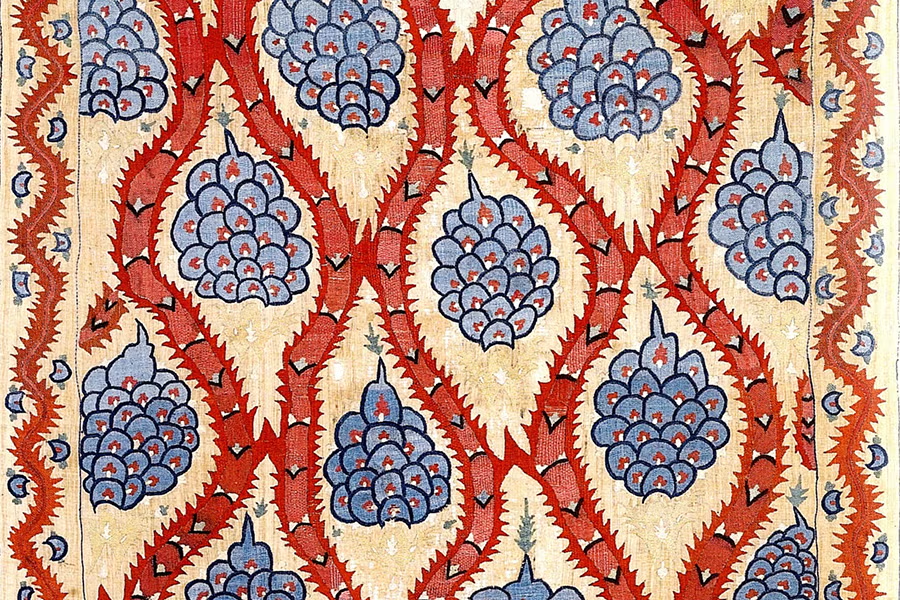
A large-scale Ottoman embroidery, now at the Aga Khan Museum in Toronto, may have been used as a quilt- or mattress-cover in the home of a relatively wealthy individual. It was probably made by a professional workshop, which had access to large pieces of linen ground fabric as well as to silk thread dyed with pigments made from madder roots, insect shells, iron filings, and other substances. These animal, vegetable, and mineral materials were used by workers to accomplish a final product that contrasts improbably blue pinecones with a scarlet and crimson lattice-work frame. The cover would have graced the multi-functional interior of an Ottoman home. When not in use, it would have been neatly folded with its colorful motifs facing out and placed on an open shelf for all to admire.
Worksheet:
A worksheet for this video is available here.
Also visit the Khamseen Worksheets page here.
Selected References:
Bilgi, Hülya and İdil Zanbak. Ottoman Embroideries in the Sadberk Hanim Museum Collection: … Skill of the Hand, Delight of the Eye. Istanbul: Sadberk Hanım Museum, 2012. 
Denny, Walter and Sumru Krody. The Sultan’s Garden: The Blossoming of Ottoman Art. Washington, D.C.: The Textile Museum, 2013.
Ellis, Marianne and Jennifer Wearden. Ottoman Embroidery. London: Victoria and Albert Museum, 2001.
Krody, Sumru. Flowers of Silk and Gold: Four Centuries of Ottoman Embroidery. Washington, D.C.: The Textile Museum. 2000.
Mackie, Louise. Symbols of Power: Luxury Textiles from Islamic Lands, 7th-21st Century. New Haven and London: Yale University Press, 2015.
Citation:
Amanda Phillips, “A Large Ottoman Embroidery with Pinecones in the Aga Khan Museum,” Khamseen: Islamic Art History Online, published 22 September 2026.

Amanda Phillips received her DPhil at Oxford and teaches Islamic art at the University of Virginia. She has focused mostly on craft traditions and material culture in the Ottoman Empire. Art, objects, and commodities are the main topic of her first book Everyday Luxuries (2016), and her second book, Sea Change (2021), argues that textiles of all kinds twined their way through every facet of life in the Ottoman Empire. Her current project is about florimania during the early modern period, and is supported by a fellowship at Dumbarton Oaks.
