

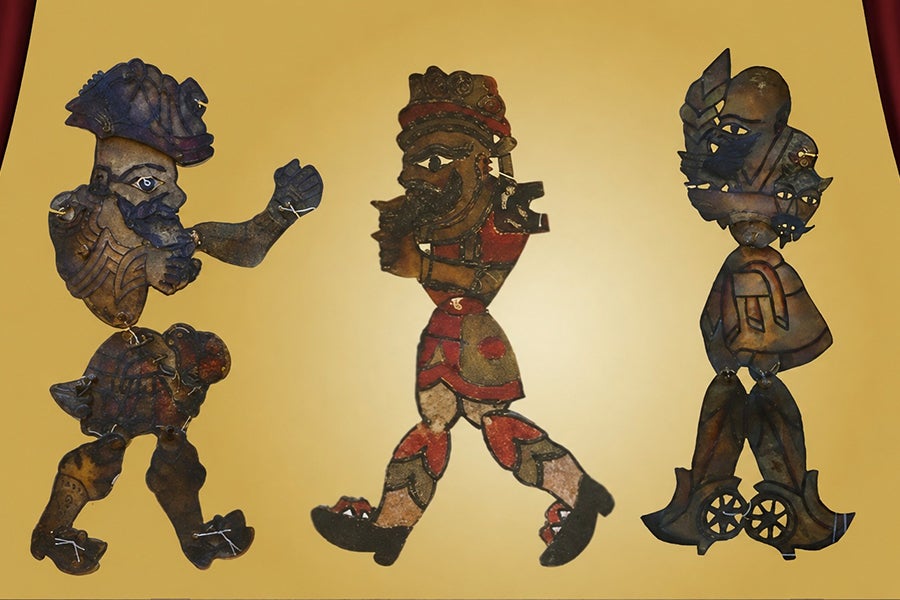
Hala Qasqas Synopsis: This talk explores khayal al-zill (shadow theater) as a central feature of recreation and urban sociability in late Ottoman Damascus. Focusing on nineteenth-century coffeehouses, it examines the material craft of translucent leather puppets, the performance practices of the puppeteer, and the interplay of light, music, colloquial speech, and improvisation. It shows how…
Tag: Ottoman Arts Topics
An Iznik Dish with a Garden Pavilion at the Aga Khan Museum

Charlotte Maury Synopsis: This talk discusses a dish that can be dated to seventeenth-century Iznik, the most important Ottoman ceramic production center. Drawing inspiration from natural forms such as saffron flowers and hyacinths, the artist fashioned the garden pavilion in a stylized and abstract manner. The building itself is an unusual feature, rarely encountered in…
A Large Ottoman Embroidery with Pinecones in the Aga Khan Museum
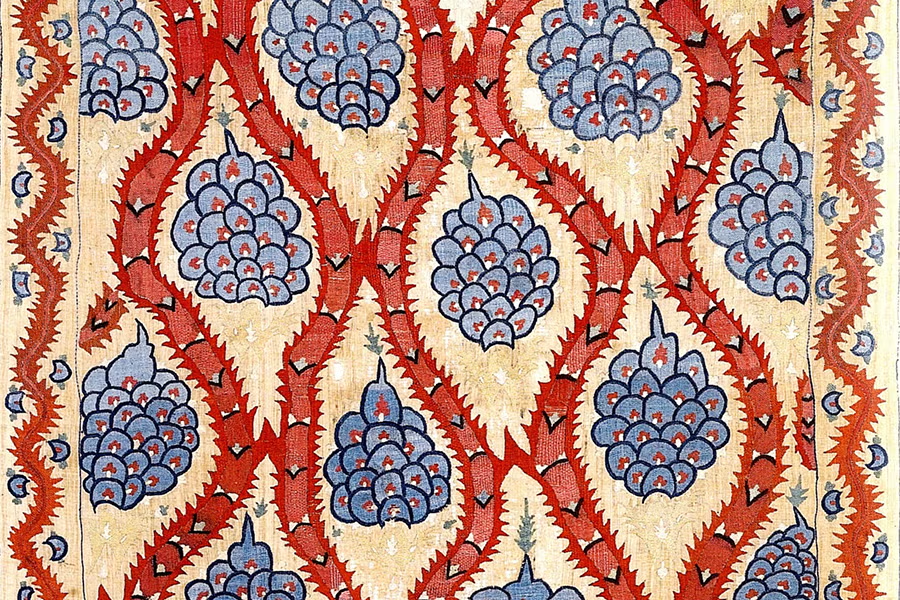
Amanda Phillips Synopsis: A large-scale Ottoman embroidery, now at the Aga Khan Museum in Toronto, may have been used as a quilt- or mattress-cover in the home of a relatively wealthy individual. It was probably made by a professional workshop, which had access to large pieces of linen ground fabric as well as to silk…
A Gilt and Inscribed Leaf in the Aga Khan Museum

Christiane Gruber Synopsis: The Aga Khan Museum in Toronto preserves a magnificent leaf, possibly from a carob tree. It was dipped in gold and inscribed with a verse from the Qur’an (17:80) that calls upon God to grant believers an honorable entrance and exit. Most likely made in Ottoman lands during the 19th century, these…
A Late Ottoman Calendar Scroll: The Ruzname-i Darendi

Patricia Blessing Synopsis: This presentation focuses on timekeeping in the Ottoman Empire, in particular a calendar scroll in the collection of the Cantor Arts Center at Stanford University. This long scroll is a copy of the so-called Ruzname-i Darendi, or Darendi’s “Book of Days,” written in Ottoman Turkish and Arabic. This calendar was written by…
Gülnuş Valide Sultan as an Architectural Patron

Muzaffer Özgüleş Synopsis: This talk explores the building activities of an overlooked Ottoman royal woman, Gülnuş Sultan (d. 1715). She was the favourite wife of Mehmed IV (r. 1648–1687); no other Ottoman royal woman accompanied her husband during military campaigns and on hunting expeditions as she did. Later on, as Queen Mother of his sons…
Picture in Picture: Images of the Sultan in Balkan Princely Portraits

Alison Terndrup Synopsis: This presentation dives into the relationship between power and sartorial symbolism by looking at portraits of hospodars, or local leaders of Ottoman-Balkan principalities. In the early- to mid-nineteenth century, territories in Southeastern Europe – including the areas we know today as Serbia and Romania – underwent a period of political, economic, and…
Ottoman Costume Portraits: Photographs in the Elbise-i Osmaniyye

Erin Hyde Nolan Synopsis: This presentation examines the Elbise-i Osmaniyye, a catalogue of popular Ottoman costumes commissioned by the Ottoman court for the 1873 Vienna World’s Fair. The Elbise contains 320 pages of text and 74 phototypes of men and women in regional dress. Photographic albums such as this one – which were made in…
Coffee and Coffeehouses in Ottoman and Safavid Lands, 1500-1800
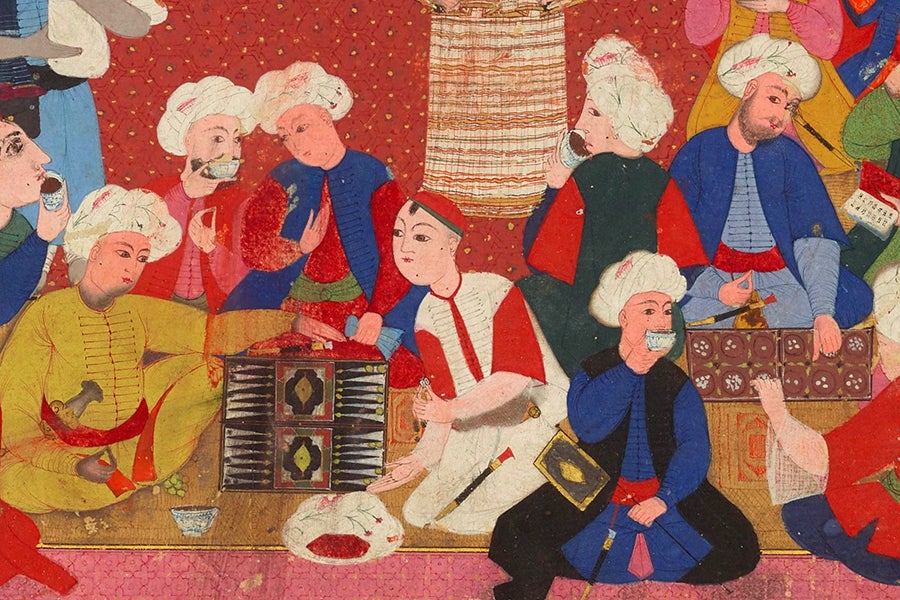
Farshid Emami Synopsis: A plant native to the highlands of Ethiopia, coffee was first consumed as a hot beverage in the Yemen during the fourteenth or fifteenth century. During the sixteenth century, the new drink spread beyond the Arabian Peninsula and coffeehouses proliferated in the eastern Mediterranean region, which was under Ottoman rule. In the…
The Nuruosmaniye Mosque and the Ottoman Baroque

Ünver Rüstem Synopsis: Focusing on the imperial Nuruosmaniye Mosque (1748–55), this presentation explores the Ottoman Baroque, a new, globally resonant style of architecture that reshaped the Ottoman capital of Istanbul during the eighteenth century, when shifting political and cultural circumstances prompted the Ottoman court to develop novel strategies of self-representation. We consider this new building…