
Reem Abou-El-Fadl
My article “Palestine in the 1972 Egyptian Student Uprising” emerged from a series of dissonances I experienced between different pasts and presents I was researching, and my critique of the historiography connecting them. In the early 2000s, during fieldwork for my book on Egypt under president Gamal Abdel Nasser, I saw how far the Egyptian state had moved from its pan-Arabist and Third Worldist horizons in the 1950s to its maintenance of Israel’s settler colonial order at the Gaza border since the Egyptian-Israeli peace treaty of 1979. Then in 2011, after the Egyptian revolutionary uprising, I followed public debates demanding that the treaty be abrogated, and weekly protests at the Israeli Embassy in Cairo, whilst Western scholars and pundits repeatedly framed popular grievances as entirely domestic in focus. This chimed with the well-aired historiographical claim that after Abdel Nasser’s passing, Arab nationalism as a popular identity and aspiration had faded, replaced by a burgeoning political Islam. And yet, many 2011 activists had been politically formed through Palestine solidarity campaigns, protests against the 2003 Iraq War, and opposition to Egypt’s place in the US-led regional order.[1] More broadly, popular rejection of cultural and political normalization with Israel has kept the peace “cold” for four decades and counting.
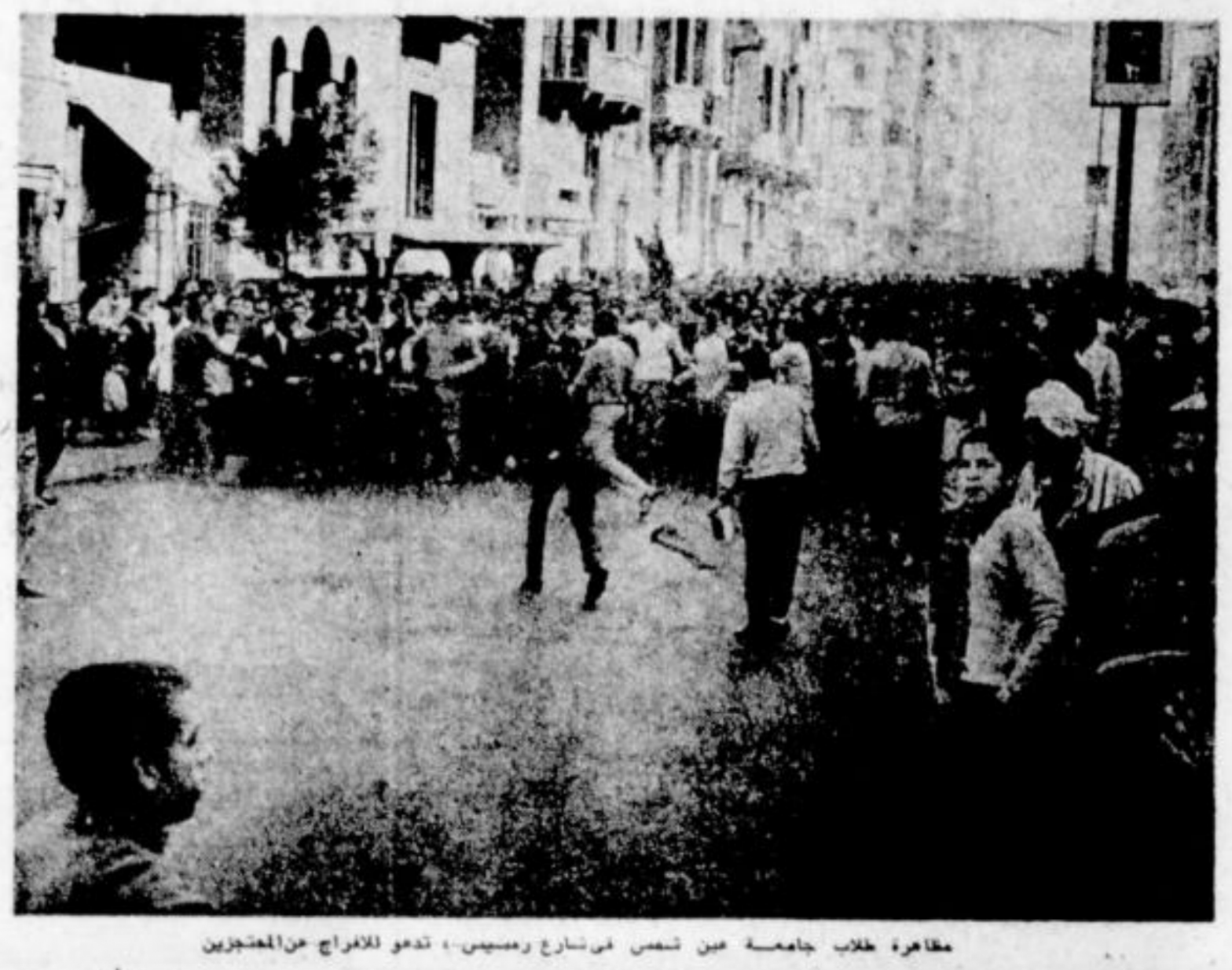
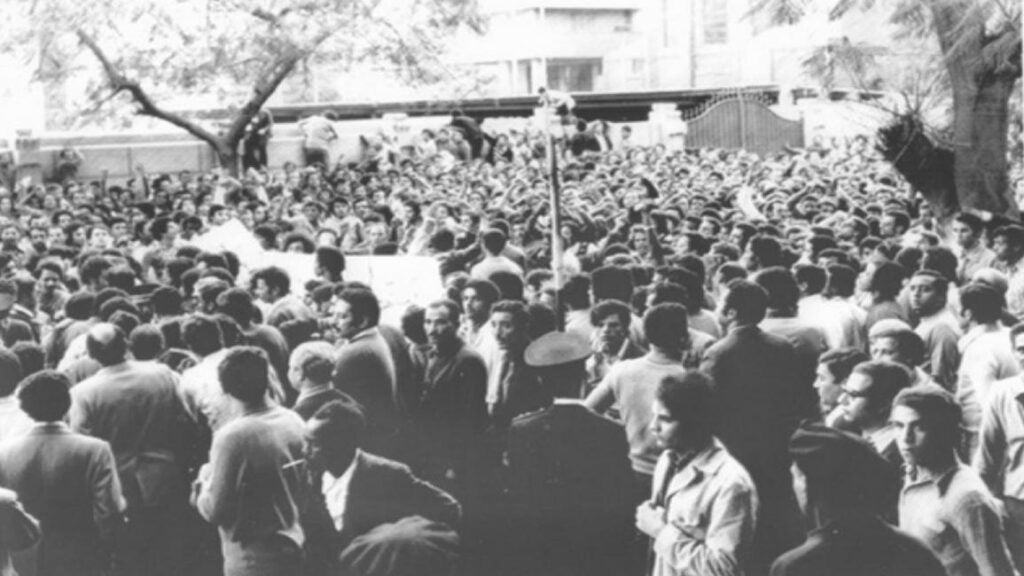
I resolved to study Anwar Sadat’s presidency in the 1970s, to ask how the treaty became possible, and how Palestine solidarity remained an organizing principle in Egyptian politics after the supposed decline of Arab nationalism. I began with an important set of oppositional actors, known as the “1970s generation,” who burst onto the scene with their student movement of 1972-3, bringing universities to a halt twice in two years. Their success lay in channelling popular sentiments of anti-Zionism and Palestine solidarity at an early and vulnerable point in Sadat’s presidency, as he was beginning his rapprochement with Washington.
My challenge was to investigate popular mobilizations going back more than fifty years – with no official archive nor easily determined parameters for participation, and with many afterlives and connections with a contentious present. Historians of modern Egypt have become adept at navigating the state’s securitization of access to official archives, going out in search of scattered documents instead, and taking the “ethnographer’s flair” to the task.[2] But what of researching long suppressed movements against the Egyptian state? This particular enquiry necessitated the addition of a further research method, oral history, itself an “ethnographic encounter.”[3]
I had to locate geographically scattered voices, seeking to capture the multiplicity of viewpoints in the movement at all of Egypt’s then five universities, whose participants were differentiated in terms of class, age, gender, and sustained political engagement. I began with a few prior contacts, who generously shared their networks to help me build my own. I combined this with the archival research more familiar from my earlier work, visiting second-hand book markets and Egypt’s National Library, and consulting press collections, memoirs, cultural production, and legal records. A rigorous oral history would certainly enable “a fairer trial” as Thompson[4] put it, and I struggled to stop pursuing new interlocutors, even though I was acutely aware of the inherently unfinished nature of such a project.[5] Starting in 2016-7, I conducted over twenty life history interviews, mostly in person in Cairo and some online in later years, which left me with a wealth of new perspectives on the period, sharper arguments, and a richer set of reflections on my positionality as a scholar.
First, given the trajectories into political opposition, writing, and journalism of many of the student interviewees, I knew I was in the presence of both witnesses and learned “amateur historians.”[6] Not only did their testimony, and in some cases their own writings, defy the silences of official narratives in Egypt, they also challenged each other’s accounts in complex ways. This reflected their distinct positions, as members of particular political groups or as independent critics, though they frequently drew on the same anticolonial history and contemporary events to tell their stories. As Polletta argues, the normative dimension of a story emerges through emplotment, and in relation to canonical narratives which it subverts or affirms.[7] To understand the sense-making in my interlocutors’ stories accurately, I had to work out which strand of activists considered which reading canonical and why, and whether they contested or affirmed these differently, or in unison. Far from confronting a problem of objectivity or fact-checking, I found that my interlocutors’ subsequent embeddedness in distinct and overlapping circles brought with it a greater opportunity for precision as to the empirical record. It also allowed for a richer set of readings of the 1972 events’ significance, for example on the different political composition of student opposition in Cairo as opposed to Ain Shams Universities, and the role of student theatre alongside musical performance in political mobilization, which ultimately exceeded my article’s limited scope.
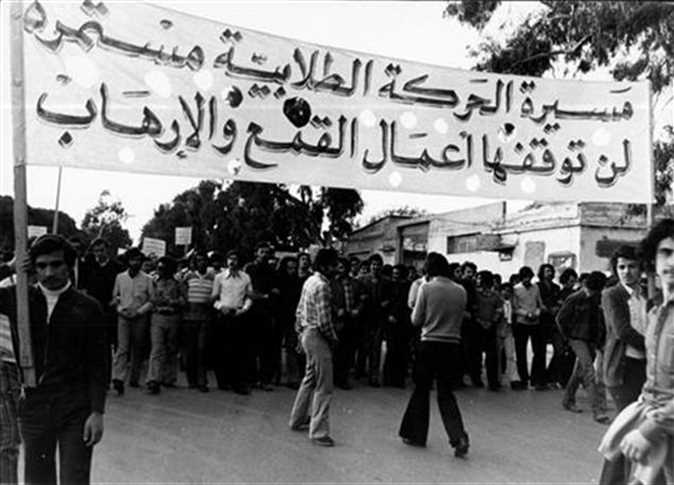
Second, both the content and the form of the life histories enhanced my article’s empirical argumentation and conceptual framework. Over the course of several conversations, there emerged certain master narratives, which challenged the silences of the secondary literature so clearly, both by their self-evidence to my interlocutors and their sheer repetition, that I had to examine them more closely. Thus whilst they did not all agree on who or what was responsible for mobilizing the majority, they were collectively adamant that their movement had sparked a national wave of sympathy which placed unprecedented pressure on Sadat to wage a liberation war with Israel. By juxtaposing this with conventional accounts of elite diplomacy and negotiation strategy in the prelude to the October 1973 War, I was able to underline the role of popular agency in forcing Sadat’s hand. Second, the speakers’ narrative style and tone displayed common features, which clarified my conceptual apparatus on solidarity as deeply affective. In describing experiences of defeat, sacrifice, pride, and dignity, my interlocutors used emotive intonation and language, and were, almost without exception, moved to tears. Their stories would often have multiple layers, each of which reflected, and was intended to elicit, certain emotional responses. For example, during my conversations with poet-activist Zain Al-Abidin Fuad, he would read occasionally out stanzas from poems that he had recited in important mobilizing gatherings on campuses in the 1960s and 1970s. Given oral history’s unique combination of orality and text, attending to my recordings and notes allowed me greater attunement to these layers, which underlined the subjects’ own and their audience’s shared affective understandings. I then found these echoed in the written ephemera that they were able to share with me, such as the public statements of various faculty sit-ins and snippets of the students’ “wall magazine” publications.
Lastly, I was highly aware of the implications of ongoing political struggles and personal experiences of defeat and loss for these accounts. I never lost sight of the 2011 Revolution in particular as the latest frame through which my interlocutors’ individual and collective memory accounts took shape. I felt it was my ethical responsibility, as the privileged historian who would curate their words into shape, to be respectful and understanding of these contexts, and to direct a critical sensibility at myself as often as at my interlocutors. I practiced this by interrogating my own positionality – my ability to travel freely to and from Egypt, my security in writing from the UK, my Arab heritage and the access it afforded me – and sharing this openly with my interviewees. I pledged to send them my writings for their reference and feedback, and to participate in any relevant events they organised, which I did.
In return, I found far more of the ironic than the epic in my interlocutors’ accounts,[8] and experienced both great pleasure and deep pathos in listening to their reflections on what they felt then and how they see things now.[9] As with the pioneering oral history projects on the Palestinian Nakba, these Egyptians’ storytelling stood as an act of living resistance to the status quo, and to the increasing distance they perceived between their imagined futures and those past.[10] Rather than misleading, their investment in current political struggles inflected their narratives with revealing comparative insights, which further supported my argument on the enduring affective solidarities with Palestine in Egypt. That memory is a site of struggle was abundantly clear in our interactions – not only through their conflicting accounts, but also their engagement with my research methodology itself. Have you spoken to enough people from Ain Shams University? Have you been to Alexandria yet? How will you write about those who passed away? They were not always satisfied with my answers. As Ann Oakley has discussed, it may be imprecise, even unethical, to speak of friendship and rapport in driving these interviews, but they were most certainly a gift.[11]
Having conducted most of these interviews in the period before the Covid pandemic, I came to write them up against the backdrop of a newer and again instructive present: the wave of Palestine solidarity actions protesting Israeli genocidal violence on university campuses worldwide since 2023. The digital records and even livestreaming of such student activism have underlined the fragmentary nature of my own repository of 1970s sources. However, these events have been subject to similar state suppression and ongoing struggles to control the narrative. In both cases, oral history can transcend such limits by offering participants the opportunity to retrieve events of significance to them, according them their own meanings through their accounts. In my research, oral history was key to uncovering the salience of Palestine to the political practice and affective attachments of Egypt’s 1970s student activists.
[1] I wrote on this in “The Road to Jerusalem through Tahrir Square: Anti-Zionism and Palestine in the 2011 Egyptian Revolution.” Journal of Palestine Studies, 41, no. 1 (2012): 6–26.
[2] See Omnia El Shakry, “‘History without Documents’: The Vexed Archives of Decolonization in the Middle East.” American Historical Review 120, no. 3 (2015): 920–34 and Chihab El Khachab, “Notes on the Difficulty of Studying State Archives in Egypt.” Comparative Studies in Society and History 67, no. 4 (2025): 785–810.
[3] Micaela Di Leonardo. “Oral History as Ethnographic Encounter.” The Oral History Review 15, no. 1 (1987): 1–20.
[4] Paul Thompson, The Voice of the Past: Oral History, 2nd ed. Oxford: Oxford University Press, 1988, 5.
[5] Alessandro Portelli, “The Peculiarities of Oral History.” History Workshop Journal 12, no. 1 (1981): 104.
[6] Michel-Rolph Trouillot, Silencing the Past: Power and the Production of History. Boston: Beacon Press, 1995.
[7] Francesca Polletta, It Was Like a Fever: Storytelling in Protest and Politics. Chicago: University of Chicago Press (2006): 9-10.
[8] See Portelli, 102-3.
[9] As Portelli states on p. 102, “Informants are usually quite capable of reconstructing their past attitudes even when they no longer coincide with present ones.”
[10] See Rosemary Sayigh, “Oral history, Colonialist Dispossession, and the State: the Palestinian Case.” Settler Colonial Studies, 5, no. 3 (2015): 193–204; “The Nakba and Oral History.” Journal of Holy Land and Palestine Studies 17, no. 1 (2018): 1–18; Diana Allan, Voices of the Nakba: A Living History of Palestine, London: Pluto Press (2021); Yara Hawari, “Allan (ed.), Voices of the Nakba: A Living History of Palestine,” Journal of Palestine Studies 52, no. 1 (2023).
[11] Ann Oakley, “Interviewing Women Again: Power, Time and the Gift.” Sociology 50, no. 1 (2016): 195–213
Reem Abou-El-Fadl is Senior Lecturer in Comparative Politics of the Middle East at SOAS University of London. She is the author of Foreign Policy as Nation Making: Turkey and Egypt in the Cold War (Cambridge University Press, 2019), and editor of Revolutionary Egypt: Connecting Domestic and International Struggles (Routledge, 2015), and of the Arabic-language memoir of Egyptian Africanist Helmi Sharawy, Sira Misriyya Ifriqiyya (“An Egyptian African Story”) (Dar al-Ain, 2019). Her edited translation of this memoir is forthcoming with Cambridge University Press. Her work has appeared in venues including Journal of World History, Nations and Nationalism, British Journal of Middle Eastern Studies, and Journal of Palestine Studies. Her current research projects examine the popular politics of nationalism and Palestine solidarity in 1970s Egypt, and the politics of Egypt’s African and Afro-Asian relations during the Nasser era.
