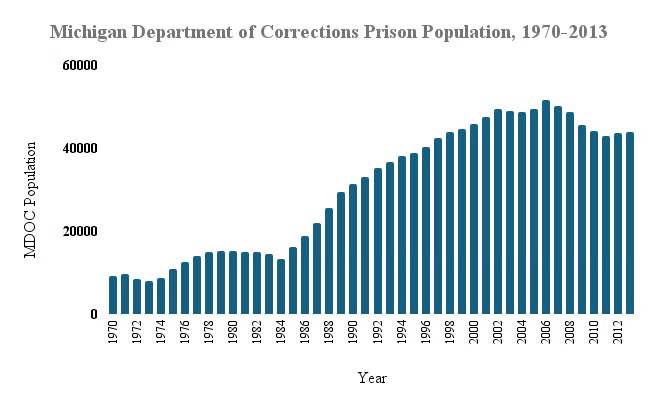
“Mass Incarceration in Michigan” is an ongoing CSP research initiative that launched in January 2025 to investigate Michigan’s criminal legal system and especially to document how and why the state’s majority Black prison population expanded from fewer than 8,000 people in the early 1970s to a peak of more than 50,000 people in the early 2000s. The initiative focuses on topics including mandatory-minimum sentencing, restrictions on parole, the role of policing agencies and prosecutors, expansion of the prison system, and advocacy groups that both supported and resisted this punitive escalation of the carceral state.
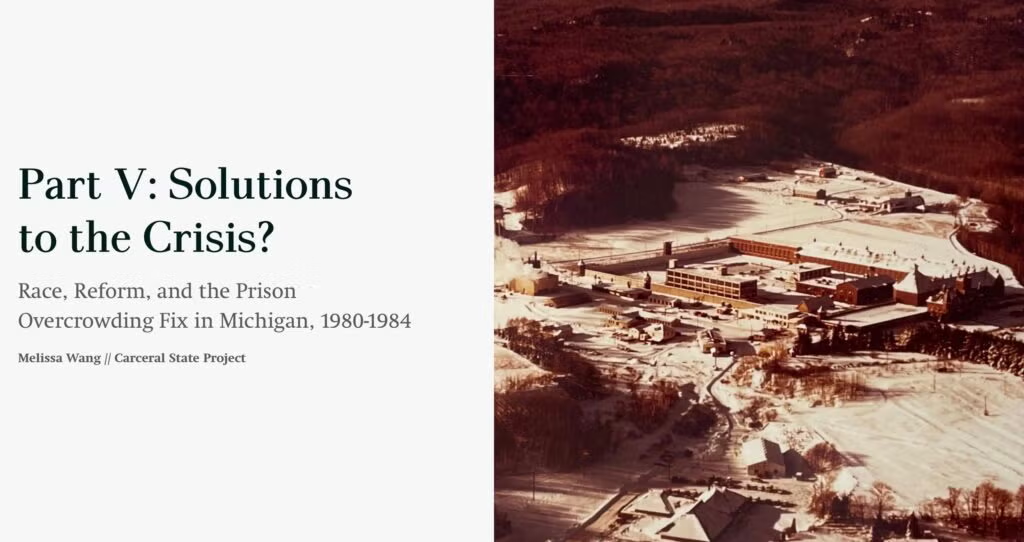
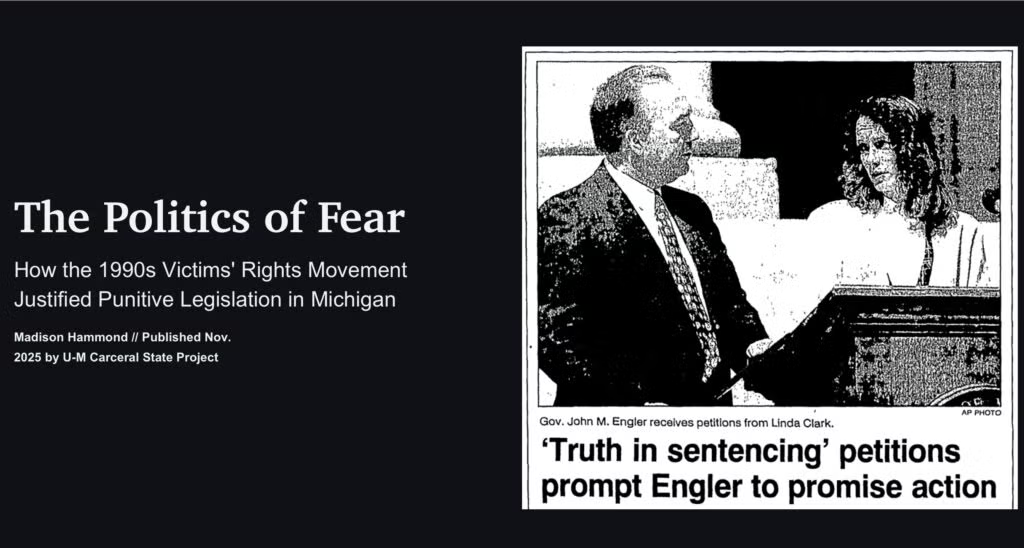
“Solutions to the Crisis? Race, Reform, and the Prison Overcrowding Fix in Michigan, 1980-1984,” by Ph.D. student Melissa Wang, is part of the forthcoming series exploring Michigan’s prison system and broader criminal legal system during the 1970s and early 1980s, under the tenure of Governor William Milliken and Department of Corrections Director Perry Johnson. This report focuses on how government officials and the MDOC portrayed “overcrowding” as the central problem afflicting the prison system in the early 1980s, especially after the 1981 prison disturbances at Jackson, Ionia, and Marquette. Incarcerated people and prisoners’ rights litigants instead emphasized the problems of pervasive racial discrimination in the majority-Black prison system; the injustices of harsh sentencing laws and arbitrary parole policies; the need for alternatives to punitive policies; and the inadequacy of the Milliken administration’s commitment to the ethos of rehabilitation. But a broad range of policymakers and legislators brushed aside critiques of systemic racism in favor of the bureaucratic issue of “overcrowding,” setting the stage for mass prison expansion in the 1980s and beyond. “The Politics of Fear: How the 1990s Victims’ Rights Movement Justified Punitive Legislation in Michigan,” a multimedia report authored by undergraduate CSP researcher Madison Hammond, investigates how racialized narratives of crime and victimhood shaped Michigan’s punitive turn in the 1990s. White suburban victims became the public face of innocence and suffering, images that politicians such as Governor John Engler and Senator William Van Regenmorter mobilized to justify tougher punishments and expanded incarceration through “truth-in-sentencing” laws and harsh parole restrictions. Drawing on the Leslie Williams case and the activism of victim’s rights organizer Linda Clark, the report traces how political and media actors weaponized the moral authority of white victimhood to deepen racial inequality and help construct Michigan’s carceral state.