

The Reckoning Project is a major research initiative working to create a comprehensive database of official legal misconduct. We aim to create a powerful tool to collect, organize, and analyze specific information about cases where individual actors (such as police officers, prosecutors, judges, expert witnesses, etc.) abused their power and committed illegal and/or unethical actions that resulted in cases of actual innocence, or people being overcharged, excessively sentenced, or otherwise unjustly affected by the misconduct.
The Reckoning Project Database
We are building a database that compiles documented reports of misconduct from court opinions, appellate findings, disciplinary records, civil filings, investigative journalism, and other publicly available and FOIA’d sources. Our database is intended to serve as a foundational research resource for examining patterns of official misconduct and generating new insights into accountability and systemic dynamics within the criminal legal system.
The data supports a wide range of research questions, including:
- Which types of misconduct are most common
- Which legal actors are most frequently implicated
- Who is most likely to face discipline
- Whether misconduct occurs in isolation or in coordinated or repeat patterns
- How misconduct clusters geographically or institutionally
Additionally, we have built a database application that includes a geographic mapping system, allowing users to visualize misconduct patterns across locations and identify spatial trends that are not apparent in tabular data alone. While not yet available publicly, publishing the database will ultimately ensure that the project’s findings can be used by lawyers, journalists, impacted people, and other stakeholders. Once public, the database will be available at https://www.thereckoningproject.org.
Data Estimation
Reporting of legal misconduct in the United States lacks regulation and standardization, thus publicly available information does not fully capture the true scope of misconduct nationwide. Existing records almost certainly underestimate the scale of the problem. The Reckoning Project research team is working on building a Bayesian model that quantifies the gap between experienced misconduct and formally reported incidents. This modeling framework provides more accurate estimates of misconduct patterns and helps identify systemic underreporting.
Relatedly, the research team is exploring computational techniques for linking and analyzing disparate disciplinary datasets across jurisdictions, with the goal of matching records across different databases. This matching approach aims to correct many of the systematic issues concerning the use of single sources of data that previous misconduct estimations and scholarship has identified.
Project Team
The Reckoning Project, an initiative of the Carceral State Project began with the 2022-2027 LSA “Meet the Moment” grant, led in partnership by Professor Christian Davenport (Political Science) and Professor Marc Howard (Georgetown University). University of Michigan and Georgetown University students, alums, and staff have made up the team of researchers.

Dr. Christian Davenport
Christian Davenport is a Professor of Political Science at the University of Michigan as well as a Faculty Associate at the Center for Political Studies and Research Professor at the Peace Research Institute Oslo (PRIO). Primary research interests include political conflict (e.g., human rights violations, genocide/politicide, torture, political surveillance, civil war and social movements), measurement, racism and popular culture.
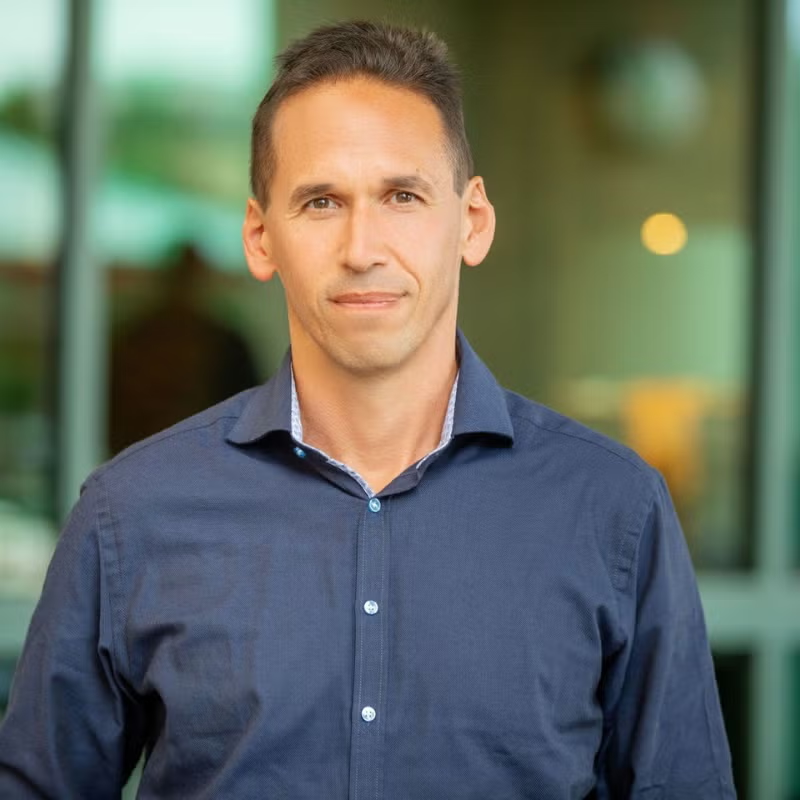
Dr. Marc M. Howard
Marc M. Howard is one of the country’s leading voices and advocates for criminal justice and prison reform. He is a Professor of Government and Law, and the founding Director of the Prisons and Justice Initiative, at Georgetown University. He is also the Founder and President of the Frederick Douglass Project for Justice, a non-profit organization that launched in 2020.

Dr. Kentaro Toyama
Kentaro Toyama is W. K. Kellogg Professor of Community Information at the University of Michigan School of Information, a fellow of the Dalai Lama Center for Ethics and Transformative Values at MIT, and author of Geek Heresy: Rescuing Social Change from the Cult of Technology. In previous lives, Kentaro taught at Ashesi University in Ghana and co-founded Microsoft Research India, where he did research on the application of information and communication technology to international development.

Ben Eberle
Ben Eberle is an engineering professional specializing in the architecture and scaling of autonomous and semi-autonomous software development organizations. Work centers on integrating AI agents, cloud-native platforms, and automated workflows to create engineering teams that consistently deliver high-quality software with speed, accuracy, and dramatically reduced operational overhead.
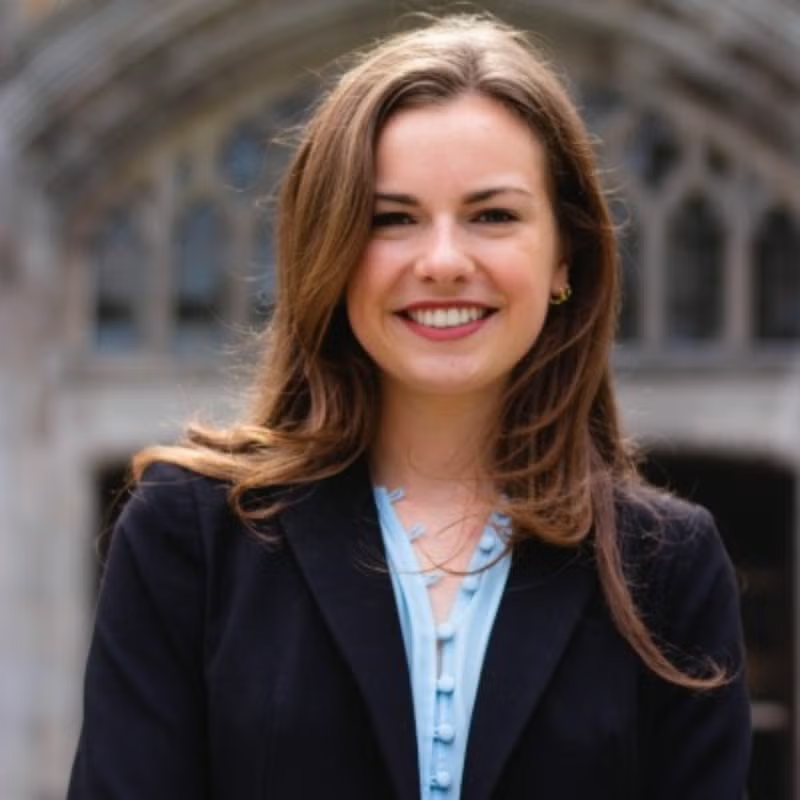
Nell Haney
Eleanor Haney is a law student at University of Michigan Law School. She formerly worked as the Project Coordinator for the Prisons and Justice Initiative at Georgetown University.

Dr. Amanda Lewis
Amanda Lewis is an Associate Teaching Professor at Georgetown University, teaching primarily inside a maximum security prison in Maryland for the Prisons and Justice Initiative. Amanda has experience conducting both secondary and primary research, including conducting in-depth interviews with formerly incarcerated individuals. She holds a M.A. and Ph.D. in Criminology, Law & Society and works as a researcher and advocate in the area of criminal legal reform.

Katie Pieper
Katie Pieper is a Project Coordinator for the Carceral State Project and Reckoning Project at the University of Michigan. Previously, Katie worked as the Prison Response Unit Manager at the John Howard Association of Illinois, reviewing and responding to thousands of letters and emails written by people who were incarcerated in Illinois and their loved ones. Prior to JHA, Katie worked as the Problem Solving Courts Project Manager with the Office of the Chief Judge for the Circuit Court of Cook County in Chicago, Illinois. Katie received her undergraduate degree from Grinnell College, and her law degree from the University of Illinois College of Law.
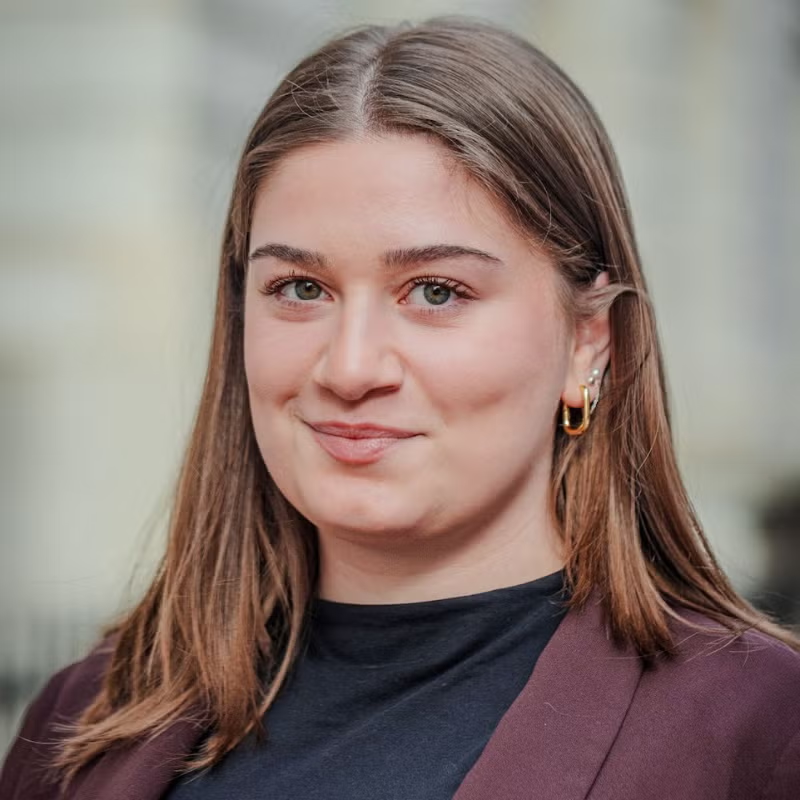
Julia Reinach
Julia Reinach holds a Bachelor of Arts from the University of Michigan, where she worked as a researcher for the Documenting Conditions of Confinement team of the Carceral State Project. Julia currently works at the Georgetown University Prisons and Justice Initiative as the Project Coordinator and Executive Assistant to the Director.