
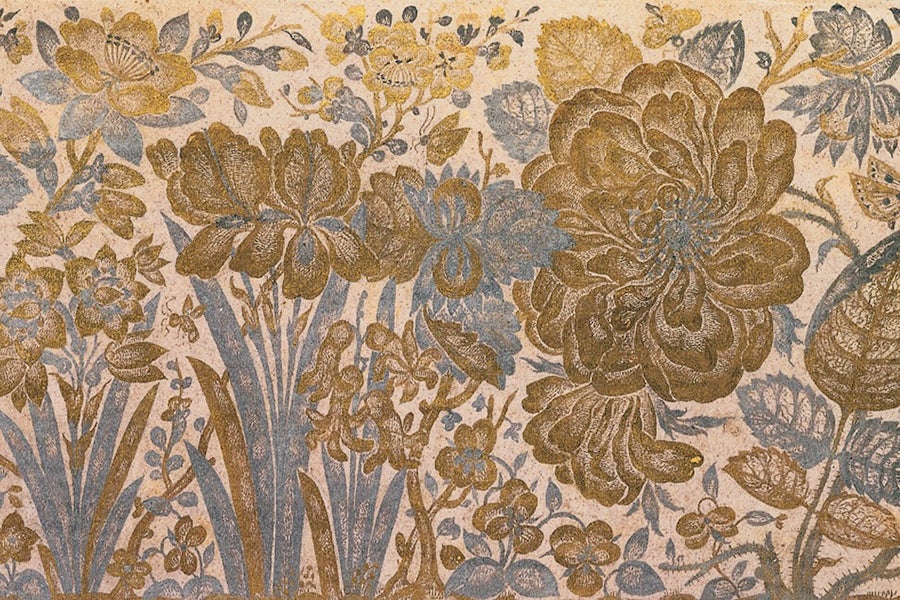
Michael Chagnon Synopsis: The Aga Khan Museum collection includes a folio from the so-called “Drouot” Album, named after the Parisian auction house where its contents were dispersed in 1982. At the center of the folio is a late seventeenth-century painting that was produced in Iran. It is executed in the nim qalam (“half-pen”) technique and…
Tag: Qajar Arts Topics
A Badge of the Persian Order of the Lion-and-Sun in the Aga Khan Museum
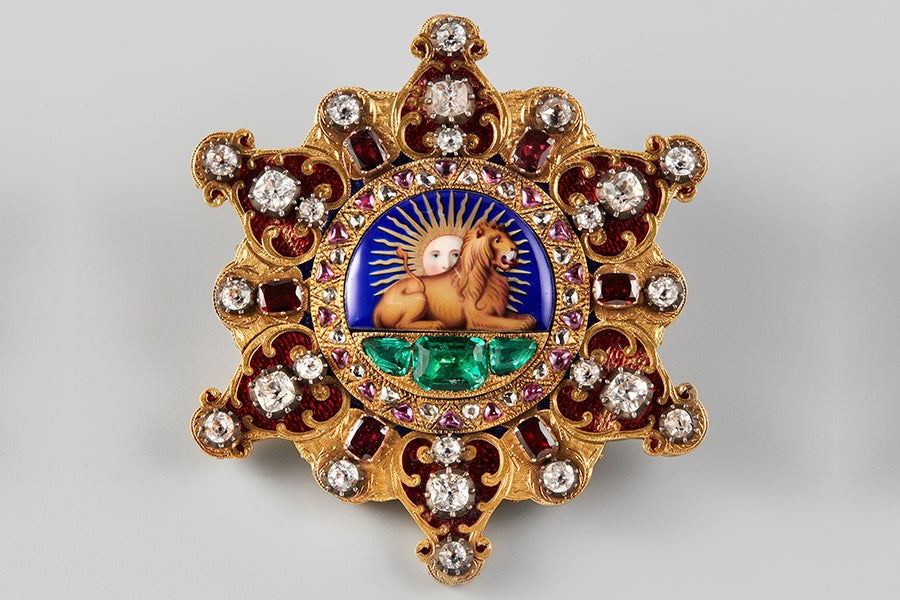
Aseman Talebi Synopsis: The lion and sun motif, known in Persian as shir-o-khorshid, recurs across Iranian history in many different forms and materials. The Badge of the Order of the Lion-and-Sun, held at the Aga Khan Museum in Toronto, is one such object that displays the leonine-solar duo. The order was crafted as a diplomatic…
A Calligraphic Composition by Ismaʿil Jalayir

A Calligraphic Composition by Ismaʿil Jalayir in the Collection of the Metropolitan Museum of Art Maryam Ekhtiar Synopsis: This presentation focuses on a calligraphic composition with tiny vignettes made by the 19th-century Iranian painter Isma‘il Jalayir, now held in the collection of the Metropolitan Museum of Art. It attempts to unpack this mesmerizing painting, analyze…
From the Miniature to the Monumental: The Negarestan Museum Painting of the Sons of Fath Ali Shah

Layla S. Diba Synopsis: Persian painting is still largely understood as the “miniature,” an Orientalist term for small-scale, semi-abstract decorative manuscript illustration. However, nineteenth-century Iran under Qajar rule witnessed a proliferation of figural oil-on-canvas and wall painting. While progress has been made in the study of large-scale single paintings and portraits, the significance of monumental…