

We promised you a response from Julia Elyachar.
Here it is. A final display of Ottoman heuristics.
Elyachar’s reaction is generous and insightful. It is urgent, too. The semicivilized, she argues, is still unfolding. If we choose to see it as buried, or beneath us, we will remain oblivious to how it shapes geopolitical infrastructures of the moment. We will also miss opportunities to merge comparativism and political critique. Elyachar insists on the power of that merger. It is an intellectual stance, but also a practical technology for building alternative forms of human connection. These forms run parallel, analytically, to the subaltern commons, the channels of knowledge, memory, and embodied experience that Elyachar explores in her book. She is developing a collaborative method, and this conversation has provided six collaborators. As Elyachar puts it, “the challenge of how to constitute and preserve collective life in realms of the semicivilized and beyond is one we must face together.”
That is a vital takeaway from this experiment in seven parts.
Here is another.
It is not enough to claim that civilization and barbarism create each other or are two versions of the same thing. Both categories are deficient and built on denial. The semicivilized is proof of those failings. It generates exceptions to them; it points toward other logics and ways of life. As Elyachar suggests, treating the semicivilized as a problem space might help us pry open the ideological loops in which so much of contemporary political theory is stuck, and then to find “submerged potentialities and pathways” that “escape territorialization and totalizing control.”
Read on.
Semicivilized as Problem Space
Julia Elyachar
I’m honored to respond to this wonderful set of essays by six CSSH authors experimenting with the concept of semicivilized under the framework of “Ottoman Heuristics.” To read these essays is to follow hidden trails through a palimpsest of embodied memory, archival gems, and forgotten institutions that still shape the present. I last published on the pages of CSSH in 2003, with an essay called “The State, NGOs, and international organizations in the informal economy of Cairo.” The editors’ ability to turn chaos into clarity with the mere stroke of a pen inspires me to this day.
I learned, while reading the preamble to this feature, that there has been only one article in CSSH that directly references the term “semicivilized” (specifically, an article by Nora Barakat published in 2026 that cites my book). Yet the concept is far from new. The term semicivilized was coined in the late 18th century by jurists of international law in western Europe who were attempting to make sense of the Ottoman Empire and its indisputable place in international order (given its extensive treaties with the “Christian nations”) even though, they thought, “civilizational differences” meant the Ottomans could not be part of “international society.”

The semicivilized was linked to the concept of the “barbarian,” which predates the concept of civilization itself. Through the 19th century, writers influenced by stadial theories of human progress also used the word semicivilized in relation to China, Japan, and the Philippines. By the turn of the 20th century, the semicivilized had disappeared from view in most formulations of social and political theory.
Questions of international law, extraterritoriality, and dividual sovereignty, all central to early definitions of the semicivilized, have been unpacked by scholars of Ottoman history and international law (e.g., Can and Genell, 2020; Can, Schull, and Zens, eds, 2020; Can and Low 2016; Genell 2016a, 2016b; Kayaoğlu, 2010; Low 2016; Özsu, 2016a, 2016b, 2015). But the term semicivilized has not been used as an analytical concept in the critical humanities and social sciences. At a time when the term “barbarian” is deployed as a slur marking out human populations for death without recourse to law, can we continue to avoid the semicivilized? This collection of essays shows the potential for new insights that engagement with this concept might bring.
The notion of the semicivilized was not dissolved together with the Ottoman Empire at the end of World War I. Rather, it was at the core of the post-World War I system of Mandates for regions of the former Ottoman Empire that came into being at Versailles and in the 1920 Treaty of Sèvres. The Mandates were charged with the mission of transmitting civilization to those “stuck” on the civilizational ladder.

Today, that global order is gone. Those who claimed the mantle of the civilized have become the barbarians; yesterday’s barbarians appear as defenders of civilization(s) and humanity. Any lingering notion of the “civilized” as an evolved stage of human development has exploded in flames of destruction and self-destruction. In such a moment, “the semicivilized” claim the right to define themselves, to narrate history, and to shape theory—as this group of essays so clearly shows.
I turned to the notion of the semicivilized to think through a set of problems that preoccupied me as an ethnographer and as a student of intellectual history and the former Ottoman Empire. Thinking from this vantage point allowed me to step outside familiar binaries of the colonizer/colonized and the civilized/primitive that have shaped colonialism studies, postcolonial studies and anthropology, and to revisit concepts and histories set aside in formative moments of political and social theory. I began to focus on the semicivilized in terms of what David Scott has called a “problem space” (Scott 2022, 2004). Scott uses the notion of problem space to refer to moments when a changing “historical conjuncture” demands reevaluation of “prior understandings of the relation between pasts, presents, and futures” (Scott, p. 7, 2022). We are living through such a moment. An outdated notion like the semicivilized has emerged as a problem space in which new (and old) questions emerge into view for urgent consideration.
Today, guiding assumptions of international law and political economy have collapsed (think here of the notion of endless growth in times of climate emergency). Today, the “semicivilized” are bombed out of their past, their present, and viable futures. In this present, new problem spaces emerge.

This is not a matter of establishing an “Archimedean” or arbitrary point from which to analyze and look at the world, as suggested by Koh in her essay. For one thing, there can be no Archimedean point when the semiotic and material grounds of life itself are being destroyed. The point is to take note of dilemmas that come into view in changing historical conjunctures, and to sharpen analytic tools and concepts – such as the semicivilized – that can help us make sense of those emergent dilemmas.
The essays that make up Ottoman Heuristics show the promise and urgency of work done in this emergent problem space. Amzi-Erdoğdular shifts geographic focus to Bosnia at the interface of Ottoman and Habsburg Empires with precision and insight, revealing how “analytics of the imperial semicivilized” move through time as well as space in “subsequent state formations and into the present.” As she reminds us, administration of Ottoman Bosnia and Herzegovina was handed to Austria-Hungary at the Berlin Congress of 1878, even as the sovereignty of the Ottoman Sultan in the province was still acknowledged. This is a classic expression of semicivilized dividual sovereignty – especially since administration was specifically given to the Habsburg Joint Ministry of Finance. The unclear status of Bosnians living between Ottoman and Habsburg sovereign regimes reverberates in archival documents of the “Mixed Courts” of Egypt in the early 20th century, which I analyze in my book.
Tuna’s reading of Tatars and Romanovs in imperial Russia talks back to the civilized from another point of interface with the Ottoman Empire. Features of life that in stadial theory were linked to the “barbarian” emerge here as “bastions of safety” in a world of catastrophic violence. Tuna’s story of a Siberian Tatar youth who hid in a ship to leave Russia without a passport, spent years studying in the Ottoman Empire, and then returned home on a deceased Hajj traveler’s passport purchased in Istanbul, reminds us that such journeys “could be difficult, but they were hardly uncommon.” The infrastructures of mobility, education, and commerce I describe in Ottoman contexts were present in adjoining empires as well. Such communicative infrastructures have great temporal depth: they “connected people not merely here and now, but across generations and ages, thereby allowing the formation of lasting discursive traditions.” The sense of permanence this gave can no longer be dismissed as backward or illusory. People united in the same communicative commons, to use my language, or in shared domains, to use Tuna’s, gain immense strength from connections “with their long-deceased ancestors and progeny yet to come.”
Suni’s astonishing tale of her forebear Grikor Suni, who lived on the move, “fleeing across imperial borders whenever the political tides turned against him,” opens with a brief echo of my own story of my grandfather’s suitcase, long abandoned in the corner of a closet. Grikor Suni’s story brings together elements at once familiar and surreal: the raiding of Grikor’s home in Tiflis in 1908 by tsarist authorities who wanted to arrest him for revolutionary activities; his escape in a small fishing boat disguised in Laz clothing over the Black Sea to the lands of the Ottoman Empire; his survival of genocide thanks to appreciation for a march he had composed for the city of Erzurum before the First World War broke out, which led to a warning to flee back to the Russian side of the border. I could go on, but it’s best to read this essay yourself, to see how documents stuffed into a suitcase can move forward in time with us, making certain kinds of memory and identity possible, and making certain ways of writing them possible as well.
Bishara, who regularly visits my classes on debt and “empires of debt” to teach my students about Indian Ocean economies, shifts from land to water to reveal vast infrastructures of commerce and mobility that work in concert with worlds of finance in Ottoman domains. As always, Bishara’s accounts of indebtedness, relationality, and trade upend common understandings of political economy and finance. Small commercial documents unfold like a portal to large scale histories that standard notions of “global capitalism” cannot capture. Here is another take on paper, this time emerging not from suitcases but from ships and dhows moving along channels of mobility in the Western Indian Ocean. Agency for this world-making moves away from “diplomatic halls of New Delhi and London” and “palaces of Muscat and Zanzibar” to dhows that “functioned as mobile law offices,” with their captains appearing as “paralegals who knew the form, function, and place of every sheet of paper in this world of ink and seawater.” These “inked sheets” moved across channels on water to generate “transregional frameworks for circulation and exchange” that remained vital for centuries, far beyond any local/global binary.
Koh’s insightful questions about odious debt, finance, and imperialism also trouble the global/local binary, reminding us of other loci of agency in the Ottoman and post-Ottoman world. She reminds us of how Ottoman authorities, using international and Islamic law, cleverly worked around the limits European powers tried to impose on their sovereignty, and how key aspects of the semicivilized condition become harder to identify in Ottoman social and economic formations as we move from modern to premodern settings.
Finally, Barakat revisits traces of property, finance, and refracted impacts of the Ottoman extraterritorial treaties in Palestine, from the perspective of a destroyed village in a decimated Gaza. Some things survive. And we cannot avert our eyes as Barakat reveals what is stolen, lost, and obliterated. As a colleague put it, having read Barakat’s piece alongside me, “The semicivilized are defined such that things can be taken from them: Life. Land. Identity. Memory.” Barakat brings her characteristic rigor as a historian together with insights from what she calls “the embodied tools of ethnography” to imagine “moving through the spaces Khalil Husayn and his family would have inhabited” in Gaza, as they sustained a “share-based agricultural system over generations” while “drawing and re-drawing its exclusive human boundaries.” Barakat then shifts our attention from loss to continuities in the collective commons of the people of Gaza and Cairo, where “in the next generation, Khalil Husayn’s son would almost always know whose cigarette he was lighting or who he sat next to on the bus.”
As this whole collection makes clear, violent attempts to contain the semicivilized in zones of exclusion are never totalizing. That old association of the semicivilized with the barbarian points to submerged potentialities and pathways of mobility that escape territorialization and totalizing control, from the hinterlands of the so-called shepherds, nomads, and barbarians of stadial theory to the embodied infrastructures and communicative channels forged and tended to by “locals” from Palestine to Cairo.
The embodied infrastructures I analyze in my book exceed the fictions of homogeneous territory at the core of classic concepts of sovereignty in Western political thought. The commons of the semicivilized provide a different basis for the constitution of collective life on shaken grounds, even as the international order to which the semicivilized were denied entry after WWI is now buried under the rubble in Gaza, Beirut, and Tehran. What are the shifting horizons of political life and sovereignty today?

We are living through an intensification of the dynamics I analyze in On the Semicivilized. An even more destructive war to control communicative channels and resources across land and water has been launched in disregard of international law. Once again, finance and debt are crucial battlefields of this war. At stake are not attempts to control territory in ways often assumed in frameworks of colonialism and postcolonialism. Rather, battles have intensified over the channels through which commerce flows, the types of currency mediating those flows, and how the wealth of the semicivilized that was once territorialized as public goods will be “set free” to accumulate returns and create more power for billionaires. Annihilation is the fate of anyone or anything that stands in the way. Under these conditions, the challenge of how to constitute and preserve collective life in realms of the semicivilized and beyond is one we must face together.
For all these reasons, I am beyond thrilled to have my book placed in conversation with these beautiful and brilliant essays, and to have the editors of CSSH curate the proceedings. Each author records moments of unshakable attachment to life and humanity. In times of catastrophe, such records are gifts. I have enjoyed opening them, reading them, and, most of all, sharing them with the broader community of CSSH readers.
References
Can, Lâle, and Aimee M. Genell. 2020. “On Empire and Exception: Genealogies of Sovereignty in the Ottoman World.” Comparative Studies of South Asia, Africa, and the Middle East 40 (3): 468-73.
Can, Lâle, Michael Christopher Low, Kent F. Schull, and Robert Zens, eds. The Subjects of Ottoman International Law.Indiana University Press. 2020.
Can, Lâle and Michael Christopher Low. 2016. The ‘Subjects’ of Ottoman International Law.” Journal of the Ottoman and Turkish Studies Association 3(2): 223-34.
Elyachar, Julia. 2003. “Mappings of Power: The State, NGOs, and International Organizations in the Informal Economy of Cairo.” Comparative Studies in Society and History 45, no. 3 (Jul. 2003): 571–605.
Genell, Aimee M. 2016. “Autonomous Provinces and the Problem of “Semi-Sovereignty” in European International Law.” Journal of Balkan and Near Eastern Studies. Vol. 18, Issue 6: Autonomy and Federation within the Ottoman Empire, pp. 533-549.
Genell, Aimee M. 2016. “The Well-Defended Domains: Eurocentric International Law and the Makings of the Ottoman Office of Legal Counsel.” Journal of the Ottoman and Turkish Studies Association, Vol. 3, No. 2 (November 2016), pp. 255-275.
Kayaoğlu, Turan. 2010. Legal Imperialism: Sovereignty and Extraterritoriality in Japan, the Ottoman Empire, and China. Cambridge: Cambridge University Press.
Low, Michael Christopher. 2016. “Unfurling the Flag of Extraterritoriality: Autonomy, Foreign Muslims, and Capitulations in the Ottoman Hijaz.” Journal of the Ottoman and Turkish Studies Association, Vol. 3, No. 2 (November 2016), pp. 299-323.
Özsu, Umut. 2016a. “The Ottoman Empire, the Origins of Extraterritoriality, and International Legal Theory.” In The Oxford Handbook of the Theory of International Law, edited by Anne Orford and Florian Hoffmann with Martin Clark, 123-37. Oxford: Oxford University Press.
Özsu, Umut. 2016b.”Ottoman International Law?” Journal of the Ottoman and Turkish Studies Association 3 (2): 369-76.
Özsu, Umut. 2015. “From the ‘semi-civilized state’ to the ‘emerging market’: remarks on the international legal history of the semi-periphery.” In Research Handbook on Political Economy and Law, Ugo Mattei and John D. Haskell, eds., Elgar, pp. 246–259.
Scott, David (2022). Refashioning Futures: Criticism after Postcoloniality. Princeton University Press.
Scott, David. 2004. Conscripts of Modernity: The Tragedy of Colonial Enlightenment. Duke University Press.
Stern, Robert. 2017. “Rethinking the History and Theory of Jus Publicum Universal: The Formation of China as a “Semi-Civilized” Legal Subject.” Frontiers of History in China. Vol. 12 (2): 181-261.
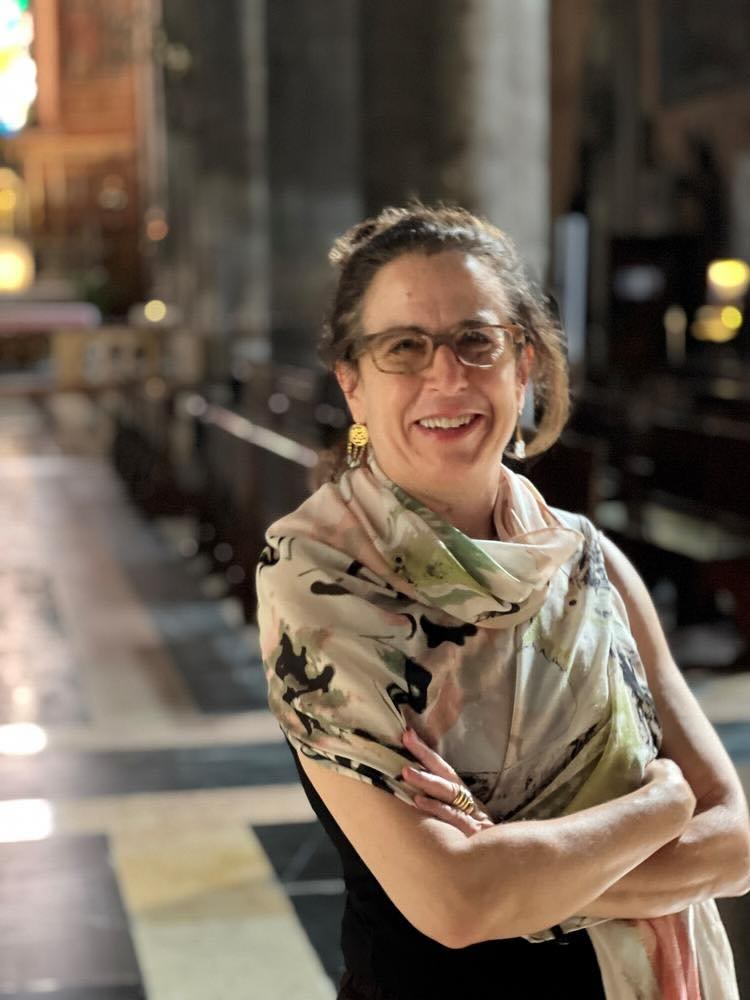
Julia Elyachar is associate professor of anthropology at Princeton University and associate professor at the Princeton Institute for International and Regional Studies. As an economic and historical anthropologist working in the Middle East, she engages with the region’s long history of markets, finance, and global infrastructures of commerce and mobility. Her primary research site is Egypt. She is the author of Markets of Dispossession: NGOs, Economic Development, and the State in Cairo (Duke 2005), winner of the Sharon Stephens First Book Prize of the American Ethnological Society, and On the Semicivilized: Coloniality, Finance, and Embodied Sovereignty in Cairo (Duke 2025). Her academic articles have appeared in Public Culture, Cultural Anthropology, Anthropology and History, Valuation Studies, American Ethnologist, and Comparative Studies in Society and History; her public-facing work has appeared in The Forward, Jadaliyya, and Public Books.
