
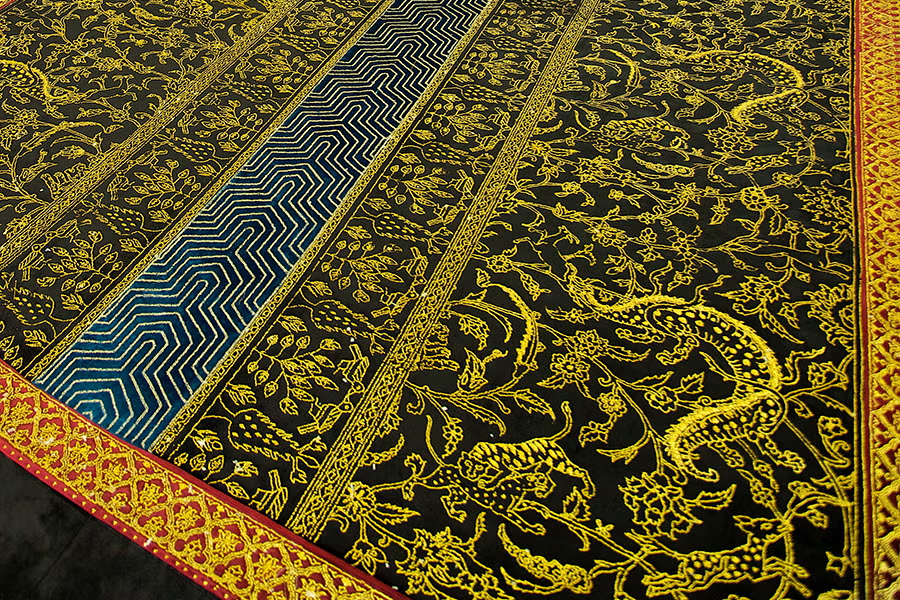
Elizabeth Rauh Synopsis: Aisha Khalid’s 2014 Your Way Begins on the Other Side is a large, dual-sided textile installation that weaves together various historical art traditions and materials across Islamic history and global contemporary art. Crafted by Khalid’s workshop team in Lahore, the artist’s research in embroidery and geometry as well as sacred environments are…
Tag: South Asian Arts Topics
Inscribing Emotion in a Musical Manuscript: The Book of Nine Tastes (Kitab-i nauras)
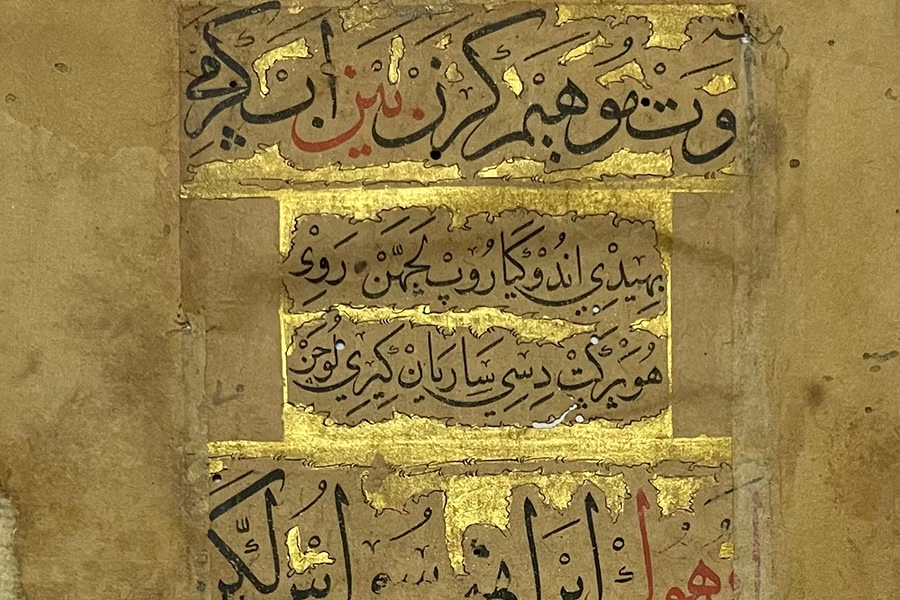
Zoë Woodbury High Khamseen Graduate Student Presentation Award 2025 Recipient Synopsis: This talk examines the Kitab-i Nauras, a Dakani song collection composed around 1600 CE and attributed to Ibrahim ‘Adil Shah II of Bijapur, as a multisensory work that drew together Indic and Persianate literary and musical traditions. By addressing manuscripts of the text written…
Two Muharram Processional Standards (‘Alams) in the Aga Khan Museum
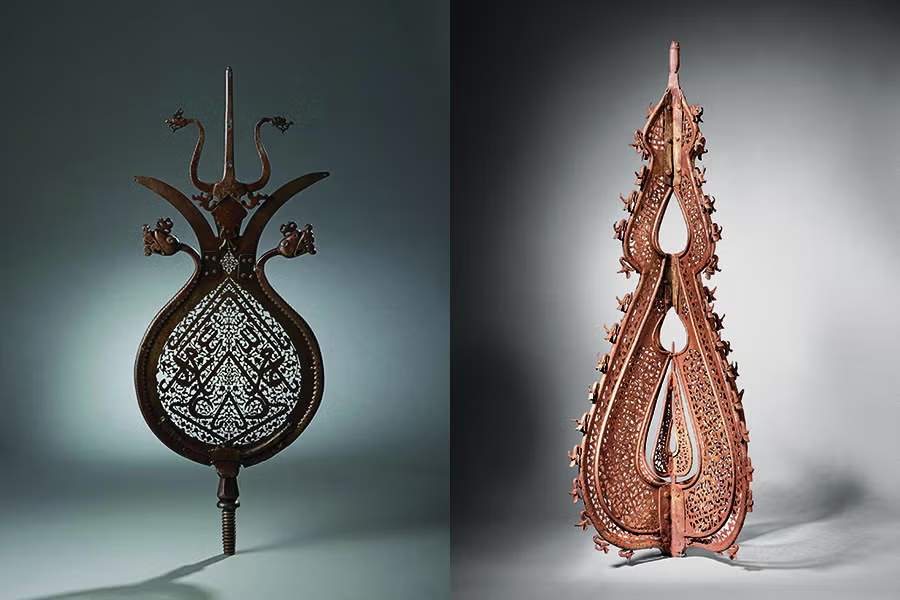
Aliyah Khan Synopsis: The Aga Khan Museum in Toronto holds two large steel Muharram processional standards (‘alams), likely produced in 16th–17th century Deccan Shi‘i India and showing strong Safavid Iranian influences. Featuring stylized protective dragons, the two standards would have topped staffs in azadari Ashura (10 Muharram) processions commemorating Imam Husayn’s martyrdom at Karbala in…
Muslim Saints in South Asian Painting

Murad Khan Mumtaz Synopsis: This talk explores the impact of Princess Jahanara Begum (1614–81) and Prince Dara Shikoh (1615–59), the children of the Mughal Emperor Shah Jahan (r. 1628-58), on devotional portraiture in Hindustan. In particular, it focuses on a pivotal moment in the history of devotional painting when one of the most powerful women…
The British Appropriation of Mughal Pacchikari (Stone Inlay) in Agra, ca. 1840-1940

Lola Cindrić Khamseen Graduate Student Presentation Award 2024 Recipient Synopsis: One of the most distinctive ornamental features of 17th-century Mughal architecture is its stone inlaid decorations, known in Hindi and Urdu as pacchikari. Drawing from rougher forms of polychrome inlay in the previous centuries, this craft reached its apex under the patronage of the emperor…
Images of the Virgin Mary in Mughal Art

Mika Natif Synopsis: The Virgin Mary (Maryam) became a popular image among the Mughal ruling elite from the late 16th to the mid-17th century. Her depiction appears in single-page pictures set in albums, on wall paintings in Mughal palaces, and within illustrated manuscripts. This presentation focuses on the links between images of Mary and the…
A Legacy of Female Power: Representations of Queen Humayun Shah from the Deccan’s Ahmadnagar Sultanate

Namrata B. Kanchan Khamseen Graduate Student Presentation Award 2023 Recipient Synopsis: This presentation explores the removal of Queen Humayun Shah (d. 1569 CE?) from paintings included in an illustrated copy of the masnavi (narrative poem) Ta‘rif-i Husain Shah created during the 1560s in western India’s Deccan sultanate of Ahmadnagar. In these images—which emerged from the…
Monsoon Winds and Ming Porcelains

Monsoon Winds and Ming Porcelains: Collecting and Displaying Chinese Ceramics at the Mughal Court Denise-Marie Teece Synopsis: While the porcelain collection donated by the Safavid ruler Shah Abbas to Ardebil, and the massive Ottoman Chinese porcelain collection held in Istanbul’s Topkapı Palace, are well known and relatively well published, the East Asian ceramic collections of…
Jahangir’s Dream

Yael Rice Synopsis: Sometime around the early seventeenth century, the painter Abu’l Hasan depicted his patron, the Mughal emperor Jahangir (r. 1605–27), encountering his contemporary and rival, the Safavid ruler Shah ‘Abbas (r. 1588–1629), in a dream. This presentation explores the implications for interpreting this unusual painting as a dream image, and it addresses the…
The Gwalior Qur’an

Marika Sardar Synopsis: Completed in 1399, the Gwalior Qur’an features illuminations, commentaries, and notations in addition to the Qur’anic text. These include a set of instructions to use the Qur’an as a divinatory text—the earliest known example of its kind. This rich and varied compendium of texts speak to the cultural and historical context that…