
The obvious question is am I dead? I’ve been asking myself that a lot lately and I’ll admit that’s not a good sign. The obvious answer: maybe? But the obvious answer is almost irrelevant in my opinion. When I was definitely, most assuredly alive (not saying that I’m not anymore!) I found that obvious answers were always insufficient. The best answers require a little digging, like earwax. I’m pretty sure I’ve got a good answer to the obvious question, maybe even a great answer. First though, I should tell you about my tin-mates.
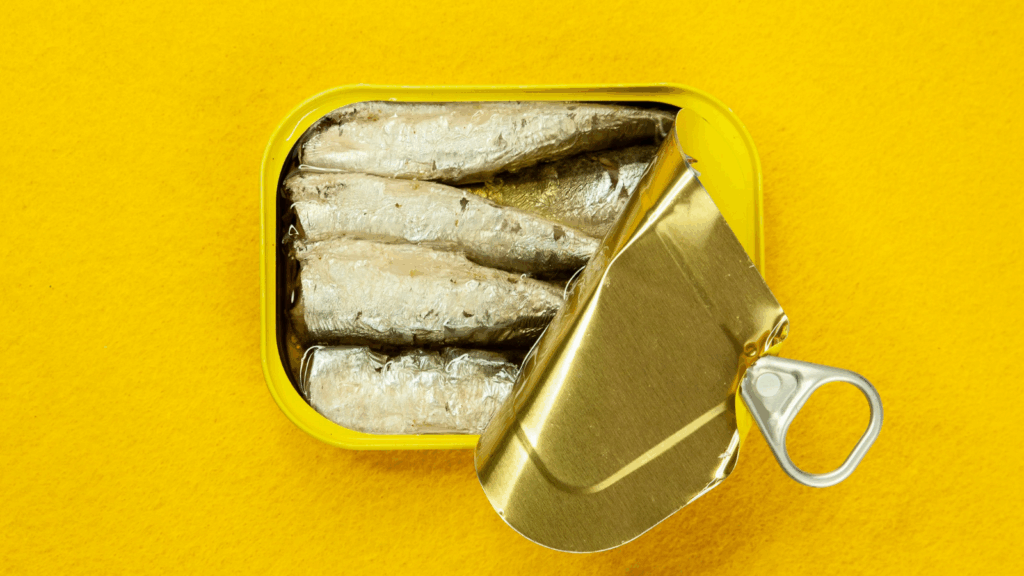
We’re all packed up like tin fish. This has a couple downsides. There’s not a lot of room to stretch and there’s no way I’ll ever be able to get the oil-stains out of my clothes. Plus, I’ve never been a big fan of the dark, so that’s a little bit unnerving. There’s one silver lining worth holding on to though—I’m not alone.
On my left is just a wall. Pretty solid. Doesn’t buckle when I kick against it, and it’s nice and cold to press into when I feel myself overheating with dread and every breath becomes an earthquake. My neighbor to the right is a bit more enjoyable, being a real person and all. His name is Denver and I’m really glad he’s here, even if he can be a bit ornery.
Denver is convinced this is Hell, which has led to a reasonable amount of horrified cries, sorrowful keens, and other forms of existential howling. Well, maybe not reasonable, but understandable.
At first I tried to cheer him up with little quips and generalized optimism. Things like: “Could be worse, could be pickles,” and “If the devil is an anchovy, would that be so bad?” My jokes never really land with Denver. If it wasn’t for Carmen (we’ll get to her later) giggling every time I threw out a new line about our suffering, well I’d think that the problem was that I’m not funny. In actuality, the problem is that Denver has to stare down an eternity trapped in a lightless tin box with oil, lemon zest, and not enough leg room.
Denver grew up in a Catholic family in the Sacramento Valley. He talks a lot about it in between fits of woe. He had to contend with an impossible dichotomy of supportive, loving parents and the rigorous cannon of religion. Mary and Keith—Denver’s parents who I’ve heard so much about that I feel okay being on a first name basis with them—they were convinced that the best way to ensure Denver’s lifelong faith was to never dictate his religion while completely suffusing his life with the Catechism. Instead of dunking him in the deep end, they taught Denver how to swim and then slowly filled his life with water. Metaphorically speaking of course, Mary and Keith were actually quite strict about water safety. All of this caused Denver to develop an on-again off-again relationship with his religion, and when he suddenly woke up in the crushing darkness of a tin can, Catholicism and Denver were most definitely on again.
I’m trying to convince him that being stuck like a sardine isn’t much of a Hell. There’s no lake of fire, endless torment, or any of that rigmarole. There’s actually quite a few things in here that are undeniably good! The oil means our skin never dries out; none of us have gotten the flu; our bodies aren’t being continually tortured; and it’s a little crass to say, but we can get off if we feel like it. What kind of Hell would let you masturbate?
Really though, the reason I don’t think this could be Hell, is that there’s been a couple times when Denver’s really stuck down in the pits of his emotions—crying in the way that makes it hard to breath and you feel like all of your bones were picked out—and I couldn’t quite wrap my arms around to hold him, but I was able to find his hand with mine and we squeezed them together, and I just don’t think it can all be that bad.
Then there’s Carmen. In all my calculations of where we are, what this existence means, what if anything we should be doing, Carmen is the hardest part to reconcile. I think it’s because we’re falling in love. Before all this, I never dreamed of falling in love. I had given up on that happening in my lifetime—then one day I’m in a fish tin listening to Carmen talk about the ocean at sunset and it feels like someone is making scrambled eggs with my heart.
Carmen’s from Orlando and she talks like lines of poetry. That’s not me just being smitten. Carmen taught poetry at University of Central Florida and can recite verse as if it were printed on the inside of her eyelids. I knew we were falling in love the first time she gave us a poem. The first few weeks didn’t have much poetry. Mostly screaming, crying, and heavy silence, then out of nowhere Carmen started up a poem. She spoke in Spanish and her words felt like glinting silver in the darkness. As if her voice alone would be able to preserve us all. I didn’t understand the meaning, but their musicality was enough to know the words were beautiful.
“That was beautiful,” I said.
Denver started crying. Or maybe he had already been crying and just continued to cry.
“I love poetry,” Carmen said. “Somehow I had forgotten that. In here.”
“Would you do it again?” I asked.
“Of course.”
And Carmen repeated those magical words and this time I could feel that they were being given to me, specifically.
“Could I ask you what the poem is called?”
Carmen started to laugh. “It’s called Ode to a Large Tuna in the Market.”
We laughed and laughed, and it was the first time I felt good in this tin can. After that, Carmen and I started talking; only stopping when Denver’s wails were too loud (it took him a bit longer to accept what was going on). Like every infatuation, there were highs and lows. I can’t say we’re dating, because, well, we’ve never gone on a date, but it’s definitely something.
There are times though when I wonder if the only reason Carmen likes me is that we’re stuck together. Before the tin can, I spent most of my time alone, in my house. After you’ve been isolated like that, it gets hard to tell what other people are thinking. You get used to making up other people’s thoughts for them, and forget that conversation is always just a shot in the dark.
Maybe that’s what we are: a shot in the dark. Some sort of inter-existential shuttle cruising through space; a little tin can in the empty spots between the stars, with a tiny bit of hope that we run into whatever comes next and a conversation can start. Back home, one of my favorite things to read about was the Golden Record. It’s a record that they launched into space in case there’s aliens out there. Sometimes I felt like I needed a Golden Record to launch into the street, where a passerby could hear my voice and might decide there’s a speck of intelligent life on that planet and it might be worth a visit.
A part of me is actually worried about aliens finding us. That they might crack this tin open and the three of us would be responsible for explaining all of humanity. Denver and Carmen have been arguing about aliens a lot actually. That’s just Denver and Carmen though. They argue about anything they can. Part of it is a predisposed incompatibility from who they were before, but part of it is what’s happening on the far side of the tin.
There’s something over there. It’s scaly except where it’s soft, and Carmen swears that it is moving. She can’t stand the feeling against her skin and so she’s always cramping up against Denver who needs plenty of space for his breakdowns. Needless to say, it’s put a strain on that whole half of the tin. The obvious answer is that a fish is packed in next to her, but you know how I feel about obvious answers.
All of us are hoping it isn’t a fish. That’s the one circumstance none of us are ready to reckon with—that we might somehow be in a real sardine pack. Could you imagine the three of us crammed in here with one real fish? And when the tin gets opened up the person would be so shocked they’d bring it back to the store and say: “I’d like a refund please, there’s tiny humans in my fish.”
And the cashier would ask: “Do you have your receipt?”
Of course the customer would answer: “No I don’t have my receipt, I never get a receipt for groceries, but clearly this deserves a refund and if you can’t make that happen then I’ll have to ask for the manager.”
The manager would hem and haw, looking several times at the opened tin with a fish, a catholic, and two people rapturously in love, and the manager would have to say: “I’m sorry but our return policy doesn’t account for cosmic impossibilities, the best we can do is a gift card.”
That is a situation none of us want to have happen, so we try our best to pretend that whatever slimy, slippery thing is next to Carmen doesn’t actually exist. Which is harder for Carmen than anyone else and Denver isn’t really in the best position to soothe her.
I wish I was in the middle. Then I’d be able to squeeze Denver’s hand whenever he’s wallowing and comfort Carmen when she touches the unspeakably horrific lump. But I’m not. I’m at the far end. I tried switching places with Denver, but there’s not enough room to turn onto your side, let alone do-si-do. Being stuck over here is how I came up with my answer to the obvious question: am I dead?
Here’s how I figure it. I’m trapped on this side of the tin. The person I’m in love with is on the other side, and all I can do is talk to her over the baleful screams of a man struggling with his religion. I don’t know how long these exact circumstances are going to last and I don’t know if a change would end up better or worse. What I do know is that I have two new friends, I can feel happy even though I’m sad a lot, and because I don’t know exactly what’s happening, there are infinite possibilities to what might happen next. Some of those possibilities could be excellent. So the obvious answer to the obvious question is that I am absolutely alive and I’ll just have to make the most of it until the lid of this tin decides to pop.