 Flying back from China, I was struck by just how significantly behaviors have changed on the practice of smoking in shared public spaces.
Both of my parents smoked pretty heavily as young adults. I was in second grade when the first Surgeon General’s report on the ills of smoking was released (about a month after the JFK assassination), and certainly, within two to three years, the level of consciousness about this was raised. My dad quit outright when I was 10-11, and my mom was on-again, off-again over the years – and later in life both of them ended up with cancers that are highly correlated with smoking.
People such as me will be interesting test cases to see the real effects of second-hand smoke. Not just at home, where I spend lots (and lots) of time fanning the fowl fumes away, but also, in what seems unimaginable, locked up in tight spaces.
I have distinctive memories of …
… being in movie theaters where, by the end of the film, the light beam cutting through the haze from the projector to the screen was completely visible. It was not until the late 1970s and early 1980s when smoking was prohibited in theaters.
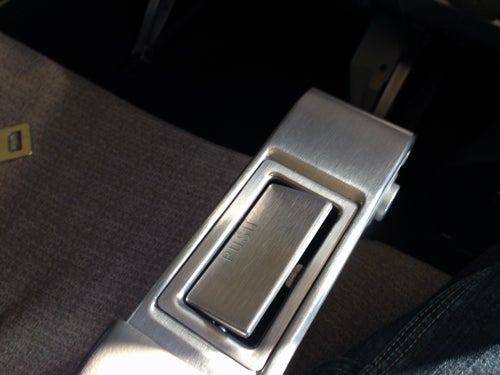
… being in airplanes filled with rancid smoke. Smoking on domestic (US) flights, for instance, was banned on trips with a duration of two hours or less beginning in 1988, with all planes being smoke-free not until the end of the 1990s.
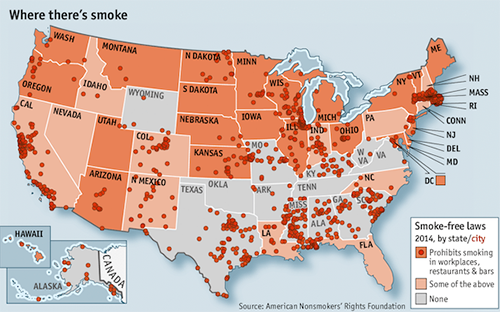
… restaurants and other public spaces: starting in about 2002 (seems like yesterday), states started enacting Clean Indoor Air Acts, which banned smoking statewide in all enclosed workplaces, including restaurants and bars (bars, cafes, and bowling alleys were sometimes exempt for a while). There are no Federal bans, and public smoking is still prevalent in many of the “red states.”