

Farshid Emami
法尔希德·埃马米
李玥翎译
摘要:
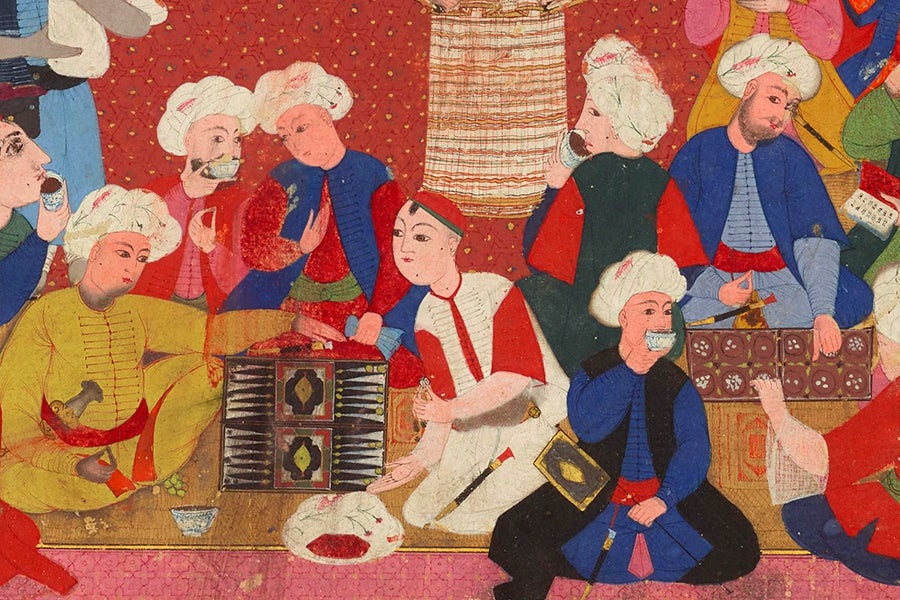
原产于埃塞俄比亚高地的咖啡最初在十四与十五世纪的也门作为热饮享用。这种新型饮料在十六世纪时从阿拉伯半岛传播出去,咖啡馆也在奥斯曼帝国统治下的东地中海地区流行开来。十七世纪时,咖啡传入了萨法维王朝统治下的伊朗。本讲座探讨奥斯曼与萨法维领土上的咖啡馆建筑,聚焦于叙利亚阿勒颇、土耳其伊斯坦布尔、和伊朗伊斯法罕。咖啡馆作为新兴起的场所塑造并承载了新的城市社交模式,并催生了公共空间的扩展。
课后练习单:
辅助此视频的练习单在此。
参考文献:
Alafandi, Rami. “The Waqf of Ibshir Mustafa Pasha.” L.I.S.A. – The Science Portal of The Gerda Henkel Foundation. 
David, Jean-Claude. Le waqf d’Ipšīr Pāšā à Alep (1063/1653): Étude d’urbanisme historique. Avec la collaboration de Bruno Chauffert-Yvart. Damascus: Presses de l’Ifpo, 1982.
Emami, Farshid. “Coffeehouses, Urban Spaces, and the Formation of a Public Sphere in Safavid Isfahan.” Muqarnas 33 (2016): 177–220.
Hattox, Ralph S. Coffee and Coffeehouses: The Origins of a Social Beverage in the Medieval Near East. Seattle: University of Washington Press, 1988.
Özkoçak, Selma Akyazıcı. “Coffee-houses: Rethinking the Public and Private in Early Modern Istanbul.” Journal of Urban History 33, no. 6 (2007): 965–86.
Watenpaugh, Heghnar Zeitlian. The Image of an Ottoman City: Imperial Architecture and Urban Experience in Aleppo in the 16th and 17th Centuries. Leiden: Brill, 2004.
引用:
Farshid Emami, “十六到十九世纪奥斯曼与萨法维领土上的咖啡与咖啡馆” Khamseen: Islamic Art History Online, published 15 October 2026.

Farshid Emami (Ph.D., Harvard University, 2017) is Associate Professor in the Department of Art History at Rice University. He specializes in the history of Islamic architecture, urbanism, and the arts, with a focus on the early modern period and Safavid Iran. He is the author ofIsfahan: Architecture and Urban Experience in Early Modern Iran (Penn State University Press, 2024). His scholarly interests include transregional histories of early modernity, social experiences of architecture and urban spaces, and the intersections of architecture and literature. In addition to his publications on Safavid art and architecture, he has written on topics such as lithography in nineteenth-century Iran and modernist architecture and urbanism in the Middle East.