

By Diop Russell & Jameel Baksh
September 8, 2025
Foundations of DEI in the Workplace
Overview
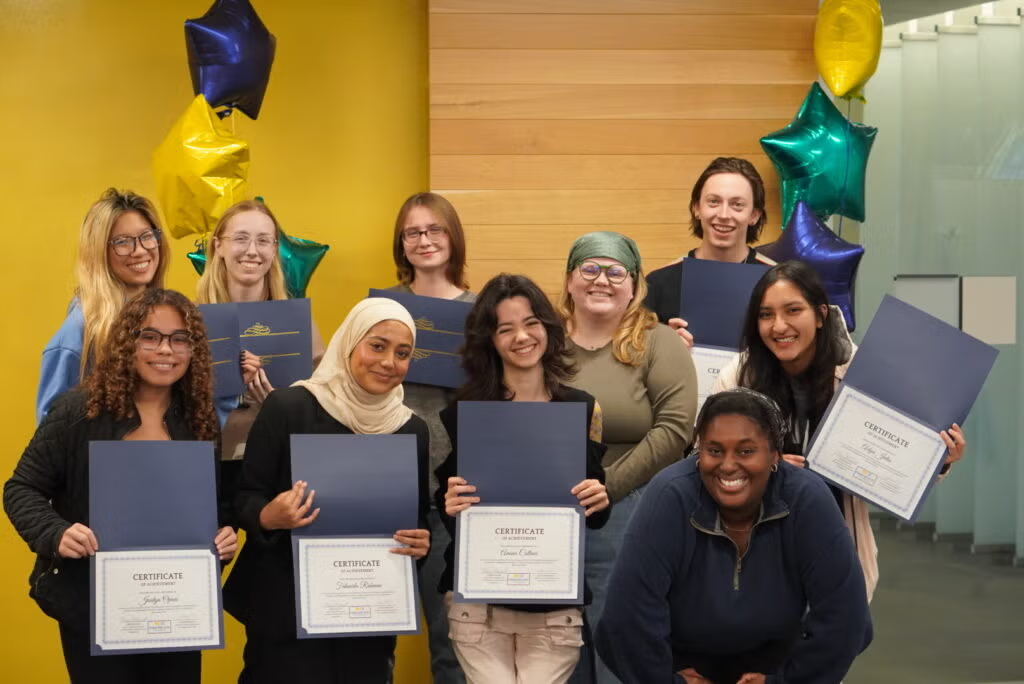
Foundations of DEI in the Workplace (FDW) was a six-session training program for undergraduate student employees in the College of Literature, Science, and the Arts (LSA). Launched in 2021 under the name Student Employee Diversity Certificate (SEDC), the program was held annually through Fall 2024. It used interactive, discussion-based workshops to enhance students’ capacity to apply diversity, equity, and inclusion (DEI) skills in the workplace and beyond. Through case studies, reflection activities, and group dialogue, students examined how systems of power and their social identities shaped their professional experiences and how they, as employees, could foster more inclusive environments within their departments. By the end of the program, participants were equipped with tools and strategies to navigate power dynamics, advocate for themselves and others, and advance DEI in their roles. With the recent sunsetting of the program, this article reflects on the importance of undergraduate student employee training, and its impact on LSA. It also includes the modules from the FDW program for those interested in developing similar initiatives.
Goals
The goals of this article are to:
- Explain the importance and impact of DEI student employee training.
- Reflect on the learnings and achievements of the Foundations of DEI in the Workplace Program.
- Share modules for implementation.
The Origins of Foundations of DEI in the Workplace
In LSA, undergraduate student employees often serve as the first point of contact for the U-M community. Their roles range from front desk workers, to peer leaders, to tutors, and research assistants. With over 1,500 undergraduates employed across the College, LSA’s workplaces are shaped daily by student contributions. Recognizing the significance of their roles, the Foundations of DEI in the Workplace (FDW) program was created to empower undergraduate students with the skills and language to advance DEI in their workplaces and beyond.
Designing the Program for Student Empowerment
FDW was founded by a team of colleagues across the College of LSA led by Jessica Custer, Ph.D., Organizational Leadership and Professional Development Specialist, and Kelly Maxwell, Ph.D., Senior Assistant Dean for Undergraduate Education and Engagement. They designed the program to center student professional development while fostering more inclusive environments across the LSA community. Offering the training as a paid opportunity was an investment in undergraduate students’ professional development. Custer says, “We wanted [students] to see themselves as change agents.” Despite their age, temporary status, or role within campus hierarchies, the program encouraged students to imagine better workplaces and advocate for equity and inclusion within them.
LSA student Nick Love participated in the SEDC program in 2023. He says, “I think that as a person who worked in multiple office environments as a student, it was important for me to understand how people from different backgrounds show up each and every day. I think it’s important for every person to know how to create inclusive environments and also protect spaces for people who might not have the loudest voice in the room or the power and privilege to say something.” For students who were just beginning their professional careers, the certificate offered them foundational knowledge that they can carry throughout their career.
Evolving the Curriculum to Meet Student Needs
FDW began in 2021 as the Student Employee DEI Certificate (SEDC), building on a pilot initiative from the Center for Engaged Academic Learning. The original version of the program had two parts: a series of five learning modules in the fall, followed by a capstone project and presentation in the winter. Students worked with facilitators and supervisors to design a DEI-related workplace project. Though meaningful, participation in the second part of the program began to decline. Students consistently identified the fall workshops as the most engaging and impactful component.
In 2023, the program was restructured and renamed Foundations of DEI in the Workplace. The revised series held 2-hour sessions over six weeks, each led by a graduate-level or professional staff facilitator.
Curriculum
Each session of the Foundations of DEI in the Workplace program was designed to foster inclusive, engaging, and reflective learning. Sessions began with icebreakers, followed by short lectures and group discussions that encouraged trust-building and deeper understanding among participants. Students consistently cited these dialogues as a powerful part of their learning, with one noting, “I learned to not make any assumptions about anyone,” and another reflecting, “It changed the way I interact with people to make sure everyone gets to share.” To support accessibility and comfort, the program incorporated live captioning, microphones, and snacks during sessions.
Facilitators organized the course through a Canvas site with short videos, readings, handouts, and reflection activities. The program limited take-home work to honor students’ workloads and instead emphasized in-session engagement and dialogue. The curriculum covered:
Week 1: Foundations of DEI
- Learning Goal: This workshop aimed to empower students with a comprehensive understanding of social identities, define Diversity, Equity, and Inclusion and its significant impact within professional settings, and facilitate a reflective dialogue where participants could explore and discuss their identities in depth.
Week 2: Social Identities and Bias
- Learning Goal: Students learned about privilege, intersectionality, and unconscious bias, as well as how to recognize these factors influence on professional environments.
Week 3: Racism and Anti-Racism
- Learning Goal: Students learned how to recognize instances of racism and bias at the individual and institutional levels in real-world contexts, enhance their understanding of anti-racism terminology, examine various ideological frameworks concerning racism, and explore strategies, particularly for students, to address systemic racism in their workplace and campus environments.
Week 4: Allyship and Solidarity
- Learning Goal: Students learned the roles of an ally, co-conspirator, and accomplice and were introduced to strategies to support communities other than their own.
Week 5: Sustaining the Work through Self- and Community-Care
- Learning Goal: Students identified various forms of care they could integrate into their daily routines and explored alternative strategies for self-care and community support, particularly in the context of engagement with anti-racism and anti-ableist efforts.
Week 6: Creating a Plan for Yourself & Your Workplace
- Learning Goal: Students, on their own or alongside their supervisor, created an action plan using course concepts to outline goals for how they will share these learnings with their coworkers.
Challenges
Although the Foundations of DEI in the Workplace program was well-received, student enrollment declined over time. It was initially launched during COVID-19 and was held over Zoom. Many students found it difficult to build connections in a remote format. The original capstone component also proved too demanding for students balancing multiple responsibilities. While removing the capstone increased accessibility and allowed more students to participate and be compensated, it also reduced opportunities for mentorship and deeper customization. Despite these changes, students consistently reported that the program strengthened their understanding of DEI, and its relevance to their workplace roles. Programs looking to replicate this model should consider these challenges before implementation.
Impact
A defining strength of the Foundations of DEI in the Workplace program was the mutual learning that unfolded between student participants and facilitators. Facilitators like Imani Barnes, who worked with the program across multiple years, emphasized how deeply impactful these guided sessions were. Barnes says, “LSA is large and diverse, and engaging with students at their worksites and listening to their experiences was meaningful for my own professional growth.”
This reciprocal learning extended to the program’s capstone projects, which provided students a platform to reflect on workplace dynamics and propose a change. Megan Shohfi, a 2021–22 SEDC participant, used her capstone to explore self-care as a critical practice for Black women navigating systemic barriers in academic and professional spaces. Guided by Barnes, Shohfi reflected that the experience deepened her understanding of both her own identity and the identities of others. Shohfi says, “I highly recommend the program to anyone interested in widening their knowledge of DEI topics in an inclusive and growth-oriented environment.” Both Barnes and Shohfi exemplify how FDW fostered an enriching learning opportunity for all stakeholders involved.
The capstone projects also generated real institutional impact. Jessica Custer recounts how one student’s research on campus reflection rooms— quiet spaces to meditate, reflect, or pray— sparked broader awareness about accessibility needs across the University. The student conducted qualitative research, including interviews and photos of each room, discovering that not all reflection rooms were equally welcoming or accessible. Some were thoughtfully designed, while others lacked key elements of comfort and inclusivity. Their findings validated and energized Custer’s ongoing efforts to improve the user experience in LSA buildings. As a result, LSA has taken the lead in designing more equitable reflection rooms, with Custer now spearheading the development of university-wide guidelines set to launch in fall 2025. These student-led capstone projects catalyzed sustainable change.
Each year, students described the program as a turning point in their personal and professional development. They appreciated the opportunity to reflect, to be vulnerable, and to engage in honest conversations with peers and supervisors. Many expressed that the workplace was one of the few places where these conversations felt both rare and necessary. In a 2024 survey, 100% of students reported forming a meaningful connection to their role as a student employee through the program.
As colleges and universities face mounting political pressure and national rollbacks on DEI efforts, programs like FDW are more essential than ever. Student employees are emerging professionals who will carry their values and skills into future workplaces. DEI training equips them to lead with integrity, challenge inequity, and foster inclusive environments. The goal isn’t only to prepare students to do the work, but to sustain it.
Adapting the FDW Model
For those looking to adapt the FDW modules to their own institutional context, we recommend hiring trained DEI professionals to lead and implement the curriculum. While the modules can be adapted, doing so with care and adherence to the program’s core values is essential.
Acknowledging the Team Behind FDW
Foundations of DEI in the Workplace was shaped by a dedicated, interdisciplinary team, including contributors from LSA Undergraduate Education, the LSA Diversity, Equity, and Inclusion Office, the LSA Opportunity Hub, and academic departments. Their collective insight and commitment helped Foundations of DEI in the Workplace grow into a model of inclusive, student-centered professional development. We acknowledge and celebrate the committee members who supported the program over the years.
Original committee members: Kelly Maxwell (LSA UGED), Jessica Custer (LSA DEI Office), Ashley Koebel (LSA Tech Services), Jennifer Eshelman (Sociology/Digital Studies, Course Assistant), Brandon Bond (DEI Graduate Student Staff Assistant, facilitator), Mikalia Dennis (LSA DEI Office), Kym Leggett (Dean’s Fellow), Christine Modey (Michigan Community Scholars Program).
Other committee members over time: Courtney Kliss (LSA DEI Office), Anisa Panahi (Dean’s Fellow), Imani Barnes (DEI Program Asst. and facilitator multiple years), Kai Dotson (Dean’s Fellow) Luciana Nemtanu (LSA Opportunity Hub), Cynthia Snodgrass (LSA Opportunity Hub), Melissa Eljamal (Org Studies/Barger Leadership Institute, Course Assistant), Cherish Dean (Dean’s Fellow), Diop Russell (LSA UGED), Jameel Baksh (Dean’s Fellow), Wynter Douglas (DEI Graduate Student Staff Assistant), Dipita Das (facilitator F’23), Kelsie- KT Thorne (facilitator F’23), and Opal Pursley (facilitator F‘24).


I’m genuinely heartened by the Foundations of DEI in the Workplace program and the thoughtful reflection shared here — this initiative not only honors the unique contributions of undergraduate student employees, but also invites us to reimagine what it means to bring diversity, equity, and inclusion into our day‑to‑day work with intention, humility, and curiosity. By creating a space where students can openly explore power dynamics, identity, bias, and allyship, and by equipping them with reflective tools and actionable strategies to foster more inclusive environments, this program nurtures both professional confidence and compassionate leadership that will ripple far beyond any single workplace.