
Interested in taking a food systems course next semester? Browse the flyers below or scroll down to view a more comprehensive listing of food system course offerings.
Note that you do not need to minor in Food & Environment or pursue a Graduate Certificate in Sustainable Food Systems to enroll in these courses.
UNDERGRADUATE
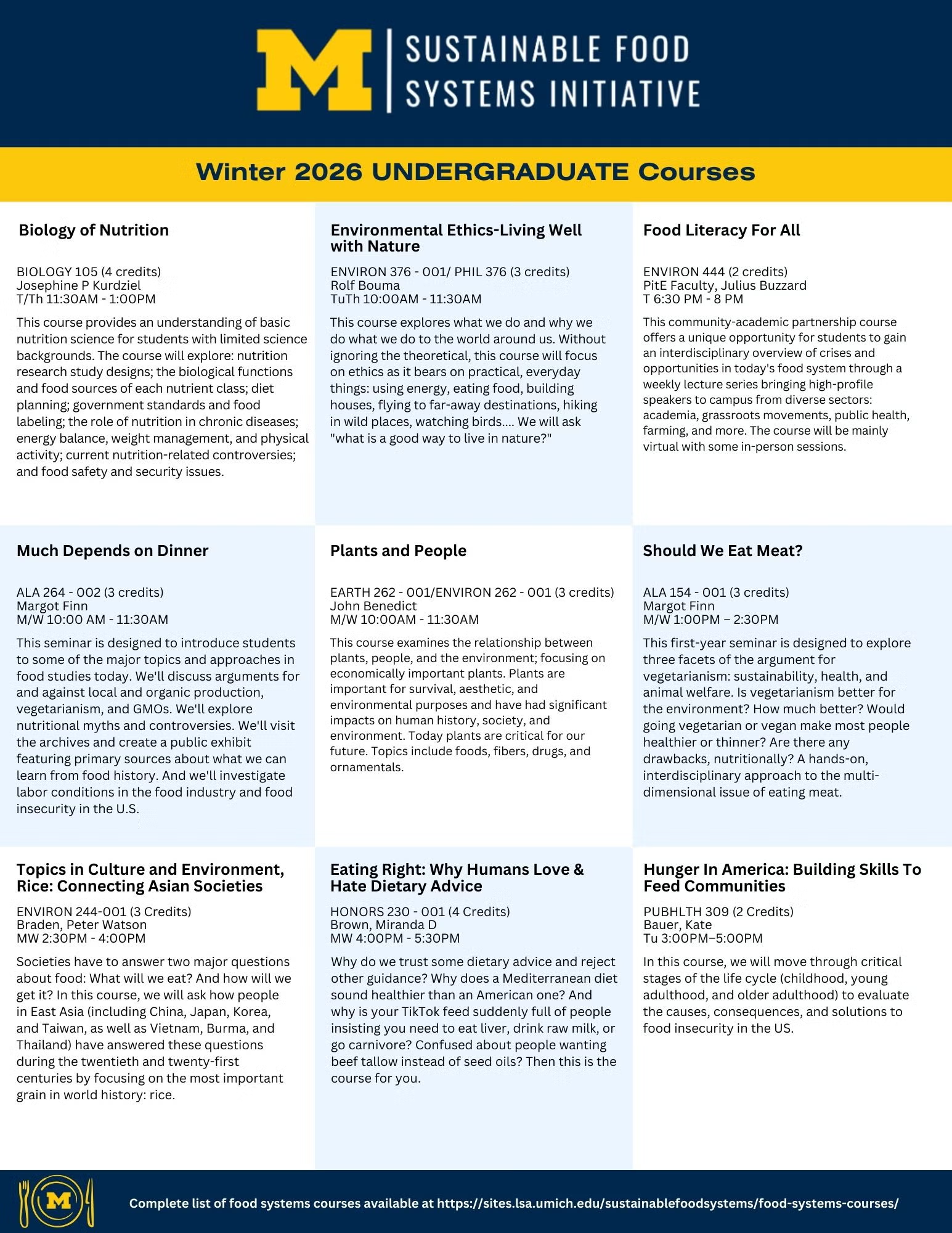
Food Literacy For All | ENVIRON 444 (2 credits)
PitE Faculty, Julius Buzzard | T 6:30 PM – 8 PM
This community-academic partnership course offers a unique opportunity for students to gain an interdisciplinary overview of crises and opportunities in today’s food system through a weekly lecture series bringing high-profile speakers to campus from diverse sectors: academia, grassroots movements, public health, farming, and more. The course will be mainly virtual with some in-person sessions.
Biology of Nutrition | BIOLOGY 105 (4 credits)
Josephine P Kurdziel | T/Th 11:30AM – 1:00PM
This course provides an understanding of basic nutrition science for students with limited science backgrounds. The course will explore: nutrition research study designs; the biological functions and food sources of each nutrient class; diet planning; government standards and food labeling; the role of nutrition in chronic diseases; energy balance, weight management, and physical activity; current nutrition-related controversies; and food safety and security issues.
Climate Change and Sustainability: Environmental Challenges of the 21st Century | ENVIRON 111 – 001/CLIMATE 172 – 001/EARTH 172 – 001/GEOG 111 – 001 (4 credits)
Michela Arnaboldi | T/Th 1:00PM – 2:30PM
This course explores impacts of modern human society on land, ocean, and atmosphere, considering all aspects relevant to a sustainable future. Throughout the semester, students work on a sustainability pledge to apply class material to everyday life.
Environmental Ethics-Living Well with Nature | ENVIRON 376 – 001/ PHIL 376 (3 credits)
Rolf Bouma | TuTh 10:00AM – 11:30AM
This course explores what we do and why we do what we do to the world around us. Without ignoring the theoretical, this course will focus on ethics as it bears on practical, everyday things: using energy, eating food, building houses, flying to far-away destinations, hiking in wild places, watching birds…. Our effects are far reaching: climate change, industrial agriculture and CAFOs, pollution and ecological restoration, biodiversity and species extinctions, wilderness, genetic engineering of plants and animals. We will ask “what is a good way to live in nature?”
Exercise, Nutrition and Weight Control | MOVESCI 241 – 001/ AES 241 – 001 (3 credits)
Peter Bodary | T/Th 1:00PM – 2:30PM
This course focuses on the study of nutrition and exercise-related health behaviors with a focus on the understanding of food, digestion, metabolism, and physical activity / exercise. Topics include nutrients, digestion and absorption of nutrients, food/supplements policy and regulation, bioenergetics, physical activity and exercise, ergogenic aids, body composition, and social and environmental factors influencing nutrition and physical activity.
Germ Wars, Asthma and the Food Allergy Epidemic | IHS 340 – 001 (3 credits)
Gary Huffnagle | T/Th 1:00PM – 2:30PM
This course introduces the student to the growing epidemic of severe allergic diseases, such as food allergies. Course lectures and discussions will focus on the advances in immunology and public health that have led to a decrease in infectious diseases but have been associated with an increase in hypersensitivity diseases, such as asthma and food allergies.
The Great Lakes mini course | EARTH 112 – 002 (1 credit)
Julia Chang | T/Th 9:00AM-10:00AM
This minicourse focuses on environmental issues in the Great Lakes. Topics include the formation and geology of the Great Lakes, hydrology and dynamics of water levels, effect of invasive species on food webs and fisheries, and pollution, particularly the role of nutrients in causing toxic algal blooms.
Interdisciplinary Environmental Topics: Sustain Living Exp 1st Yr Sem | ENVIRON 155 – 001 (2 credits)
Joseph Trumpey | T 11:30-1PM
This introductory special topics course seeks to examine environmental problems and issues from an interdisciplinary perspective. Specific topics will vary by term.
Much Depends on Dinner | ALA 264 – 002 (3 credits)
Margot Finn | M/W, 001: 10:00 AM – 11:30AM
This seminar is designed to introduce students to some of the major topics and approaches in food studies today. We’ll discuss arguments for and against local and organic production, vegetarianism, and GMOs. We’ll explore nutritional myths and controversies. We’ll visit the archives and create a public exhibit featuring primary sources about what we can learn from food history. And we’ll investigate labor conditions in the food industry and food insecurity in the U.S.
Nutrition in the Life Cycle | PUBHLTH 310 – 001 (3 credits)
Liv Anderson | M/W 9 AM – 10 AM
Nutrition in the Life Cycle will cover nutritional needs of individuals during critical stages of development. Students will learn about the biological basis for nutritional requirements in normal development and maintaining health in adulthood. Consequences of over- and under-nutrition and how to identify and address these issues will be discussed.
Plants and People | EARTH 262 – 001/ENVIRON 262 – 001 (3 credits)
John Benedict | M/W 10:00AM – 11:30AM
This course examines the relationship between plants, people, and the environment; focusing on economically important plants. Plants are important for survival, aesthetic, and environmental purposes and have had significant impacts on human history, society, and environment. Today plants are critical for our future. Topics include foods, fibers, drugs, and ornamentals.
Should We Eat Meat? | ALA 154 – 001 (3 credits)
Margot Finn | M/W 1:00PM – 2:30PM.
This first-year seminar is designed to explore three facets of the argument for vegetarianism: sustainability, health, and animal welfare. Is vegetarianism better for the environment? How much better? Would going vegetarian or vegan make most people healthier or thinner? Are there any drawbacks, nutritionally? What we know about conditions for animals in the food industry, and how would a transition to eating less meat and more plants affect rodents, birds, and downstream aquatic life? How can we apply what we’ve learned to improving the food served by UM Dining Services? A hands-on, interdisciplinary approach to the multi-dimensional issue of eating meat.
Topics in Environmental Natural Science: Campus Farm Plant Propagation Practicum |
ENVIRON 303.003 (2 credits)
Jeremy Moghtader | W 1:00PM-5:00PM
This course offers hands-on experience and skill building in propagation of organic transplants with a primary focus on vegetable, herb, and flower crops used in diversified farm operations. UM Campus Farm grows food for-students by-students through our partnerships with MDining, our weekly fall on campus Farm Stand, and donations to Maize and Blue Cupboard Food Pantry. The combined weekly lecture lab format held at Matthaei Botanical Gardens will emphasize the principles and practices of successful organic transplant production and the application of that knowledge in the growing of transplants for a wide range of Campus Farm programmatic uses. Students will explore both the theory and practices associated with plant propagation for use in organic farming including, seeding, germination, media, fertility, pest and disease management, temperature control, watering, seed selection and plant management. As part of a service learning framework for the course, students will help produce transplants for donation and distribution to Campus Farm urban agriculture partners in Ypsilanti and Detroit for use in their farms and programs. This is a ½ term (7 week) course that starts after spring break and meets at Campus Farm/Matthaei Botanical Gardens, Wednesdays 1-5pm.
Culture, Adaptation, and Environment | ANTHRCUL 256 – 001(3 credits)
Paredes, Alyssa Dawn Esquivel | TuTh 10:00AM – 11:00AM
This introductory course in environmental anthropology begins with a simple premise: environmentalism is a cultural phenomenon. How should nature be guarded and managed? Who belongs in it? Who benefits from it? What counts as “natural” in the first place?Around the world, ideals about environmental justice, biodiversity, sustainability, and conservation have been deeply shaped by cultural ideas about race, gender, class, sexuality, dis/ability, and nativism. In this class, we will confront these realities with the help of ethnography—research accounts based on anthropological fieldwork—about fossil fuels, plastics, invasive species, poaching, pesticides, industrial food plantations, mining, air pollution, and waste and wastelands, among others. Through these ethnographies, we will encounter “the environment” differently—not only as the primordial forest, tropical jungle, or national park that might first come to mind, but also in the form of the suburban lawn, the urban skyscraper, and even our very own bodies. The objective of the course is to develop conceptual skills necessary for environmental problem-solving in the 21st century. A semester-long project on an issue at the University of Michigan will give students the opportunity to apply what they have learned in the context of Ann Arbor.
Science and Sustainable Development | ENVIRON 109–01/ CHEM 110–01/EARTH 178–01 (3 credits)
McNeil, Anne | TuTh 10:00AM – 11:30AM
One of the biggest challenges facing our society today is that growth and prosperity come with a huge environmental cost. Is there an alternative way to thrive? The United Nations thinks so, and in 2015, they created “a shared blueprint for peace and prosperity for people and the planet, now and into the future.” The result led to 17 sustainable development goals “which are an urgent call for action by all countries – developed and developing – in a global partnership.” This course will explore 7 of these goals through the lens of a scientist. We will explore the science behind what we know and how we know it. Then we will explore how cutting-edge science being done today might offer solutions for the future.
How does “chemistry” fit in? Chemistry is the study of matter, which includes everything in our environment – both living and non-living. Today’s chemists are helping overcome sustainability challenges, including providing access to enough food and clean water, developing biodegradable plastics, as well as the capability to capture and store renewable energy. As a consequence, each section of this course will involve learning some fundamental chemical principles (e.g., how greenhouse gases absorb infrared radiation and warm the planet).
Topics in Culture and Environment, Rice: Connecting Asian Societies | ENVIRON 244–001 (3 Credits)
Braden, Peter Watson | MW 2:30PM – 4:00PM
Societies have to answer two major questions about food: What will we eat? And how will we get it? In this course, we will ask how people in East Asia (including China, Japan, Korea, and Taiwan, as well as Vietnam, Burma, and Thailand) have answered these questions during the twentieth and twenty-first centuries by focusing on the most important grain in world history: rice.
This course is not a conventional survey of national histories. Instead, we will use rice as a way to trace and analyze historical concepts such as daily life, identity, imperialism, and human interactions with the environment. We will explore similarities and differences in the ways that neighboring societies have produced, traded, consumed, and thought about rice.
Living for the City: Black Study and Urban Transformation | AAS 330/RCSTP 330 (4 Credits)
Ward, Stephen M | TuTh 2:00PM – 4:00PM
Focusing on the historical and contemporary experiences of African Americans in U. S. cities, this course is designed for students who wish to develop historical perspectives and analytical frameworks that will help them to understand, study, and work in urban communities. Course material will span most of the twentieth century and the first two decades of the twenty-first, leading us through an interdisciplinary investigation into the processes of community formation and social change impacting contemporary urban life. We will draw from a wide range of disciplinary perspectives, analytical approaches, and reflective lenses. Accordingly, course material includes: historical studies, urban sociological theory, ethnography, case studies of grassroots redevelopment efforts, memoir, local community studies, documentary film, and contemporary social criticism. Throughout the semester we will also use music and other elements of popular culture to animate and explore our subject matter. To frame our work for the semester, we will begin by critically examining the historical and contemporary uses of the words “urban,” “inner city,” and “ghetto.” From there we will explore the history of cities in the United States since 1940 with a focus on the growth and development of black urban communities. This will lead us into studying theoretical perspectives on community-based activism and case studies of local community organizations and movements. Through this, students will learn about, discuss, and develop their own interpretations of a range of topics and issues, both historical and contemporary. These include: urban renewal, the impact of the crack epidemic, mass incarceration and prison abolition, urban rebellions, the birth of Hip Hop, gendered and racialized urban violence, gentrification, community land trusts, and urban agriculture.
Eating Right: Why Humans Love & Hate Dietary Advice | HONORS 230 – 001 (4 Credits)
Brown, Miranda D | MW 4:00PM – 5:30PM
Why do we trust some dietary advice and reject other guidance? Why does a Mediterranean diet sound healthier than an American one? And why is your TikTok feed suddenly full of people insisting you need to eat liver, drink raw milk, or go carnivore? Confused about people wanting beef tallow instead of seed oils? Then this is the course for you.“Eating Right” explores how humans have thought about food, health, and “eating right” across cultures and centuries. We’ll examine ancient dietary wisdom, colonial-era nutrition science, mid-century food fads, and today’s Instagram wellness influencers. Through energetic engagement with readings both ancient and modern (some quite wacky), students will trace how dietary advice reflects the anxieties and power struggles of its moment. Students will participate in collaborative fact-finding activities and small group discussions to untangle why certain foods get demonized while others achieve superfood status. By the end of the course, you’ll gain a sharper understanding of contemporary food debates, develop a healthy ounce of skepticism about dietary proclamations, and understand why humans have always loved—and hated—being told what to eat.
Hunger In America: Building Skills To Feed Communities | PUBHLTH 309 (2 Credits)
Bauer, Kate | Tu 3:00PM–5:00PM
In this course, we will move through critical stages of the life cycle (childhood, young adulthood, and older adulthood) to evaluate the causes, consequences, and solutions to food insecurity in the US.
GRADUATE
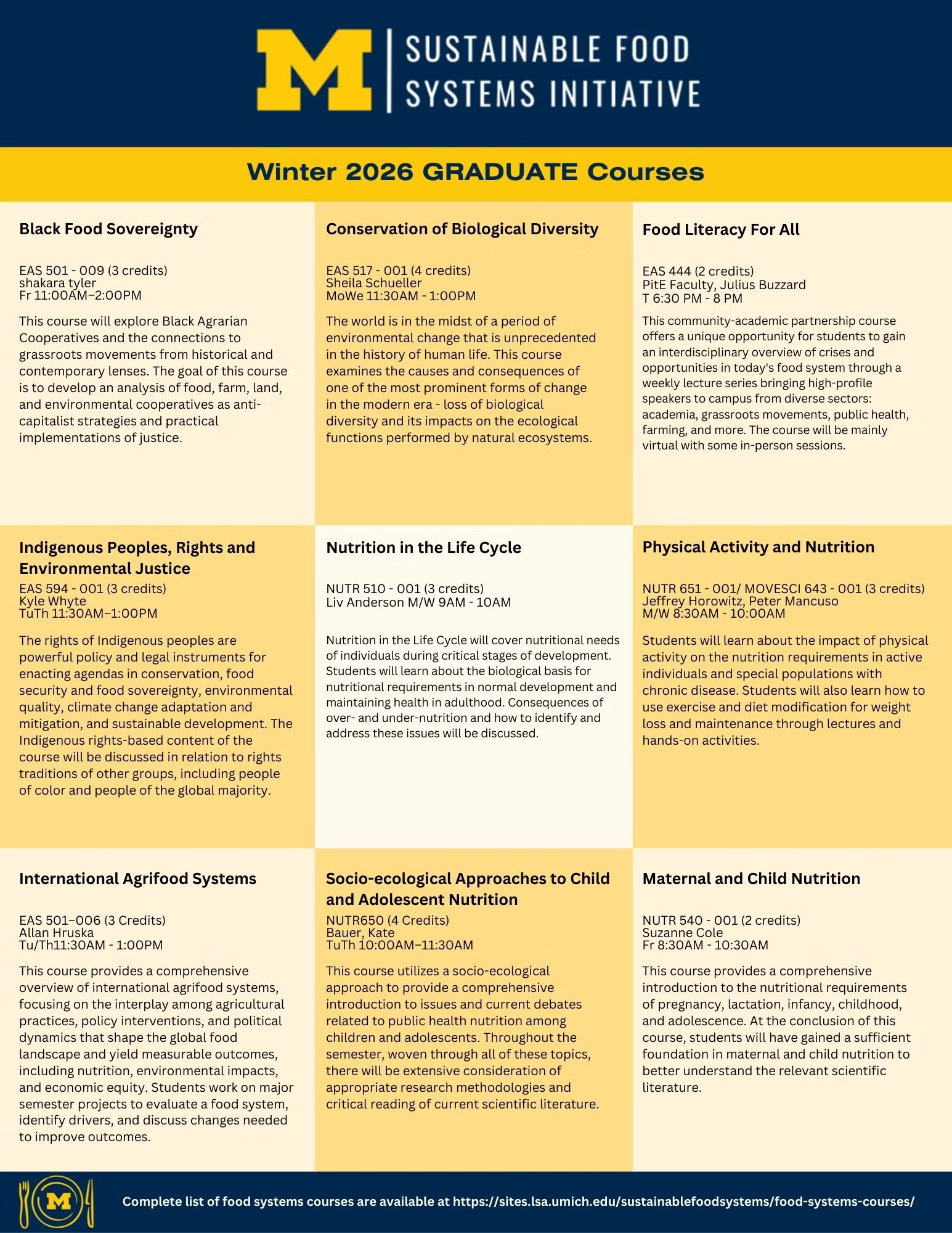
Food Literacy For All | EAS 444 – 001 (2 credits)
PitE Faculty, Julius Buzzard | T 6:30 PM – 8 PM
This community-academic partnership course offers a unique opportunity for students to gain an interdisciplinary overview of crises and opportunities in today’s food system through a weekly lecture series bringing high-profile speakers to campus from diverse sectors: academia, grassroots movements, public health, farming, and more. The course will be mainly virtual with some in-person sessions.
Black Food Sovereignty | EAS 501 – 009 (3 credits)
shakara tyler Fr 11:00AM–2:00PM
This course will explore Black Agrarian Cooperatives and the connections to grassroots movements from historical and contemporary lenses. The goal of this course is to develop an analysis of food, farm, land, and environmental cooperatives as anti-capitalist strategies and practical implementations of justice. The course will examine historical and current case studies of Black cooperative philosophy and practice and how they operate in grassroots movement settings. Students will develop an understanding of the historical and contemporary factors that shape the emergence of Black agrarian cooperatives as acts of sociopolitical and socioeconomic resistance, community self-determination, and empowerment. Students will analyze grassroots case studies, policy landscapes, and community discourses connected to Black agrarian cooperative formations.
Conservation of Biological Diversity | EAS 517 – 001 (4 credits)
Sheila Schueller MoWe 11:30AM – 1:00PM
The world is in the midst of a period of environmental change that is unprecedented in the history of human life. This course examines the causes and consequences of one of the most prominent forms of change in the modern era – loss of biological diversity and its impacts on the ecological functions performed by natural ecosystems.The goals of the class are to (i) detail the scientific evidence for why Earth’s biological resources are being depleted, (ii) outline how these changes are likely to impact ecosystems and the services they provide to humanity, (iii) describe the social and economic trade-offs we are likely to face as a result of biodiversity loss, and (iv) study the current and emerging management strategies that are used to curb changes in our planet’s biological resources.
Environmental Epigenetics and Public Health | NUTR 660 – 001 (2 credits)
Dana Dolinoy | Th 1:00PM – 3:00PM
This course examines the principles and applications of epigenetics and epigenomics as they relate to human nutrition, environmental exposures and disease etiology. Lectures will address epigenetic mechanisms, environmental epigenomics, and policy implications. Examples and case studies will evaluate these processes using both animal and human examples drawn from the primary literature. Students will also be introduced to current laboratory methods and emerging technologies for examining epigenetics and epigenomics.
Indigenous Peoples, Rights and Environmental Justice | EAS 594 – 001 (3 credits)
Kyle Whyte TuTh 11:30AM–1:00PM
The rights of Indigenous peoples are powerful policy and legal instruments for enacting agendas in conservation, food security and food sovereignty, environmental quality, climate change adaptation and mitigation, and sustainable development. At the same time, Indigenous peoples struggle against nations, institutions, and industries that willfully ignore or strategically exploit Indigenous rights. Rights are among the major policy and legal instruments Indigenous peoples use in pursuit of environmental justice. Students of environmentalism, sustainable development, and environmental justice ought to have practical knowledge of the history, current practices, and future innovations in the field of Indigenous rights. They must understand the contextual differences in rights law and policy in different places, and the institutions through which rights claims can be articulated and enforced. The course will be taught as a legal and policy primer, including in depth study of the history of Indigenous rights, key rights laws and policies in use in different parts of the world, including through the United Nations, and innovations in rights methodology by Indigenous peoples, such as the rights of non-human entities. The Indigenous rights-based content of the course will be discussed in relation to rights traditions of other groups, including people of color and people of the global majority.
Maternal and Child Nutrition | NUTR 540 – 001 (2 credits)
Suzanne Cole | Fr 8:30AM – 10:30AM
This course provides a comprehensive introduction to the nutritional requirements of pregnancy, lactation, infancy, childhood, and adolescence. Main topics include: physiologic and metabolic adaptations of pregnancy and lactation, maternal nutrition during pregnancy and lactation, composition of human milk and formula, feeding practices of infants and toddlers, and the nutrient requirements of infants, children, and adolescents. At the conclusion of this course, students will have gained a sufficient foundation in maternal and child nutrition to better understand the relevant scientific literature.
Nutrition in the Life Cycle | NUTR 510 – 001 (3 credits)
Liv Anderson | M/W 9AM – 10AM
Nutrition in the Life Cycle will cover nutritional needs of individuals during critical stages of development. Students will learn about the biological basis for nutritional requirements in normal development and maintaining health in adulthood. Consequences of over- and under-nutrition and how to identify and address these issues will be discussed.
Physical Activity and Nutrition | NUTR 651 – 001/ MOVESCI 643 – 001 (3 credits)
Jeffrey Horowitz, Peter Mancuso | M/W 8:30AM – 10:00AM
Students will learn about the impact of physical activity on the nutrition requirements in active individuals and special populations with chronic disease. Students will also learn how to use exercise and diet modification for weight loss and maintenance through lectures and hands-on activities.
International Agrifood Systems | EAS 501–006 (3 Credits)
Allan Hruska | Tu/Th11:30AM – 1:00PM
This course provides a comprehensive overview of international agrifood systems, focusing on the interplay among agricultural practices, policy interventions, and political dynamics that shape the global food landscape and yield measurable outcomes, including nutrition, environmental impacts, and economic equity. We examine the challenges and opportunities within agrifood systems, including food security, climate resilience, biodiversity, food sovereignty, trade policy, and sustainable development. We discuss several evaluation frameworks for the systems and delve into the drivers responsible for the current results. Students work on major semester projects to evaluate a food system, identify drivers, and discuss changes needed to improve outcomes.
Sustainable Urban Systems | EAS 501–074 (3 Credits)
Benjamin Goldstein | Tu/Th11:30AM – 1:00PM
As global centers of population and economic activity, cities consume vast amounts of resources. The demand for energy, building materials, water, mobility, and consumer goods in cities fuels unequal environmental change in multiple dimensions both inside cities and at distal locations beyond their borders. At the same time, access to these resources and the essential services they provide is also grossly unequal within and between urban areas. This makes cities critical to just decarbonization and to equitably achieving a range of other societal sustainability goals. To support the necessary transition to a more sustainable urban future through policy and urban design, cities need robust metrics to track their environmental performance. This course introduces graduate students to cutting-edge methods to measure and map the stocks and flows of energy and materials in cities and their related environmental impacts.
Socio-Ecological Approaches to Child and Adolescent Nutrition | NUTR650 (4 Credits)
Bauer, Kate | TuTh 10:00AM–11:30AM
This course utilizes a socio-ecological approach to provide a comprehensive introduction to issues and current debates related to public health nutrition among children and adolescents. Throughout the semester, woven through all of these topics, there will be extensive consideration of appropriate research methodologies and critical reading of current scientific literature.
U-M DEARBORN
Critical Food Studies | LIBS 351 ( 4 credits)
Emily Luxon
This course is about revealing the powerful ways that food shapes our lives. Food is rapidly becoming a focal point for pedagogy and research because it lies at the nexus, and intersects multiple disciplines. It is essential to life and our health is heavily reliant upon adequate nutrition. The production and distribution of food is also deeply political and under strain from economic and social forces. This course uses a holistic approach to better investigate the complex ways that food impacts our lives and how food insecurity contributes to income, social, and political inequality in the US.

